










Busbar trunking: the best choice for every situation
Text Linda van DorenImage STbenelux
Electricity is becoming increasingly important in today’s world. Electrical installations are growing in size, as is the number of connections.
In larger buildings, electricity comes in via one or more transformers and feeds into a central switchboard: the main distribution board. Generators and UPS systems are also used alongside transformers, and all these components need to be connected to one another and to the consumption units. Heavy-duty cable connections can do the job, but busbar trunking systems repeatedly prove to be the better solution.
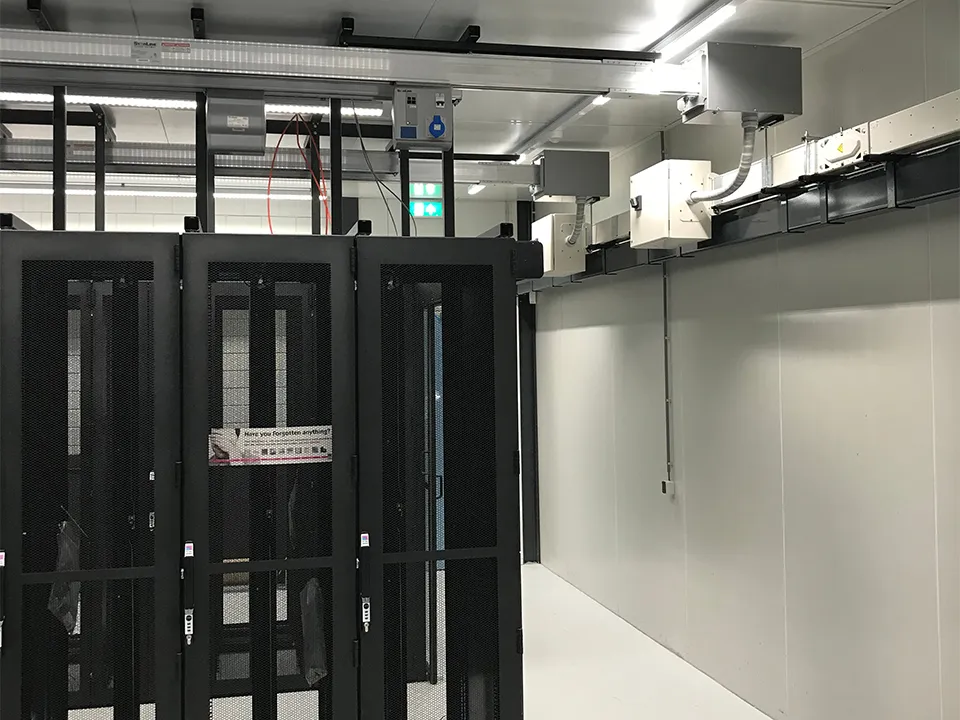
Thijs de Boer, account manager at busbar trunking specialist STbenelux, explains the benefits of busbar or busway systems. “One advantage that is becoming increasingly important in today’s business operations is that busbar trunking is more environmentally friendly and sustainable than cables. Saving space is another benefit: busbar trunking takes up less room than cable runs. This is particularly useful in locations where a large number of cables are routed together in cable trays or under raised floors. What’s more, the heat generated by bundled cables is undesirable. It can lead to unsafe situations, and is especially unwelcome in data centres, where cooling the servers being supplied with power is a priority. In such cases, an overhead busbar is an ideal solution. Busbar trunking can also be installed in less time than it takes to lay cables, and the plug-and-play nature of the components makes it less prone to errors. Depending on the type of busbar, the installed route can be easily adapted and extended. Equipment can be added wherever necessary to increase rack or production capacity. This modularity is a much-valued advantage in data centres and industry.”
It has to work and look good
“As specialists in designing and implementing busbar trunking systems, we hear this time and again,” De Boer continues. “The product’s versatility means it can be used anywhere. We supply busbar trunking in a range of designs. These include simple feeder busbars as well as distribution busbars, which allow connections to be made at any point. Each type of busbar also has its own advantages, depending on the application and environment, such as current rating, dust protection, water and splash resistance, and even aesthetic qualities. That last point may raise an eyebrow, but anything on show has to look good too. For example, we represent the Starline brand, which stands out from many other manufacturers not only because it allows connections to be made anywhere along the entire length of the busbar, wherever the end user wants, but also because of its attractive, clean design. We also like working with Schneider Electric’s Canalis range, which is robust and suited to more demanding projects. This means we can serve a wide range of market segments with the product best suited to their requirements. We develop the best solution each time, based on drawings, precise measurements, on-site surveys and the client’s requirements.”
Which type of busbar trunking should you use?
“Naturally, clients sometimes choose the busbar trunking manufacturer themselves. That’s no problem, we can work with any type of busway. But if we’re asked to recommend a system, we do so after careful consideration. STbenelux’s recommendations are based on knowledge and experience. For example, on behalf of Kromwijk Elektrotechniek, we supplied and assembled more than 600 metres of busbar trunking for the new-build site of Vergeer Kaas. The system connects the transformers to the main distribution board and carries power to the various sub-distribution boards and heavy machinery, including the complete refrigeration system. Connecting the transformer, which stands separately in its own switch room, to the main distribution board in the main building required a weather-resistant connection between the two buildings. We recommended using waterproof Canalis KR for this part of the project, because of its high IP rating.”
Or a combination of brands?
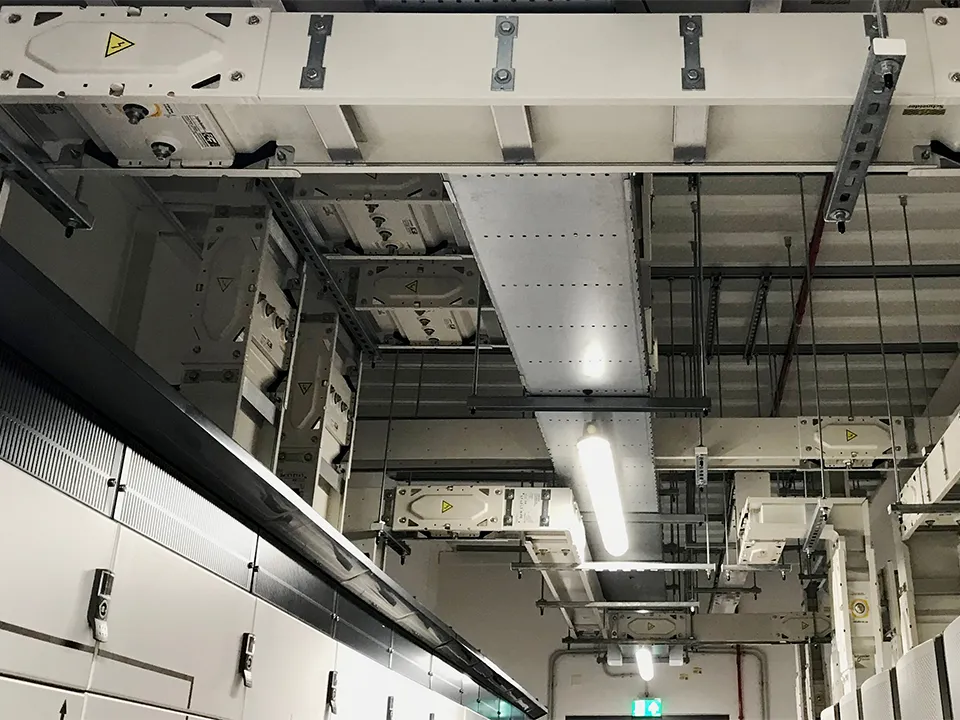
“For Global-e datacenter, we used the US-origin Starline product to power the data racks in the data hall. We recommended it for its modularity, flexibility, clarity, extensive choice of configurations and the attractive design of its tap-off boxes. For the power supply to the data hall, we chose Schneider Electric’s Canalis instead. This type of busbar is ideally suited to the safe transmission and distribution of high power loads. Canalis tap-off boxes fitted with circuit breakers provide the connection to each of the Starline system’s busbar tap-off boxes in the hall. This is how we make the best choice for every situation, using a combination of brands where appropriate.”
Question about this story? Ask your question
Keep following this
Get an email when a new story is published. No account needed.
- SubjectYearbook