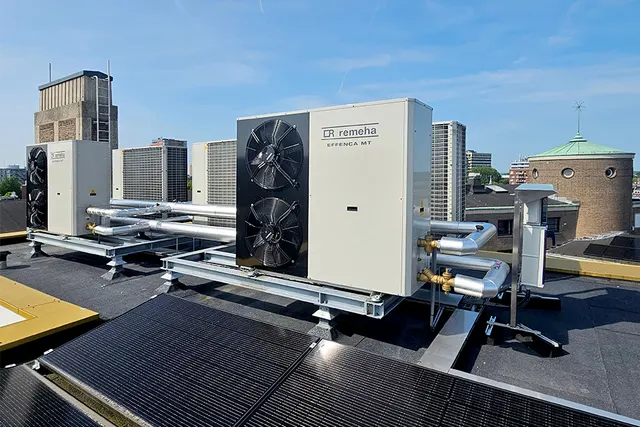











Improvising and adapting to deliver Frisse Scholen
Text Tjerk van DuinenPhotography Ned Air
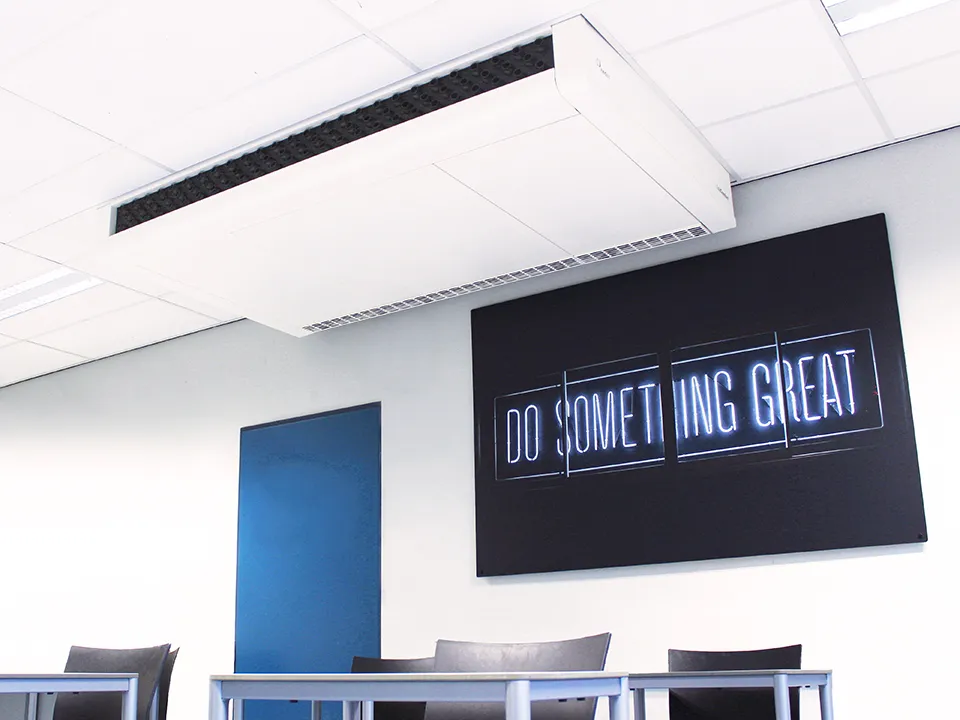
At last, there seems to be real momentum behind the drive to provide as many schools as possible with a healthy learning environment. “The SUVIS effect is kicking in, but don’t expect everyone to be helped this summer. Shortages of technical staff, installers’ packed schedules and a lack of materials and components mean school boards will have to be patient.”
There’s more than one way to achieve your goal

Wouter Wijma, managing director of Ned Air, a leading manufacturer of climate control systems with a strong specialism in systems for school buildings, is speaking. “The second tranche of the SUVIS scheme closed on 30 April. Of the €198 million made available across the first two tranches, more than €169 million has been awarded following 1,087 applications. We are finally seeing this reflected in enquiries and orders, so we’re operating at full capacity and will be working on many schools across the Netherlands.”
More than one way to achieve your goal
Wijma is keen to temper that optimism, however. “There are still schools and municipalities that think we can get started this summer. We all know there are shortages of staff at installation companies, as well as of components and materials. First it was aluminium and steel, now it’s specific insulation materials and plastic for injection moulding. There is also still a shortage of chips and electronics. That means we have to buy in good time and move quickly. We have good contacts with sister companies such as Ubbink, which is helping us out with plastics. There’s more than one way to achieve your goal, and if you can improvise well, you can get a long way. For example, we’re fitting some climate control units with different types of fans from the ones we usually use. That way, the client still gets the climate control system they want, only with a perfectly good Italian fan instead of a German one.”
Spreading the work
Ned Air is doing everything it can to supply as many schools as possible, but whether it will manage this over the summer remains to be seen. Wijma says: “Supply delays have a knock-on effect for the client. And our policy is simple and fair: first come, first served. That’s why I advise schools to spread out work on their climate control systems, for example by scheduling some of it during the autumn half-term. For most school boards, that’s not an insurmountable problem.”
EduComfort
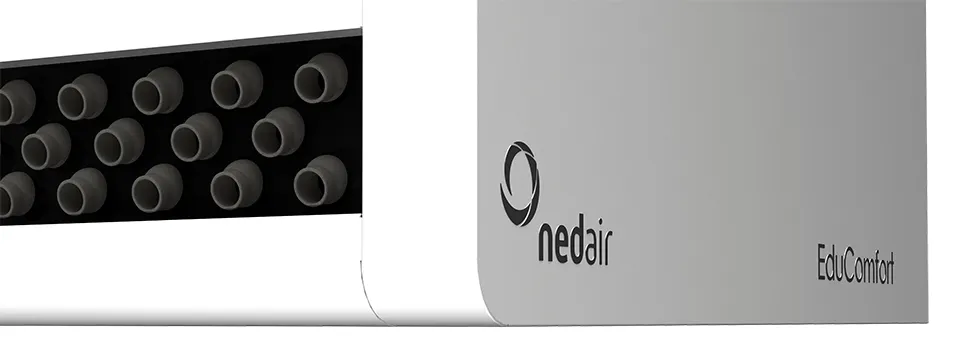
Production at Ned Air is running at full capacity. The decentralised Ned Air EduComfort 1000 has been upgraded so that it can be fully serviced without having to remove the unit from the ceiling. “It’s an even stronger contender for schools,” Wijma stresses. “With a maximum noise level of 33 dB(A), it’s one of the quietest units on the market. It is made to German standards and suitable for Frisse Scholen Class B. We are also working to bring the Ned Air EduComfort 675 to market. The first units have been sold and will be delivered this summer. For buildings completed before 1 April 2012, it’s an excellent solution for achieving Frisse Scholen Class C. The 675 is also suitable for special education and smaller classrooms. We already have more than a hundred enquiries from Belgium, which is not surprising, since the requirements for schools in Belgium and Germany are lower than here. So I expect exports to be a major opportunity.”
Using less
The difference in capacity is an interesting question in its own right. Wijma concludes: “We are involved in a study with TU Eindhoven and other market players that is examining the value of having high extraction capacity in classrooms. Why extract 950 cubic metres per hour when a smarter approach might mean you can make do with 600 cubic metres per hour? That would not only reduce noise levels, but could also significantly cut the investment schools need to make in a healthy learning environment. We’re very interested to see what the study comes up with.”
Een zakelijke vraag aan Ned Air? Get in touch
Companies in this story
Keep following this
Get an email when a new story is published. No account needed.
- SubjectHVAC
- CompanyNed Air