The building envelope as a key component in timber frame and modular construction
Text Lieke BousemaImage Etex Building Performance
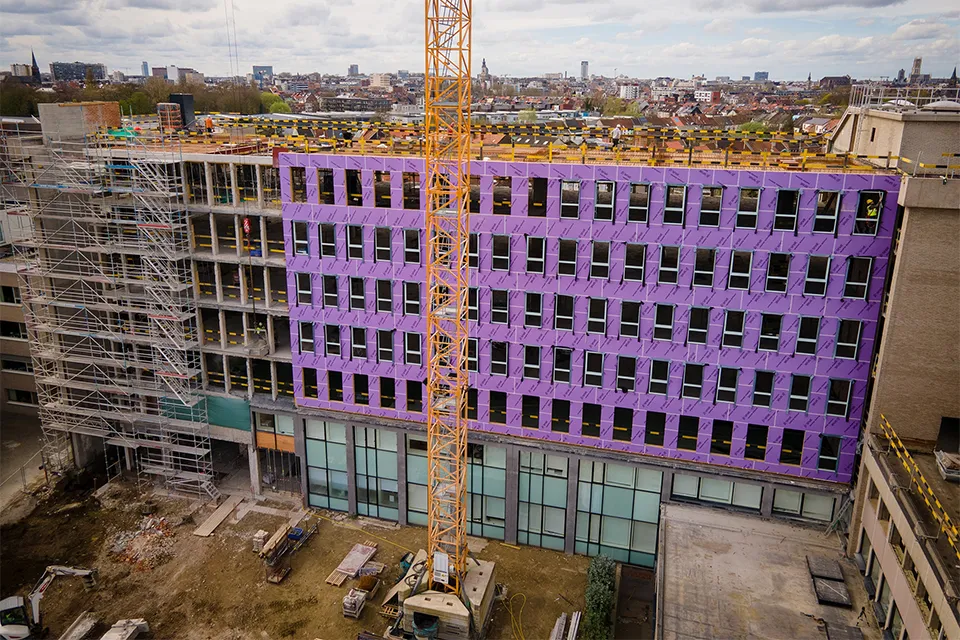
Efficient construction without compromising safety and sustainability
In timber frame and modular construction, the building envelope presents a complex challenge: as well as protecting against the weather, it must also contribute to high energy performance and excellent fire safety, efficient construction logistics and high levels of sustainability. With Weather Defence, Etex Building Performance offers a high-quality façade solution that fits seamlessly with these construction methods.
Weather Defence forms a robust, airtight and watertight outer layer that provides lasting protection for the underlying structure during and after construction. At the same time, it supports efficient off-site manufacture and rapid installation on site, speeding up construction processes and reducing the risk of defects. Combining technical performance, fire safety, design flexibility and low weight, Weather Defence is ideally suited to both modular housing concepts and large-scale timber frame projects. The system therefore makes an important contribution to future-proof buildings in which speed, comfort, circularity and sustainability go hand in hand.
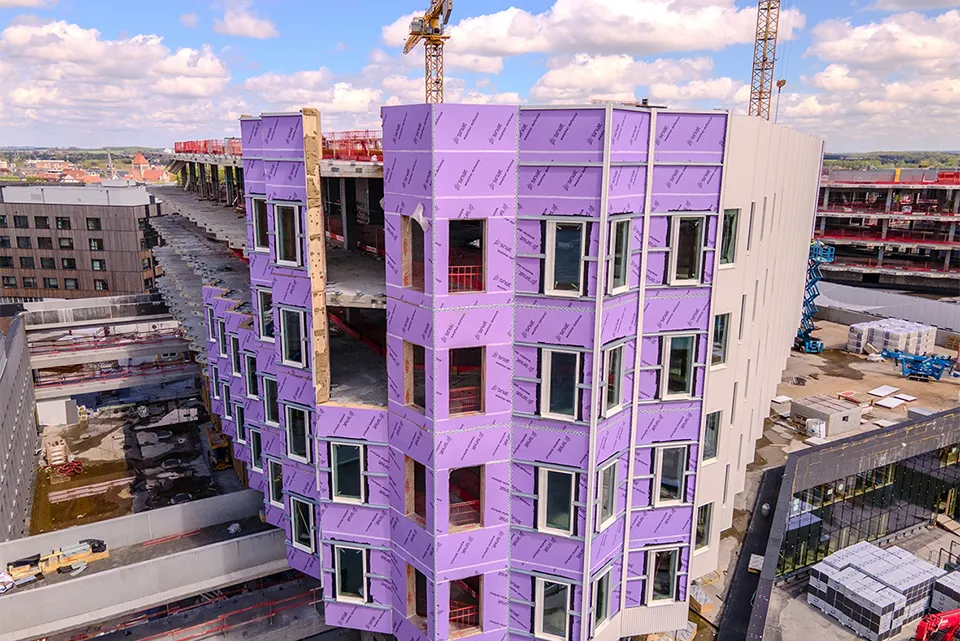
Building without risk
“In timber frame and modular construction, it is essential to make façades carefully airtight and watertight to prevent moisture problems, heat loss, condensation and damage to the structure,” says Tim De Lamper, Technical Specialist at Etex Building Performance. “Weather Defence is ideally suited to this and is vapour-permeable, which means the system allows moisture from inside to escape. This effectively prevents moisture building up in the structure, as well as mould and wood rot, while also protecting against rain and wind from outside.” Buildings in 2026 also need to operate efficiently and use energy sparingly. “Weather Defence is inherently much more sustainable than conventional cavity boards, and its exceptional fire protection performance allows for a wider choice of insulation materials. The system also excels in fire safety, making it a perfect fit for the requirements of modern, sustainable building concepts.”
Simplicity as the starting point
Keep it simple. Simplicity was the starting point in the development of Weather Defence. “The system offers major benefits for designers, modular builders and joinery manufacturers,” De Lamper summarises. “Its high reaction to fire classification (A1) and successful EI and R/EI tests give designers maximum freedom to choose insulation materials and façade finishes, while providing maximum protection for the underlying structure. Weather Defence is also very easy for modular builders and joinery manufacturers to work with. The system can simply be screwed, stapled or nailed to the façade. Since its core is made of plasterboard, it can also be easily cut to size, including on CNC machines for 2D prefabrication projects. Even curved façades are no problem with Weather Defence. Its low weight also contributes to excellent ergonomics on the shop floor.”
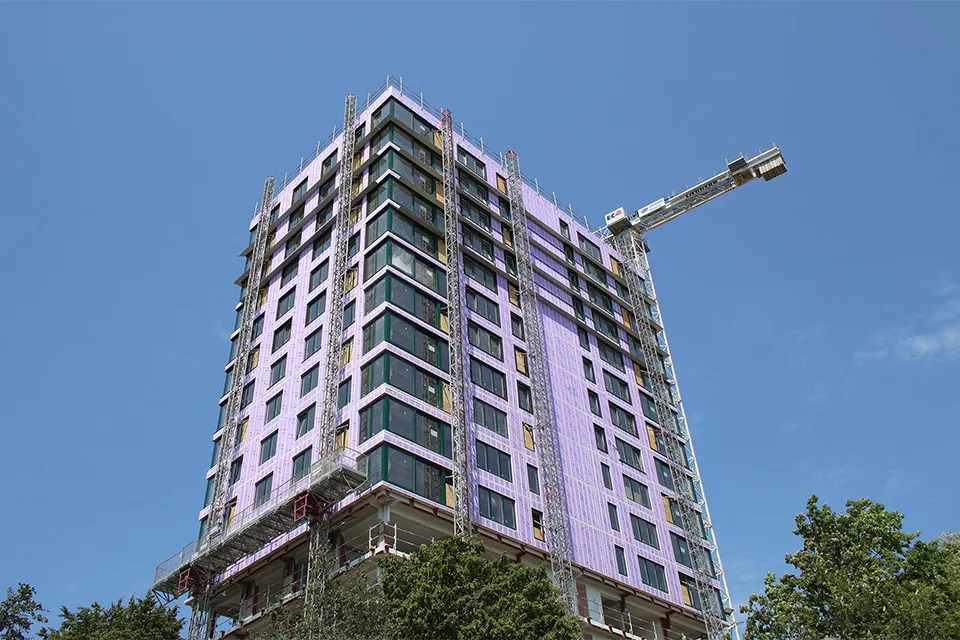
Excellent airtightness and watertightness
A plasterboard used outdoors. That might sound like the start of a disaster, but nothing could be further from the truth, De Lamper stresses. “Weather Defence performs exceptionally well in terms of airtightness and watertightness. We have carried out numerous tests to support this. We can also draw on more than ten years of experience with projects, in Belgium, England and Germany, and recently in the Netherlands too. Once contractors have worked with it, they generally do not want to use anything else. The system can be exposed to all weather conditions for up to twelve months without any problems, from sunshine to rain, hail and snow. This is useful, for example, on high-rise projects, hospitals and other large-scale developments, as well as in prefabricated family homes where installing the façade finish can take several months.”
Sustainable and energy-efficient
Sustainability and energy efficiency are also key advantages. “Weather Defence helps buildings achieve excellent airtightness,” says De Lamper. “What’s more, the plasterboard core can be easily recycled after dismantling.” The board’s glass fibre outer face also contributes to the system’s strength and durability, helping to reinforce it against mechanical loads and weather conditions during construction.
Weather Defence therefore combines efficiency with reliability. The system enables fast, straightforward installation without construction risks or any compromise in performance. Its airtight and watertight, vapour-permeable design and robust material construction create a dependable envelope that speeds up construction processes and reduces the risk of defects, while maintaining sustainability and fire safety.
Question about this story? Ask your question
Keep following this
Get an email when a new story is published. No account needed.
- SubjectFaçades, roofs & roof gardens