‘Embedding safety in procurement’
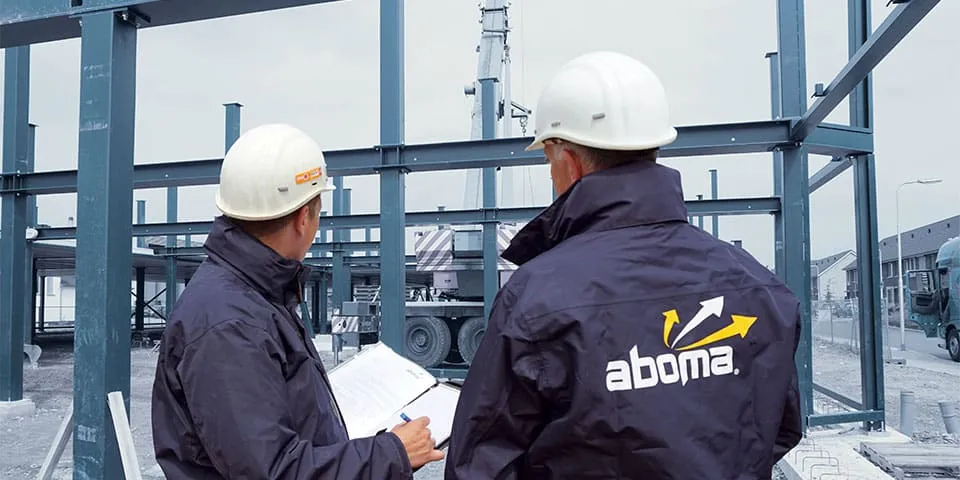
From 2021, clients who have signed the Governance Code for Safety in Construction will make safety awareness a requirement in procurement and contracts, and the Safety Culture Ladder will be used to make the safety awareness of the parties involved measurable, transparent and comparable. To this end, both clients and contractors will be required to obtain certification. Aboma provides support with advisory and certification processes.
Signatories to the Governance Code for Safety in Construction, including the Rijksvastgoedbedrijf as a leading proponent, commit to achieving at least level 2 of the Safety Culture Ladder. These companies ‘have a habit of changing things after something has gone wrong’ and take a reactive approach to safety issues. A feasible step, albeit ‘not very ambitious’, say Pieter Visser of Aboma Advies and Wouter Riel of Aboma Certificering. “The Safety Culture Ladder was originally initiated by large companies to measure their own level of safety; NEN took over the system,” says Visser. “From 2021, signatories to the Governance Code will integrate the Ladder into the procurement process, making it a minimum requirement for all project parties in the tender documents.”
Aboma provides advice and certification for these processes, including Safety Culture Ladder verification at various levels. Riel says: “These are fundamentally different processes from ISO or VCA certification. The audits focus on the perspective of the people on the shop floor; paperwork and management scope are not the ultimate goal. The Safety Culture Ladder is about safety in practice, and about communication processes, with questions such as: ‘Can you raise a problem with your client or manager?’ and ‘Does management provide you with sufficient support on safety?’.”
‘Achievable levels’
Visser says: “It is important to note that Aboma can both advise and certify in this area, but these are separate processes.” Sometimes further steps are needed, with actual implementation of the requirement as the starting point. “These might include training or appointing an operational safety specialist who acts as a safety coach among employees, but it must not be just a piece of paper. The signatories to the Governance Code are committed to bringing construction projects to a successful conclusion together. We are deeply involved in the construction company’s culture. For every project, the company effectively organises itself as if the procurement process were a recruitment process based on shared principles, with safety as an essential component. We see the sector increasingly committing to this, including clients.”
The implementation date of the Governance Code, 1 January 2021, coincides with that of the Building Quality Assurance Act (Wkb), but this is a coincidence, says Visser. “The Wkb concerns liability for the completed building; the Governance Code ensures that construction parties provide a safe working environment. This applies not only to large contractors working on large projects, but also to SMEs on small projects.” Riel says: “The Safety Culture Ladder has five levels. At the highest, employees reach a level of critical awareness at which they take the initiative to work safely and prevent problems. The Governance Code calls for at least level 2, preferably level 3; these are achievable levels.”
Question about this story? Ask your question
Keep following this
Get an email when a new story is published. No account needed.
- SubjectGeneral