










Frankfurt’s Phoenix-Haus gets new Warema external venetian blinds with wireless control
Smart upgrade with automated solar shading
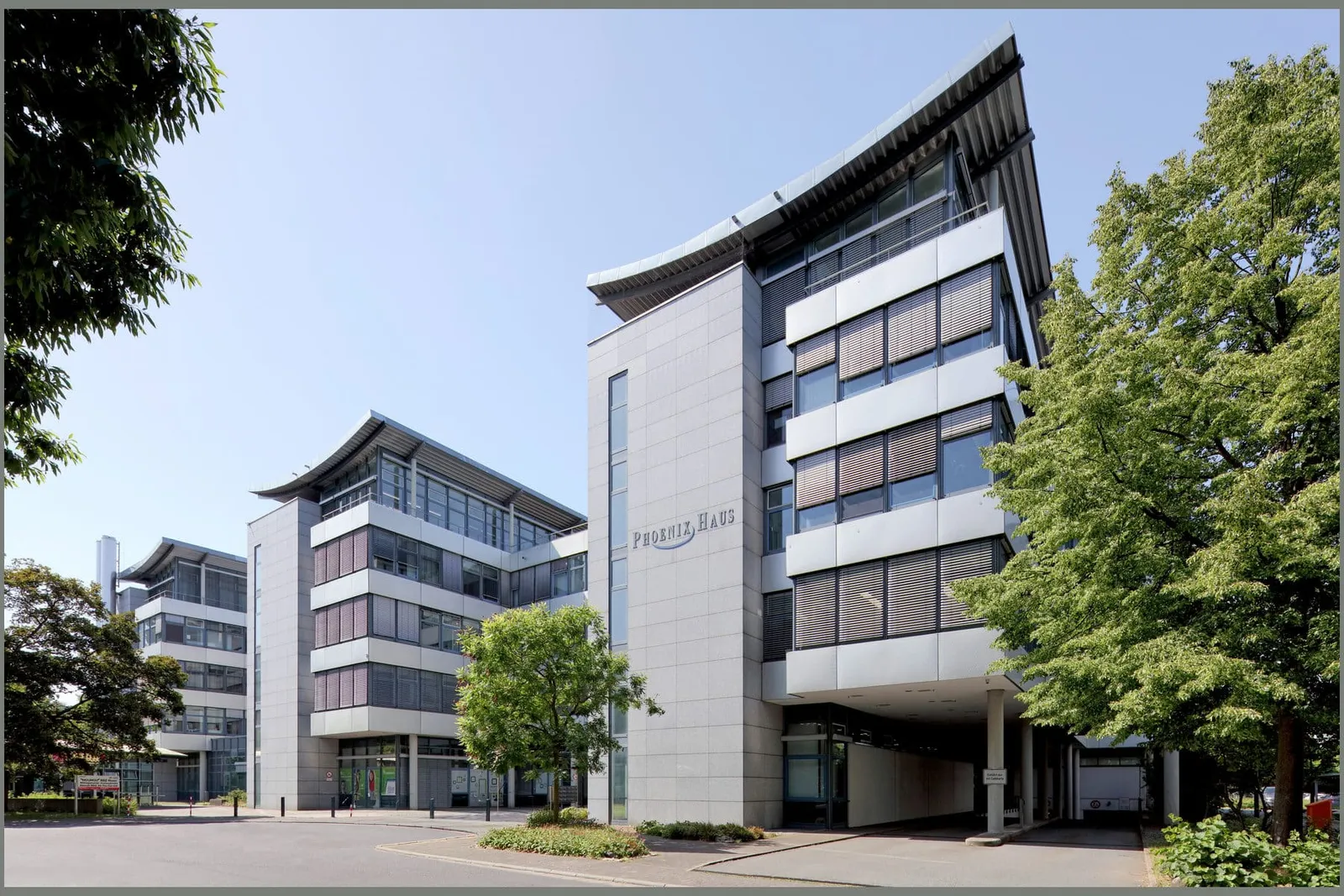
The Phoenix-Haus office complex in Frankfurt underwent extensive renovation in 2025. A key part of the project was replacing the previously manual external venetian blinds while the office spaces remained in continuous use. Warema’s automated solar shading solution is equipped with the WMS wireless system.
The five-storey complex, built in 1997 at Berner Straße 119 in the Nieder-Eschbach district, was outdated and needed energy-efficiency upgrades and improved user comfort. At the initiative of the new main tenant, the owner decided to renovate three floors initially. Building services were modernised on the ground floor, first floor and fourth floor, and more flexible layouts were created, providing a future-proof working environment. At the same time as the interior renovation, the roof needed to be made more energy efficient and the existing external solar shading replaced. Matthias Angermeier of Objektausstattungen Walter G. Angermeier GmbH in Dieburg, which was responsible for the planning and installation, describes the requirements as follows: “The new solar shading had to improve user comfort and protection against summer heat, while also being cost-effective to install during normal use of the building. We needed to avoid making changes to the existing façade structure, and a central solar shading control system was not required.”
Comfortable, wirelessly controlled solar shading, installed while offices remained in use
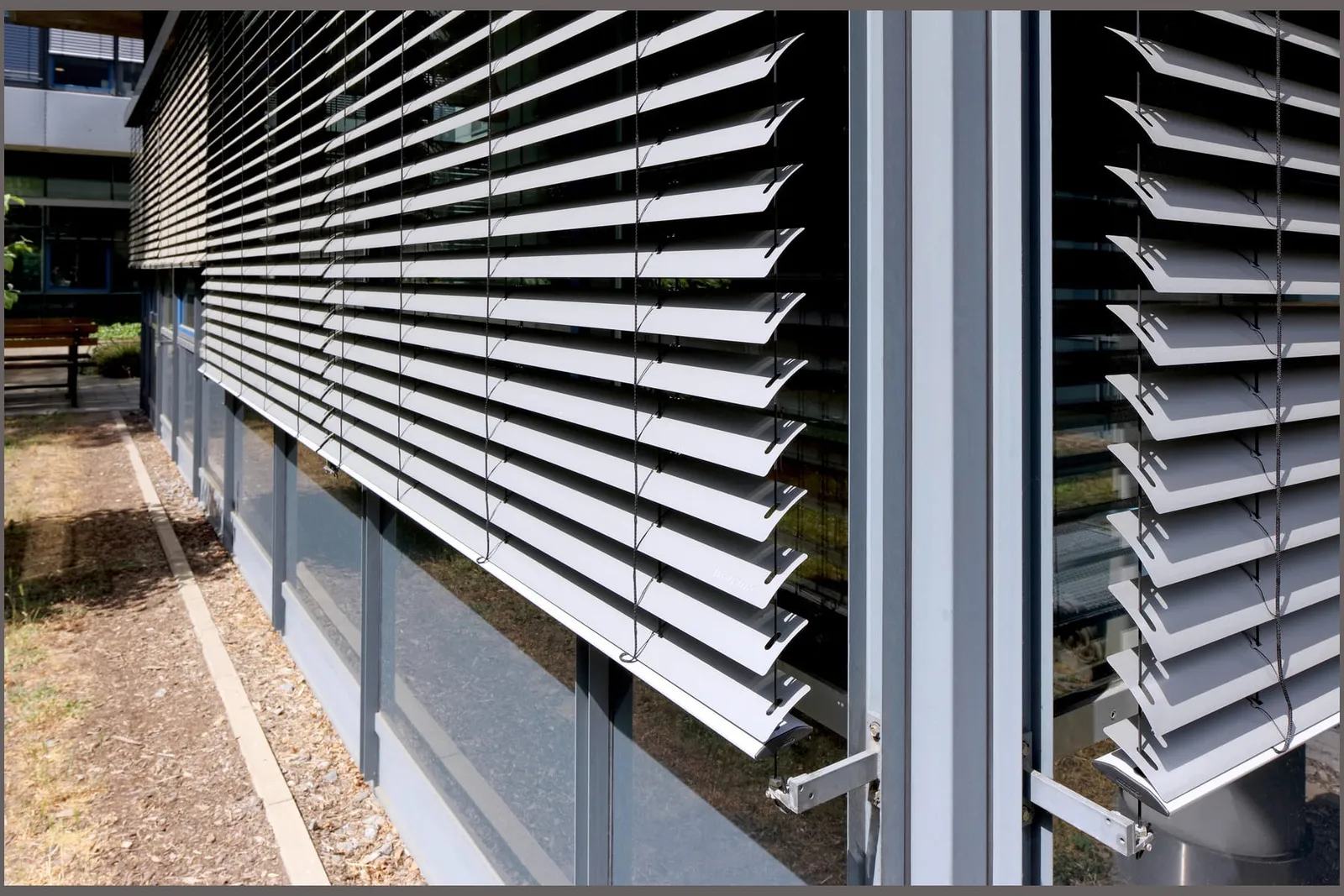
The project replaced the nearly 30-year-old external venetian blinds, previously operated by crank rods, with new Warema basic external venetian blinds with flat slats and cable guides, now motorised and fitted with intelligent WMS control. The advantage: the blinds are operated entirely wirelessly, avoiding the need for complex cabling on the façade and in the office spaces. The wireless signal receivers, the WMS plug-in adapters, are connected to the respective motors and communicate via the WMS mesh network with WMS wall transmitters, discreetly installed in the office spaces. The control system can also be expanded in future with mobile WMS hand-held transmitters or individual scene control. This provides additional flexibility, for example if room layouts change or tenants move out. Matthias Angermeier explains: “For correct installation, all that was needed was a power supply to the motors and the weather-resistant WMS plug-in adapters. This was routed along the façade through existing service ducts. This meant there was no need for drilling or structural alterations to the existing building.” The electrical connection was carried out by a certified electrical contractor, while commissioning and pairing of the WMS wireless system were handled directly by Warema’s technical service team in consultation with Matthias Angermeier.
Greater ease of use and protection against summer heat
The WMS wireless system also enables smart automated functions. The integrated sun automation adjusts the external venetian blinds automatically according to the position of the sun and light intensity. This helps with thermal insulation in summer and reduces heat entering the interior spaces. In addition, WMS weather stations plus on all sides of the façade protect the external solar shading. The installed sensors record meteorological data such as wind speed and solar radiation, and transmit it regularly via the mesh network to the wireless signal receivers. As soon as wind speed reaches a critical level, the external venetian blinds are raised automatically. This ensures safety and protects the system. “Wireless WMS offers major advantages, particularly when renovating an existing building such as the Phoenix-Haus: no work in newly renovated interior spaces, flexibility for future changes in use and a noticeable improvement in user comfort,” explains Matthias Angermeier. “Smart automation controls the solar shading independently and thus supports the building’s energy management, without requiring users to intervene manually.”
Smart technology for smart renovations
The successful solar shading upgrade at the Phoenix-Haus shows that modern, automated solutions can also be installed in existing buildings with limited structural work. A smart solution such as the WMS wireless system combines demand-based control, ease of use and flexibility when retrofitting existing installations. An extension to the remaining floors of the building is already being considered and is possible thanks to the system’s modular design.
Question about this story? Ask your question
Who worked on it
Phoenix-Haus in Frankfurt, renovation
- the automated solar shading solutionWarema
Keep following this
Get an email when a new story is published. No account needed.
- ProjectPhoenix-Haus
- SubjectGeneral
- CompanyWarema