How can cities achieve climate-friendly mobility?
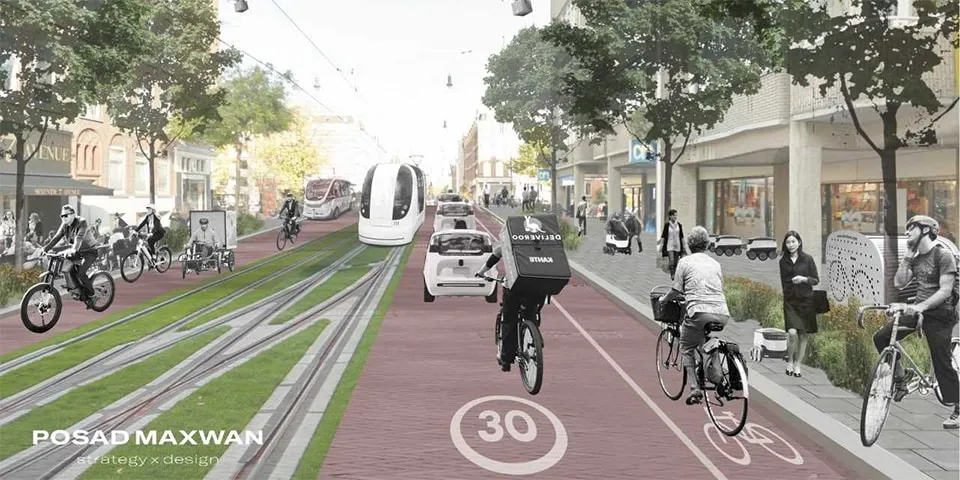
Many European cities have ambitious long-term goals to reduce CO2 emissions from mobility. But how these goals can actually be achieved is less clear. The 2050 CliMobCity project examines which packages of measures can deliver the desired reduction quickly enough. The packages relate to the project’s partner cities. They must also promote the efficient use of land.
Cities have increasingly come to recognise that certain activities in their area generate significant CO2 emissions and air pollution, with mobility accounting for a large share. Many municipalities are therefore addressing the sustainability of mobility in their policies and policy plans. However, cities’ climate targets are often highly ambitious: for example, becoming climate-neutral by 2050, and sometimes earlier. They are “ambitious” in light of the current rate of CO2 reduction. Municipalities have often not sufficiently assessed whether their proposed policies will actually put them on track to meet their long-term targets.
The 2050 Climate-friendly Mobility in Cities project (2050 CliMobCity, https://www.interregeurope.eu/2050climobcity/) uses backcasting to explore the major challenge of how cities can achieve their climate targets for mobility. This approach is being applied in five European cities: Almeria, Bydgoszcz, Leipzig, Plymouth and Thessaloniki.
Each of these cities defines packages of measures. The project assesses whether they will deliver the desired CO2 reduction. These include not only mobility measures that encourage a modal shift and cleaner, better technology, such as electrification and automation, but also spatial interventions, such as densification and mixed-use development, which promote climate-friendly mobility. When drawing up the packages of measures, the effectiveness and efficiency of the measures are both taken into consideration.
The project is funded by the Interreg Europe programme. It officially began in August 2019 and runs for 4 years. In addition to the cities already mentioned, two research institutions are taking part. The Potsdam Institute for Climate Impact Research is primarily responsible for the emissions calculations. TU Delft contributes expertise in mobility and urban development modelling and policy, and also coordinates the project.
Question about this story? Ask your question
Keep following this
Get an email when a new story is published. No account needed.
- SubjectGeneral