









‘Let construction practice be the guiding principle’
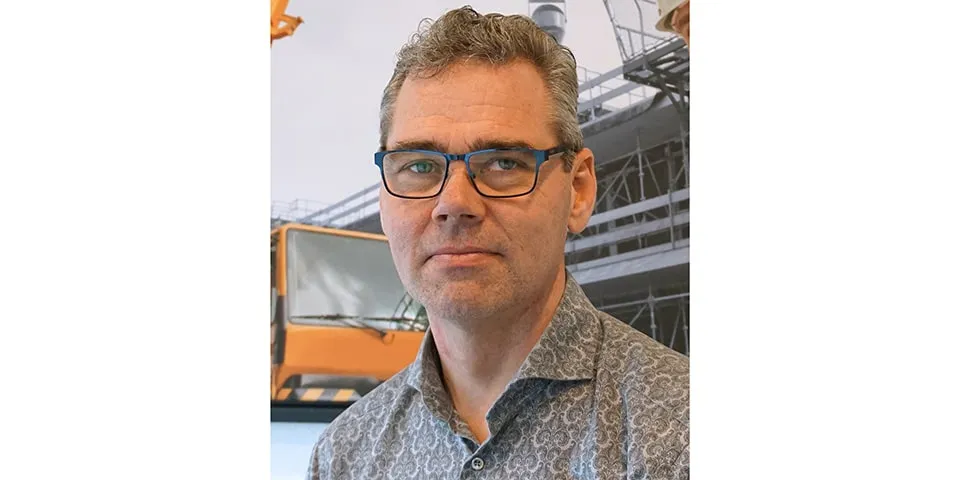
Construction safety calls for a proactive role from project stakeholders, who are more than capable of taking on this responsibility. Yet calls for an independent safety coordinator are growing louder: Minister Ollongren (Ministry of the Interior and Kingdom Relations) even wants this to be made a requirement, in response to findings by the Dutch Safety Board following recent construction accidents. “Aboma has the knowledge and expertise to provide effective support for construction safety processes, based on an understanding of every point of view,” says Pieter Visser, general manager of Consultancy.
‘I am amending the building regulations to designate a single central party responsible for safety in the surrounding area, in line with occupational safety’, Ollongren wrote in a letter to the House of Representatives last September. That has not happened yet. Visser says: “Let me start by saying that things need to be properly organised, but there are pitfalls to this approach.” Aboma Advies has always kept its feet firmly on the ground, and that is where the solution lies too, says Visser. “Every project is unique in terms of location, contracting arrangements and the parties working together, so a bespoke approach to safety is always needed. Construction processes often prove complex. There is much more regulation in place than you might think from media reports, and by the time the finished project is standing, everyone is generally satisfied. Yet something often causes friction in construction processes: who is in charge of safety?”
Environmental manager
Let practice be the guiding principle, says Visser. Raise this point at a construction meeting and contractors, designers and clients will nod in agreement. “There are already many good initiatives, but what authority does an environmental manager have, for example, who do they report to, and are they involved at every stage? We believe that all stakeholders, including the municipality, should make binding agreements on construction safety at the outset of the process. If they do not, a party that is challenged will dig in its heels or adopt a formal stance. Construction partners can often achieve more by working together than they think, but they have to step up and play their part. That applies to everyone, from the client to the supplier. This can be difficult, because not everyone is at the table before the tender. But bring them in as soon as possible, in line with what was agreed beforehand.”
Construction safety plan
This could cover leaving the site in a safe condition or fencing off the construction site to ensure safety in the surrounding area. “We can put all of this on paper, but it also has to be properly organised in practice. Aboma Advies can provide support, whether commissioned by the contractor or the client, for example with risk analyses and a project-specific construction safety plan.” The latter is required in every case. And what about the safety coordinator the minister wants? “The stakeholders can decide together who this is and which party they work for, with practice as the guiding principle,” says Visser. “However, safety coordination is a complex role covering every aspect of safety: the surrounding area, temporary structures, traffic, occupational health and safety, and social safety. These aspects cannot be considered in isolation, and the safety coordinator must be able to stand above all parties, because the measures required may conflict with stakeholders’ interests.”
Question about this story? Ask your question
Keep following this
Get an email when a new story is published. No account needed.
- SubjectGeneral