







NO ROOF TO WASTE
Text Lieke van ZuilekomPhotography Derbigum
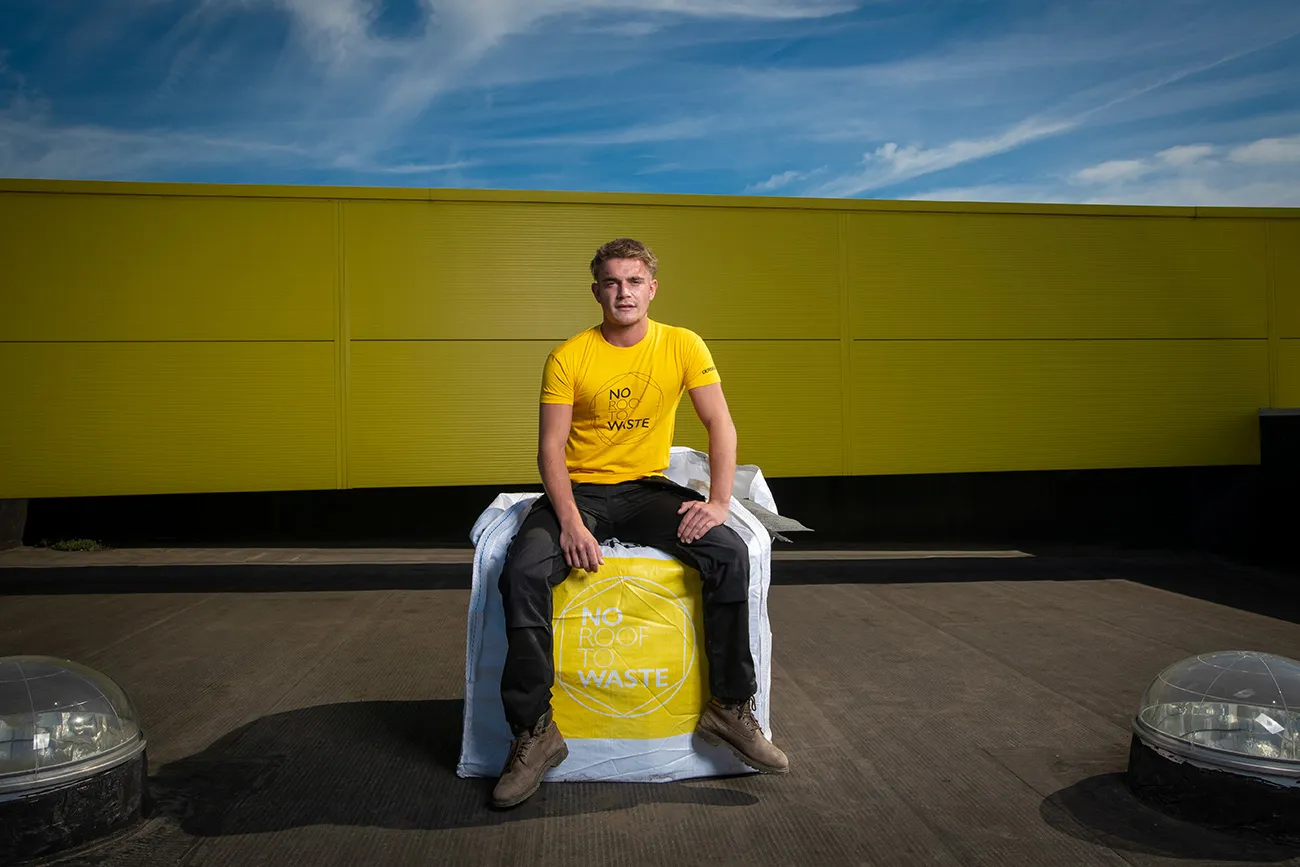
A substantial reduction in CO2 emissions, high-quality use of recycled content, a long service life, minimal maintenance costs and a considerable reduction in indoor temperatures: our roofs are expected to meet ever-higher standards. Derbigum is keen to meet these demands. “The simplest way to reduce our environmental footprint is to maximise the service life of our products,” says Atze Walsweer, Technical Manager at Derbigum. “But also by actively collecting bitumen and recycling it into new raw material, in line with our ‘No Roof To Waste’ philosophy. Following on from our Derbigum NT bituminous cap sheet and Derbicoat NT underlay, which contain 25-30% recycled content and can be 100% recycled at the end of their service life, our Derbigum NT root-resistant roofing and Derbicolor NT roofing membrane are a perfect fit too.”
Bituminous roofing specialist expands its circular range
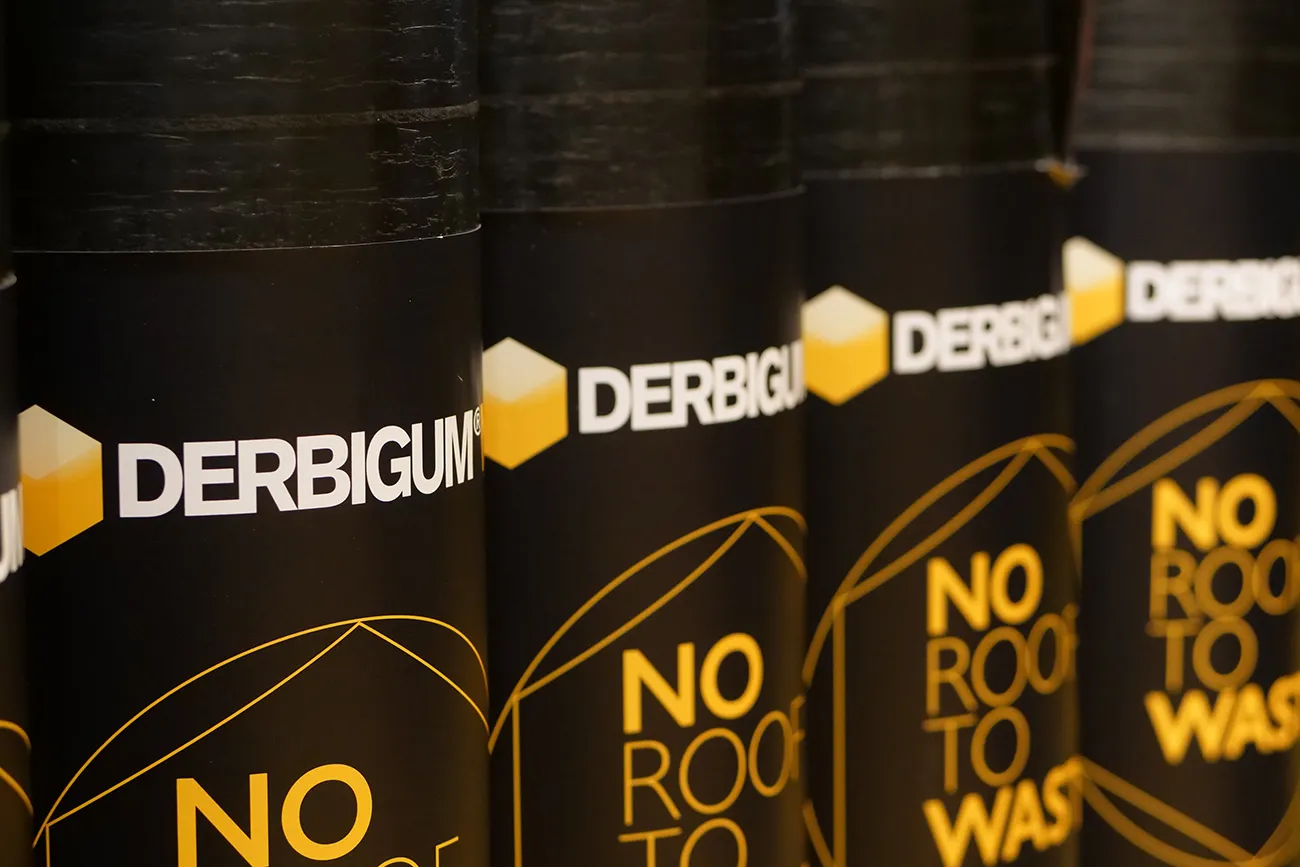
Derbigum specialises in bituminous roofing for flat roofs. “At first glance, bitumen and ecology may seem to have little in common, but there is a connection,” says Walsweer. “Although bitumen is a petroleum-based product, it is the most environmentally friendly solution for waterproofing flat roofs. Derbigum roofing membranes have a proven service life of more than 40 years. After that, they can easily be overlaid with an additional Derbigum NT bituminous cap sheet, giving them at least another 40 years of reliable service. At the end of this long service life, Derbigum roofing membranes can be recycled in their entirety, with 100% of the material turned into a high-quality raw material for new roofing membranes: Derbitumen.”
High-quality secondary raw material
Derbitumen is recovered from various residual and waste streams, explains Walsweer. “Alongside production waste and offcuts, which we collect from our approved processors in Derbigum big bags, suitable roofing from demolition projects is also collected. All residual and waste streams are carefully processed at our recycling plant in Perwez, Belgium, before being reused in our production as a high-quality secondary raw material. One example is Derbigum NT, a bituminous roofing membrane based on New Technologies (NT), but with the trusted Derbigum quality. A recent quality inspection of the very first Derbigum NT roofs, installed from 2007 onwards, found no difference in quality compared with our standard Derbigum SP roofing membranes, either visually or in laboratory tests.”
Take-back guarantee
Derbigum’s factory recycles around 4,000 to 5,000 tonnes of bitumen each year. “Our ambition is to increase this amount to 10,000 tonnes in the future,” says Walsweer. “To ensure we have enough circular content available, we offer a take-back guarantee with every completed Derbigum roof.”
CO2 reduction certificate
By making smart use of new raw materials and reducing the need for their extraction, processing and transport, Derbigum emits considerably less CO2 than other roofing specialists. “We show the exact amount saved for each project in a CO2 reduction certificate. This makes it possible to include the CO2 savings from roofs in, for example, a CO2 reduction programme.” The CO2 reduction calculation has been validated by PWC.
Low shadow cost
Derbigum NT is KOMO- and DuBokeur-certified and is also listed as a Category 1 product in the National Environmental Database (NMD). “With a shadow cost (MKI) of just € 0.54 per m2 per year, Derbigum NT also achieves the best score under the Environmental Performance of Buildings (MPG) assessment,” says Walsweer. “Its environmental impact is minimal, making Derbigum NT highly suitable for new-build projects too.”
Expanding the circular range
The Derbigum NT bituminous cap sheet and Derbicoat NT underlay contain at least 25-30% recycled bitumen. Both products are fully integrated into the sales and installation process for both ‘conventional’ roofs and circular projects, says Walsweer. “In the course of 2023, we will further expand our circular product range. Our Derbigum root-resistant roofing will also be added to the NT range. This roofing, which will contain a significant proportion of recycled bitumen, is suitable for sedum roofs (green roofs) and retention roofs (blue roofs), for example.” In addition, the Derbicolor roofing membrane with mineral finish (slate granules) will now also be produced using a significant proportion of recycled content.
Following Derbigum NT, the Derbigum root-resistant roofing and Derbicolor NT roofing membrane will also be added to the NMD. Derbigum is currently undertaking the Life Cycle Assessment (LCA) process for these products.
A business enquiry for Derbigum Nederland B.V.? Get in touch
Companies in this story
Keep following this
Get an email when a new story is published. No account needed.
- SubjectGeneral
- CompanyDerbigum Nederland B.V.