PODCAST: Modular building without limits: flexibility, comfort and sustainability in one solution
A conversation with Annemiek Glorie and Joris Billen of Algeco
Modular building is no longer just an emergency measure. What was once seen as a temporary setup of containers has now become a fully fledged, high-quality alternative to permanent construction. With state-of-the-art insulation, fire-resistant solutions such as Fire-X, solar panels, ventilation systems and even positive-pressure systems to keep out fine dust, modular building is increasingly shifting towards comfort, sustainability and innovation.
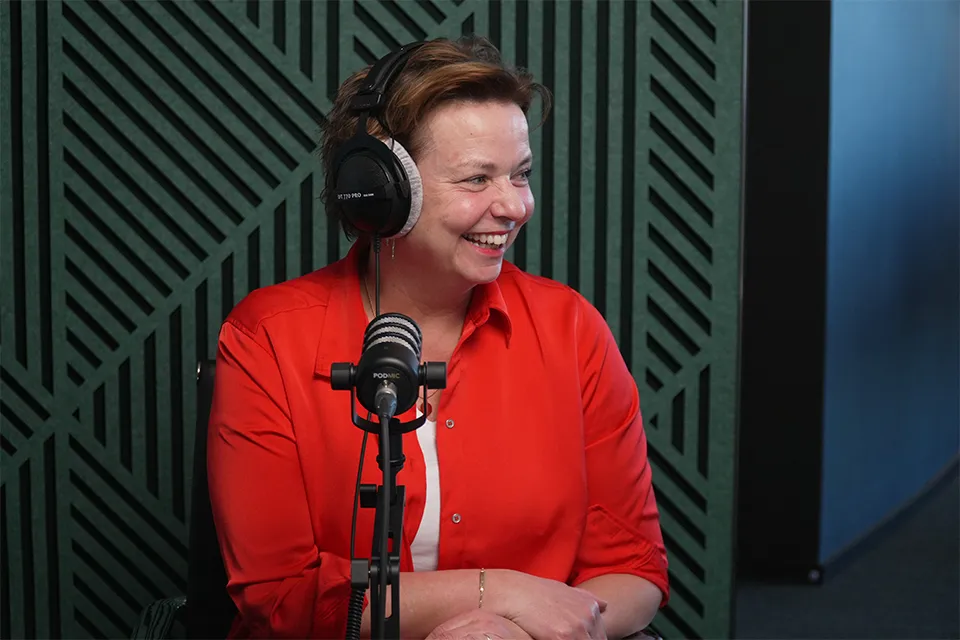
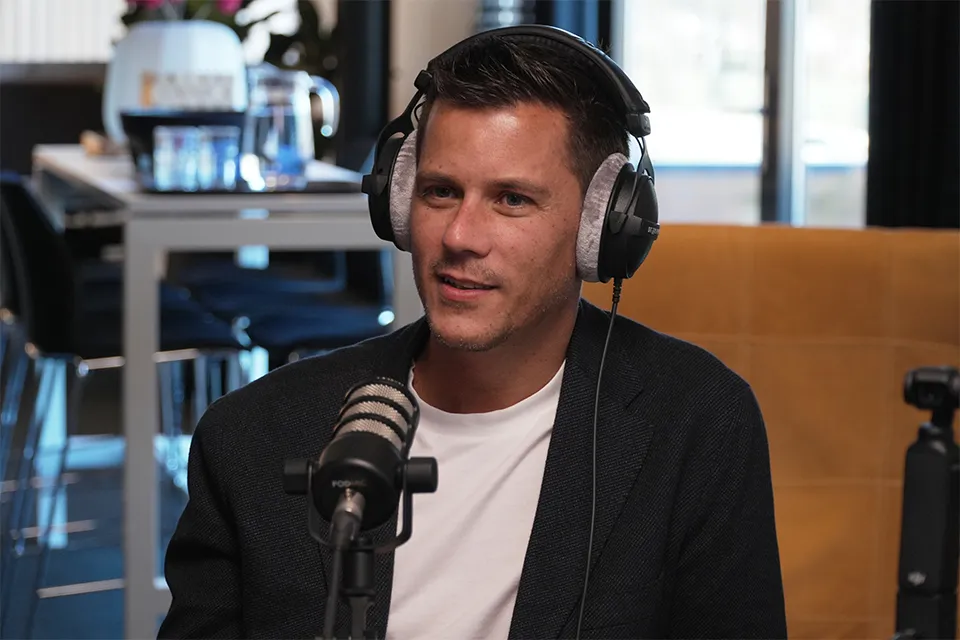
In this episode of Louwers Mediagroep’s GWW podcast, host Roel Van Gils talks to Annemiek Glorie, Regional Brands Manager North at Algeco, and Joris Billen, Lead Technical Office Benelux. Together, they discuss the evolution of modular solutions in the Netherlands and Belgium, the impact of tighter energy regulations, the difference between renting and buying, and how Algeco is focusing on reuse, standardisation and European innovation.
One thing quickly becomes clear: the possibilities offered by modular building are virtually endless. And the future is set to be even more ambitious.
A business enquiry for Algeco? Get in touch
Full transcript
All chapters (21)
- Introduction and guest introductions
- Role and responsibilities at Algeco
- What are modular solutions?
- Is modular building an emergency measure?
- Why is modular building more relevant than ever?
- Misconceptions about modular construction
- Preconceptions about containers and comfort
- Options for rental and purchase units
- When do clients choose to buy or rent?
- Customisation and comfort
- Differences between the Netherlands and Belgium
- Technical differences and regulations
- Projects to be proud of and the development of Fire-X
- Sustainability and standardisation in Europe
- Options and tenders
- Production and service centres
- Site cabins and warehouses
- Looking to the future
- European regulations
- What should listeners remember?
- One Benelux
Introduction and guest introductions
Roel Van Gils Welcome to the Louwers Mediagroep studio in Weert. Today, we’re taking a closer look at the world of modular solutions, with the future of flexible building at the heart of the discussion. Just how flexible is modular building? What are the differences between the Netherlands and Belgium? And why are more and more businesses, schools, care institutions and public authorities choosing this construction method? I’m joined by two special guests who know all there is to know about modular building. Welcome, Annemiek and Joris. Perhaps you could start by introducing yourselves.
Annemiek Glorie Yes, thanks, Roel. My name is Annemiek Glorie. I’ve worked at Algeco for ten years as Regional Brands Manager North. That means I’m responsible for the three branches, both commercially and operationally. I work closely with Joris in that role.
Joris Billen Yes, good afternoon. I’m Joris Billen. I’ve been with Algeco for four years now. I’m responsible for the technical side of the organisation, which means I lead the Technical Office across the Benelux.
Role and responsibilities at Algeco
Roel Van Gils Could you give us an example, or explain exactly what that involves?
Joris Billen What exactly does it involve? We’re actively involved in developing new units, and we also support the sales team wherever possible, by producing drawings and budgets. We also try to come up with ad hoc solutions when we encounter problems at clients’ sites. Our work isn’t just for the commercial team, though. We try to extend our support across the whole organisation, particularly in the area of safety. When safety issues arise, we always try to step in and propose the most appropriate solution we can, so that we can eliminate the risks. Our work also extends to operations and other departments.
Roel Van Gils I see. Very good, and welcome again.
Joris Billen Thank you.
Roel Van Gils But let’s go right back to the beginning. If you had to explain modular solutions and modular units at a birthday party, what would you say?
Read the full transcriptCollapse transcript19 more chapters
What are modular solutions?
Annemiek Glorie I always start by explaining that a modular solution is temporary and flexible. Algeco supplies not only the units, but also partitioning systems and warehouses. I also explain that we’re a global market leader. We operate in 25 countries, and with 180 service centres we can provide flexible accommodation to people in all of them.
Joris Billen I tend to explain it by comparing it to Lego. I always say that we play with big blocks. They’re ready-made offices, classrooms or facilities for care institutions, delivered from the factory. We can use them to create buildings ranging from two units to 200 units. So we can provide the solutions clients need, in terms of size, layout and finish. We can offer all kinds of solutions to serve our clients as well as possible.
Is modular building an emergency measure?
Roel Van Gils So could you see it as an emergency measure?
Joris Billen It can be used as an emergency measure. We’ve seen that recently during a number of crises, such as the COVID and coronavirus crisis in Belgium and the Netherlands, when there was a great need for temporary hospitals, as well as waiting areas for people who needed to be tested. Those were genuine emergency solutions. But I’d also like to point out that we’re increasingly seeing demand from industrial clients and schools that really need more space. For schools, it can still be an emergency measure, but we’re also seeing more and more permanent buildings made from modular units. Industrial clients realise they may grow in the coming years, but still want the flexibility to create more or less space depending on the number of people they employ.
Why is modular building more relevant than ever?
Roel Van Gils Joris, you said it’s more relevant than ever. Why exactly is modular building more relevant than ever?
Annemiek Glorie Because we’re seeing demand for flexibility and temporary solutions growing in both countries, Belgium and the Netherlands. Investment is lagging behind in most of the sectors we operate in. We’re not just talking about construction, but also industry and education. We’re seeing demand in particular because people don’t always invest in permanent premises or accommodation. So we now use the term emergency measure only for crisis situations, such as a fire or COVID. It’s much more a flexible solution, and one that’s becoming increasingly relevant.
Roel Van Gils But it is temporary, isn’t it?
Annemiek Glorie Yes, temporary. Absolutely temporary.
Roel Van Gils Is there a maximum period?
Annemiek Glorie Our definition of temporary ranges from one week to five or ten years. If it’s longer than ten years, we generally call it semi-permanent. Other solutions often come into play as well, rather than just our solutions. But our solutions can certainly be used for more than ten years.
Misconceptions about modular construction
Roel Van Gils But you see other players entering the market once it becomes semi-permanent. What are the biggest misconceptions about modular solutions?
Joris Billen The biggest misconception about modular solutions is that people think they’re cheap. They’re not a low-cost solution, but they do offer other benefits that more than make up for that disadvantage. For example, the time it takes us to install a modular building is much shorter than for a permanent building. We can also guarantee quality more effectively, because modules are assembled in a factory environment, where quality can be controlled much more reliably. It’s also easier to forecast costs. The amount of waste generated when units are manufactured in factories is generally much lower than the amount generated by a permanent building. So the benefits are much greater than the main disadvantage, which is that it can be quite costly.
Annemiek Glorie Another disadvantage is that if you initially put up an emergency building or temporary modular solution thinking you’ll need it for two years, and reserve it for that period, but later find that you need it for four or five years, we might have offered you a different solution.
Roel Van Gils For example, buying instead of renting?
Annemiek Glorie Yes. So that can be another disadvantage.
Preconceptions about containers and comfort
Joris Billen One of the biggest preconceptions we encounter among clients is that we just deal in containers. They’re not containers. Never call a unit a container. The comfort we can currently offer with the solutions we deliver to clients is often on a par with, or certainly better than, that of permanent buildings being put up as an alternative here and there.
Roel Van Gils Yes, that sounds good. Take us inside a modular unit. We’re recording a podcast, of course, but what can you expect? What are the possibilities?
Options for rental and purchase units
Joris Billen The possibilities are endless. There are two main types: rental units and units for sale. With rental units, we’re of course bound by a number of standards we’ve defined in advance. For example, there’s a set number of sanitary units in relation to the number of offices and so on. But when it comes to a building for purchase, we always say: the sky is the limit. We can supply whatever the client wants. We use very good insulation and the latest materials, and pay close attention to the materials’ recyclability at the end of their life cycle. You name it, and we can provide it in our units. That applies to units for purchase, though.
Roel Van Gils Or rental units too?
Joris Billen Both rental and purchase units. I think one of the latest projects we worked on was for a client who wanted a lift in the middle of the building, with a glass staircase leading upstairs.
Roel Van Gils In a modular unit?
Joris Billen In a modular unit. So none of that is a problem. Of course, these solutions are also expensive and not something everyone can afford. They’re not standard products we can offer in every project. So if a client asks for them, we can provide them. But they’re not standard, and it doesn’t happen every day.
Roel Van Gils And was that a purchase or rental solution?
Joris Billen That was a purchase, yes.
When do clients choose to buy or rent?
Roel Van Gils So when do you actually decide to buy?
Joris Billen It tends to make sense to buy mainly when a number of different factors come into play. One of the biggest is what we call capex. This is the same for a lot of clients. If there’s plenty of capex, if there’s a lot of cash or budget available at the start of the project, they often opt to buy. If no capex is available, and many industrial clients depend on parent companies and are in the same position, receiving capex and budgets in small amounts, as Annemiek has just explained, they’re more likely to opt for rental. Why? Because that allows them to spread the investment over a longer period. The term of the agreement is one of the factors that comes into play.
Annemiek Glorie So, for a rental client, if they know it is going to take longer than two and a half years, they could also choose to request a quote for a building to buy.
Roel Van Gils Is it also possible to start with a rental and then eventually switch to buying?
Annemiek Glorie That is possible. It is not something we actively offer, but it is certainly one of the options available within the financing structure.
Joris Billen Within the financing arrangements, including capex and so on, it is also possible to offer a lease arrangement. In other words, the client pays a monthly amount and, at the end of the term, after four, five or six years, they have the option of paying a residual amount, which would make them the owner of the building.
Customisation and comfort
Roel Van Gils You just gave an example of a unit with a luxurious fit-out. So customisation is definitely possible?
Joris Billen Customisation is possible. It is a shame this is a podcast, otherwise we could show you some photos or videos, but the possibilities in modular construction today are extraordinary. Clients very often tell us they are bowled over by the quality and comfort of the modular solutions they get. Something that is very important to me too is making sure we provide that comfort for our clients. I have a background in construction, so I have spent a lot of time in modular units myself. Why is this important? Because people working in those units are often in them for eight, nine or even ten hours a day. In fact, they spend more time in those modular units than they do at home. That is why we focus on providing our clients with solutions that are as comfortable as possible.
Differences between the Netherlands and Belgium
Roel Van Gils What are the main differences between the Dutch and Belgian markets?
Annemiek Glorie I think we have the same types of clients. Both Belgium and the Netherlands have a large events sector, with dance and sporting events in both countries. We also have industry, education and construction in both. I think the differences are mainly to do with the way we work here. The cultural differences are positive, but there are differences in how we approach each other and deal with clients. Looking at the enquiries we receive, we see that in Belgium’s industrial sector, demand currently includes high-specification buildings. In the Netherlands, by contrast, the industrial sector is still at a lower level, and we mainly supply high-end buildings to schools, nurseries and hospitals. I think that is one difference at the moment. We also see a difference in the pharmaceutical industry, which is much larger in Belgium than in the Netherlands.
Roel Van Gils So higher-specification, meaning more comfort?
Annemiek Glorie Yes, more luxurious. Much more luxurious.
Technical differences and regulations
Joris Billen Exactly. But that is more my area. There are also technical differences and differences in regulations between Belgium and the Netherlands. For example, in Belgium we have EPB compliance. This means buildings must meet certain requirements for insulation, renewable energy and so on. The regulations differ between Belgium and the Netherlands. The rules in the Netherlands are a little more relaxed than in Belgium. In Belgium, a building must comply with EPB regulations if it is rented for two years or is on site for two years.
Roel Van Gils So the same rules apply as for a permanent building?
Joris Billen The regulations are the same as for a permanent building. In the Netherlands, that only applies after a period of fifteen years.
Roel Van Gils Fifteen?
Annemiek Glorie Yes. In the Netherlands, we build and install everything in accordance with the Building Decree. We have to comply with that. In addition, for industry, we follow the rules of organisations such as Deltalinqs. So, yes, the regulations are a major difference between the Netherlands and Belgium, and sometimes that is a challenge for us as a company.
Roel Van Gils Are there differences in the fit-out or the insulation requirements too?
Joris Billen We try to use the same standard units as much as possible throughout the Benelux and across the wider region. The only major difference when we transport units from Belgium to the Netherlands is something minor but inconvenient: the sockets. In the Netherlands, sockets have earth clips, while in Belgium they have an earth pin. So the Netherlands is more aligned with Germany, while Belgium follows the regulations in France.
Roel Van Gils So you cannot simply swap them over, then?
Joris Billen No, it is a minor job. It does not take long to change the sockets. I think we have around six or seven sockets per unit, so everything can be replaced in about an hour.
Annemiek Glorie But they do have to be changed, as it is crucial. You do not want to end up with the wrong ones. So electricity is important.
Projects to be proud of and the development of Fire-X
Roel Van Gils Could you share a project you are proud of, or one that makes you think: wow, this really is a flagship project?
Annemiek Glorie Yes, I would like to talk about a project we completed in the Netherlands: a school in Soest. We installed it using a new Fire-X unit. In the Netherlands, and also in Belgium, demand is growing, and requirements are increasingly driving this, for fire resistance and fire safety. We built a two-storey secondary school with a learning commons and classrooms, with high standards of insulation and ventilation. Ventilation, of course, has become a very hot topic since the COVID period.
Roel Van Gils Especially in schools, of course.
Annemiek Glorie Especially in schools, with so many children in a classroom. And we are talking about a temporary building, for two or two and a half years, but it still needs to be comfortable. After all, you have to go there every day. It is really nice to have a good learning environment. This is one of our flagship projects at the moment, and we are very proud of it in the Netherlands.
Roel Van Gils But you must have one in Belgium too, Joris.
Joris Billen I do not have one particular favourite project in Belgium. I think I am most proud of our latest unit, which you have already mentioned: Fire-X. Why? Because it gives us a real asset for the future. It is a unit on which we have put a lot of emphasis on insulation, as well as, and now I am getting technical, thermal breaks in the different elements of the building envelope. We have also focused on acoustics, which is very important, and on modular solutions within our modular units for ventilation, emergency lighting and so on. In that respect, I think all the projects we have delivered so far have received very positive feedback from clients. They see it as a solution they would also like to invest in further in the future. One thing we have added is a modular solar panel package. We can deliver it by truck and install it on the client’s unit. It is a plug-and-play system, which means we can also add renewable energy to these units. That is what I am most proud of from the work we have done over the past few years.
Sustainability and standardisation in Europe
Roel Van Gils That brings us neatly to sustainability and the future. So the unit you just mentioned is really your state-of-the-art, latest development, that solution.
Annemiek Glorie Yes, and this is the unit that will be rolled out worldwide, or at least across Europe. That is a very positive development when you consider sustainability. If we use the same type of unit in all those countries, we can, apart from the electricity, of course, exchange units much more easily, operate much more cost-effectively and therefore be much more sustainable by using them differently. We are also seeing a lot of interest from the market in things like rainwater harvesting and greywater, so that we can move away from the solution we often use now, with clean water tanks and wastewater tanks. If you consider that these have to be filled, topped up and replaced each time, when you could instead use a collection system, the possibilities are endless. Anything you can think of for your home, we can eventually put in a unit. We are already using heat pumps in certain situations, for example. We also have a number of projects at Schiphol at the moment where fine particulates are a concern. There, we use positive-pressure systems in the unit, so we can be absolutely sure that fine particulates stay outside. These are real developments for the future.
Options and tenders
Roel Van Gils So as a client, do you effectively have a menu of options: I want this, this, this and this, and it can all be fitted into the unit?
Joris Billen Yes, that is right. But I should say that clients usually come to us with what they need. They will say: we need offices for seventy people. We need changing rooms for x number of people. And they must meet these requirements. Then we try to work out which of our standard solutions would be the best fit. We look at which of our products are most suitable technically, but also economically. We discuss with the client what is and is not feasible, and then try to offer them the best possible solution. We are certainly seeing sustainability become much more prominent in the specifications issued by different contracting authorities. In many cases, these authorities use different criteria when awarding projects. Increasingly, sustainability or the green credentials of modular units are becoming a deciding factor in the process. So I expect this trend to continue and grow in the future.
Roel Van Gils The green credentials also include reuse, of course, don't they? Are units reused when they come back from a project? Can they be reused one-to-one?
Annemiek Glorie When we’ve completed a project and then collect the units, they come back to one of our service centres. There’s a team there ready to check them. They look at what needs replacing and what can be reused. And what we’ve implemented very successfully in both countries is that, as Joris said at the start, our units are a bit like Lego bricks. We can also mix and match the walls, doors and windows. They can be clicked in and out. We also have what we call a refurbishing line in our service centres. We might say, for example: a wall in a unit is no longer in good condition. Which parts can we reuse? Can we use them again in this way? Units have an average lifespan of thirty years, so we do a lot of maintenance on our products.
Production and service centres
Joris Billen We should bear in mind that after those thirty years, around ninety per cent of all the materials in the unit will actually be recycled. That’s important to know too.
Roel Van Gils Where are they manufactured?
Joris Billen We manufacture them in the Czech Republic, France and Spain.
Annemiek Glorie Those are our own factories. They serve the whole of Europe. But, as I said, we operate in 25 countries. So we’re also present in other countries, but I’m talking about Europe here. Units for the Benelux are also made at those three factories. The factory with availability is chosen, so it works on the basis of time slots.
Roel Van Gils They get to supply them?
Annemiek Glorie Yes, they get to supply them. That’s where we place the order.
Roel Van Gils And do you have service centres in every country, so in the Netherlands and Belgium?
Annemiek Glorie Yes. As I said, there are 180 worldwide. We have two service centres in Belgium and three in the Netherlands. In Belgium, that’s Beringen and Perwez. In the Netherlands, there’s Den Bosch, where the site cabins and warehouses are made and prepared, as well as Beverwijk and Moerdijk, which are also unit branches, just like in Belgium.
Site cabins and warehouses
Roel Van Gils You just mentioned site cabins and warehouses. We’ve mainly been talking about modular units. Could you tell us a bit more about those too?
Annemiek Glorie Yes. In the Netherlands and Belgium, we can offer two other solutions for modular construction and temporary accommodation: wooden buildings ranging from six to twenty-five metres in length, with two or three storeys.
Roel Van Gils The traditional site hut, really.
Annemiek Glorie The traditional site hut people are familiar with. They’re widely used on joint venture construction projects and infrastructure schemes. We also offer warehouses. They’re the kind of buildings known as Romney huts, although that’s a brand name. They’re curved buildings, the sort you see a lot in industry. In the Netherlands, we often refer to the place where Freddy Heineken was held during his kidnapping.
Roel Van Gils Do people in Belgium know about that too?
Annemiek Glorie I think so. No? That was before Joris’s time, I think, Roel. But we offer those warehouses as a solution too.
Looking to the future
Roel Van Gils And just briefly, looking to the future, where will we be in five or ten years?
Joris Billen In five to ten years, I expect regulations on modular construction, and not just modular construction but permanent buildings too, to become even stricter. We’re currently talking about certain U-values for insulation, and those requirements will become much more demanding. The amount of renewable energy required per square metre of building area will increase. So regulations on sustainability and energy will only get stricter. On the other hand, one advantage we have as part of a large group is that innovation and the development of new units never stand still. We’re currently in the final stages of preparing to launch the new Fire-X across Europe. But that doesn’t mean we’re not already working behind the scenes and thinking about what comes next. We’ve launched this product, so what’s the next step? We’re now considering whether to make further improvements to an existing unit or start from scratch and develop a new one, with a longer lifespan in mind or with a focus on what the standards will be in ten years’ time. A working group will soon be set up, bringing together specialists from different countries to discuss and debate what the standards will be in five to ten years. We’ll then get to work on that, with a view to launching a completely new product within two or three years.
Annemiek Glorie And I think there’s another aspect too. Joris has described things from Algeco’s perspective, while from the commercial side, from the customer’s perspective, I see customers inviting us in and us actively seeking collaboration with major construction clients in the Netherlands, for example. We look to the future together, because they also have to meet all kinds of requirements. We also give a lot of thought to the future of accommodation. People leaving school now and wanting to work for large companies, we all want the best possible staff, but of course you also want to work in a really pleasant environment yourself. So we’re working closely with customers at the moment to hear what they want and how they see the future, and then respond to that together.
European regulations
Roel Van Gils Do you also expect laws and regulations to be harmonised at some point?
Joris Billen I do, because we’re seeing more and more coming from Europe. At some point, probably in the next few years, there will be European regulations to govern this. What we’ve also learned from the launch of our previous new unit is that energy, energy efficiency and renewable energy regulations currently differ from one European country to another.
What should listeners remember?
Roel Van Gils If listeners should remember one thing about modular solutions, what would it be?
Annemiek Glorie I think the one thing is that the possibilities are endless. You can have pretty much anything you want in a modular solution, whether it’s a unit, a site cabin or a warehouse.
Roel Van Gils Even in site cabins?
Annemiek Glorie We can do that in site cabins too, and even in warehouses. Anything is possible. That’s what listeners should remember.
Joris Billen What I’d like to emphasise is that modular construction is certainly not the same as the containers we used to talk about. It offers a very high level of comfort and energy efficiency. And, as Annemiek said, we can provide pretty much anything the customer wants. One advantage we have at Algeco is that we consider ourselves a one-stop shop. So even if something isn’t in our range, we’ll go out into the market and try to offer the customer that solution too. It’s a very good alternative to permanent construction for customers who don’t have the budget to buy outright. But it really is nothing like the site containers of the past.
Roel Van Gils And by that you mean things like ventilation systems and solar panels too?
Joris Billen Yes, tables, chairs, televisions, plants.
Annemiek Glorie Acoustic panels, a podcast studio. Really, you name it.
Roel Van Gils And why should people choose Algeco?
Annemiek Glorie I think because we’re the world market leader and have expertise in every area.
Joris Billen And I think we’re simply the best.
Roel Van Gils I couldn’t agree more.
One Benelux
Roel Van Gils And finally, I understand that the Netherlands and Belgium are also coming together. Is that still in the pipeline?
Annemiek Glorie Since 1 January, we’ve been building towards a single Benelux organisation. We see a lot of benefits in that, and ultimately it will enable us to serve customers better. This includes having a technical department and access to a much wider customer base, where we can learn from one another. So yes, we’ve been one Benelux organisation since 1 January.
Roel Van Gils Well, that’s great. Congratulations.
Annemiek Glorie Thank you.
Roel Van Gils And thank you for your input.
Joris Billen Thank you very much as well.
Annemiek Glorie My pleasure.
Companies in this story
Keep following this
Get an email when a new story is published. No account needed.
- SubjectGeneral
- CompanyAlgeco