Safe maintenance under the Working Conditions Decree
Text Roel van GilsImage Aboma
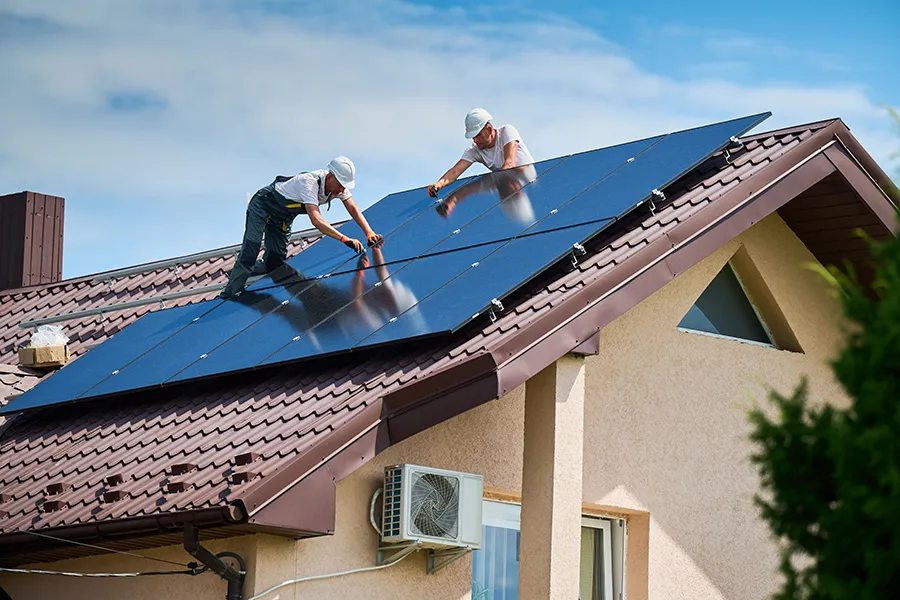
THE ROOF AS A SAFE WORKPLACE
Governments are encouraging the adoption of sustainable technologies in buildings, leading to a growing number of innovations and rooftop applications, such as solar panels, heat pumps and other electrical installations. All these installations must be safe to maintain in accordance with the Working Conditions Decree. Building owners are required to provide a safe workplace, and this applies to the roof too.
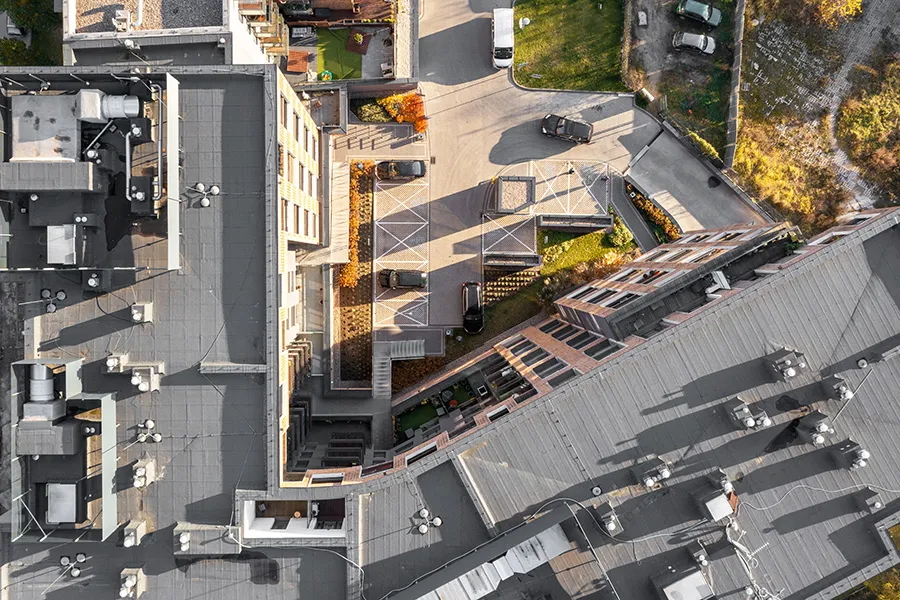
The Working Conditions Decree states that both the design team and the client are responsible for assessing whether a building can be maintained safely. However, the client remains ultimately responsible at all times, says Harry Spies, operations manager at Aboma. “Roofs are increasingly being used as platforms for all kinds of installations, particularly in new-build projects, but people often overlook the fact that these installations must be maintained safely.” Duco Opdam, safety adviser at Aboma, adds: “That is why it is important to consider the roof as a safe workplace from the design stage, rather than waiting until the end to assess what has been designed. By then, it is often a case of learning to deal with disappointment.”
Maintenance file
During the design of a building, a health and safety plan is drawn up, primarily to assess whether the building can be constructed safely, Spies explains. “This is supported by a health and safety file, which describes how the building can be maintained safely. Think of it as the building’s maintenance manual. The design team should initiate it in the first instance, but the client also has a role to play. They must ensure that the design and construction teams comply with the requirements of the Working Conditions Decree.” Opdam adds: “This is often overlooked, especially for houses. People often forget that the heat pump on the pitched roof needs periodic maintenance by an installer. If it cannot be done safely, an installer will not carry out the work. Formally, as a homeowner, you can go back to your client, because under the law they have failed to provide a building that can be maintained safely. The law makes no distinction between houses, apartment blocks with a
VvE or residential towers.”
Hierarchy of control
How can a roof be made a safe workplace? “Under the Working Conditions Act, you follow the hierarchy of control,” says Spies. “In other words, the order in which measures must be taken to ensure that work can be carried out as safely and healthily as possible. This starts with eliminating the hazard at source, thereby removing a risk entirely. So, if possible, install a heat pump in the garden rather than on the roof. If that is not possible, consider collective measures, such as installing a parapet or guardrails. If that is not an option either, you have to use a fall-arrest system.” Opdam adds: “The further down the hierarchy of control you go, the more instruction is required. In the longer term, eliminating hazards at source or using collective measures is often more cost-effective too. There is therefore every reason to prioritise measures as high up the hierarchy of control as possible. All these decisions must be recorded and justified in the health and safety plan and file.”
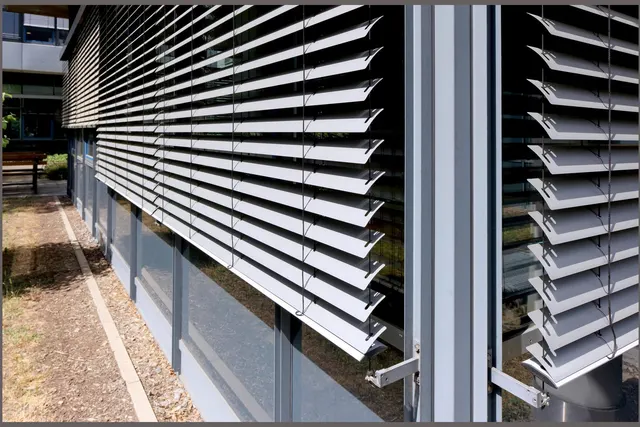
The points outlined above apply not only to new-build projects, but also to major renovation or conversion projects. “At Aboma, we take an integrated approach to building maintenance,” says Spies. “As well as the roof, we also assess whether window cleaning and minor façade maintenance can be carried out safely. Where necessary, we advise on any adjustments. We also provide training on these topics for clients, to update their knowledge of the legal obligations and requirements.”
Question about this story? Ask your question
Companies in this story
Keep following this
Get an email when a new story is published. No account needed.
- SubjectGeneral
- CompanyDuco