Webinar ‘Practical guidance on circular construction’:
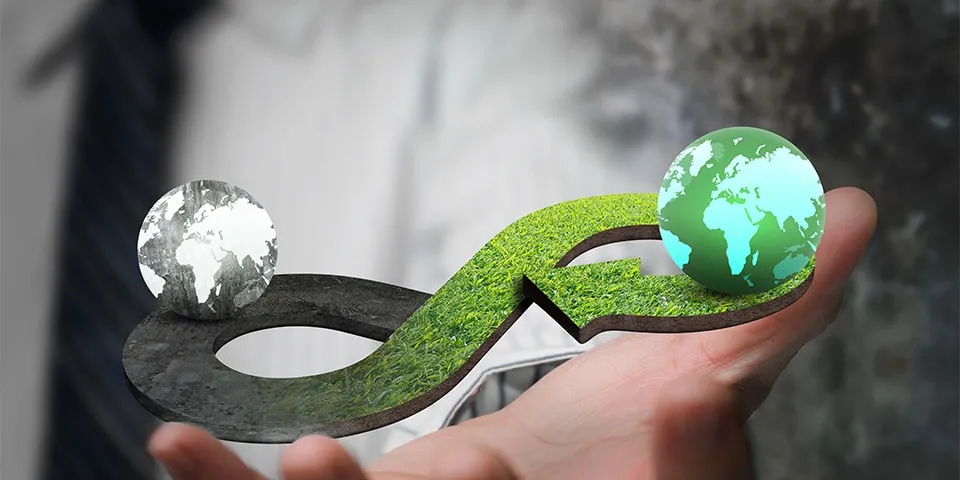
Circular construction is about much more than recycling, reuse and preventing waste. The key is to keep raw materials in the product chain, which requires every party in the construction industry. Manufacturers need to innovate their products, but the entire construction supply chain must ensure that collection and reuse actually happen.
‘The entire construction supply chain is needed for circular construction’
This shared responsibility was a key theme of the webinar ‘Practical guidance on circular construction’, hosted by Eisma Bouwmedia in collaboration with ROCKWOOL®. ROCKWOOL has been using recycled stone wool as a secondary raw material to produce new stone wool for years. This material can be reused indefinitely, but the supply chain must ensure that the stone wool is actually collected. To make this easier, ROCKWOOL has set up the Rockcyle® service with Renewi.
For many players in the construction industry, circularity is still a vague concept, as a poll of webinar viewers revealed. Jacqueline Cramer, Professor of Sustainable Innovation at Utrecht University, clarified the concept with her
10R model. The highest level of circularity is Refuse: not using materials at all. This is followed by Reduce and Redesign. Reduce could mean, for example, eliminating unnecessary materials. In concrete, for instance, less cement could be used than is currently the case. Geopolymers could also replace cement. There are then various ways to reuse materials, such as Repair and Refurbish.
An inexhaustible resource
Hans Spronken, Manager Public Affairs & Technical Support at ROCKWOOL, showed how circular ROCKWOOL is during the webinar. It starts with the raw material, basalt. Every year, the Earth produces 38,000 times more basalt than ROCKWOOL uses to manufacture stone wool. This means the raw material can be considered inexhaustible. ROCKWOOL is also pursuing Reduce, including through its new generation of Rockfit cavity wall slabs, which use 20 per cent fewer raw materials for the same performance. Redesign is another option with Rockzero® Building Systems: ROCKWOOL developed this lightweight building system as an alternative to masonry structural shells.
Developments in structural shells
Esther Donders, Procurement Director at Heijmans, gave an insight into the practices of the construction company, which has made circularity a priority. A number of steps still need to be taken to make homes 100 per cent circular. For the structural shell, this could mean switching to fully circular concrete or changing construction methods. Heijmans is experimenting with a construction project using Rockzero Building Systems in Amersfoort. The company is also making a concerted effort to reduce packaging materials. “Why should we pay for something we didn’t ask for, and then pay to have it removed as well?” Suppliers are now proving quite willing to help minimise packaging.
Business models
To facilitate the reuse of raw materials and other materials, Heijmans has set up the digital platform Matching Materials. Heijmans sees reuse as a clear win-win, rather than incurring the double costs of demolition and disposal, followed by purchasing new materials and raw materials. Donders notes, however, that this challenges the foundations of the construction industry’s current business model, and that companies will need to consider what their future role in it will be.
The webinar ‘Practical guidance on circular construction’ is available to watch again free of charge.
Have a business enquiry for ROCKWOOL? Get in touch
Companies in this story

Keep following this
Get an email when a new story is published. No account needed.
- SubjectGeneral
- CompanyROCKWOOL
- CompanyHeijmans