Our own ‘Decree’ is a necessary step towards more sustainable construction
Text Jan-Kees VerschuurePhotography Ballast Nedam Development

In September, Ballast Nedam Development launched its so-called ‘Decree’, modelled on the Dutch Building Decree. It sets stricter standards for energy, health, mobility, nature-inclusive design, climate resilience and circularity, among other things. The ‘Decree’ also announces that the company will buy only vegetarian food and regards electric driving as the new norm. CEO Onno Dwars says: “As a company, we have to take these steps ourselves to encourage greater cross-pollination across the supply chain, and we feel the market is ready for it.”
Dwars has recently seen positive signs among the players in the construction supply chain around the property developer. “Investors are making good progress in setting higher sustainability requirements, as are many municipalities, such as Amersfoort. But that is not enough: we, as property developers, have to set the standard ourselves. Ballast Nedam Development is guided by a system of values, not the cost model used today. The step we are taking as a company with the ‘Decree’ marks the point at which developers take matters into their own hands, leading rather than following.” The government will no longer set minimum requirements; companies will do so themselves from now on. Dwars says this is both a logical and necessary development. “Only by raising the standards ourselves can we make the world a better place.”
‘Dynamic and challenging’
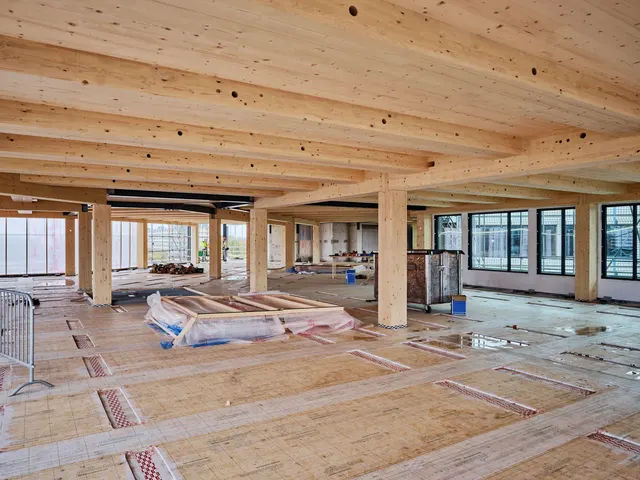
For this reason, the standards in Ballast Nedam Development’s ‘Decree’ are ‘dynamic and challenging’, with new ones added whenever possible. The focus is on energy, health, mobility, nature-inclusive design, climate resilience and circularity. In line with this vision, the company has set measurable internal targets. Ballast Nedam Development will make all ground-level homes eligible for a sustainable mortgage; BENG 2 will be 0 (energy neutral), and the wellbeing of people and animals will be central, as part of one inseparable natural system in which planting and bio-based materials are the norm. For example, Ballast Nedam Development will install nest boxes as standard in ground-level homes, combined with a project-specific package to increase biodiversity, and will fit rain barrels as standard at ground-level homes and sedum roofs on storage sheds.
‘Reducing the footprint of the company’s supply chain’
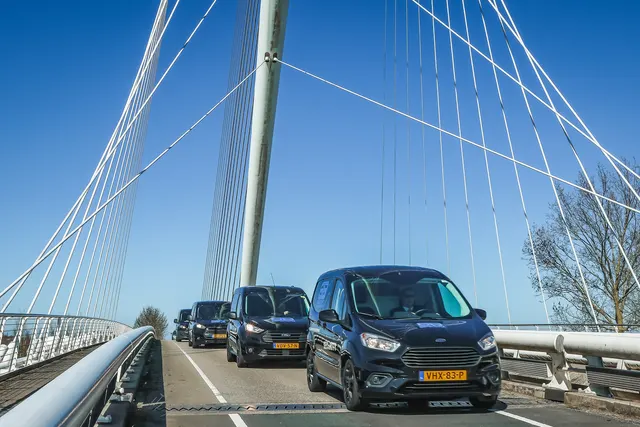
Homes will be manufactured modularly and off-site wherever possible, and the living environment will be designed to encourage active travel. Dwars says: “We provide shared cars as standard for projects with 100 homes or more, and all projects will include charging points for bicycles. We also encourage our own employees to use electric and shared cars, and from now on the company will buy only vegetarian food. These are not just drops in the ocean: reducing Ballast Nedam Development’s footprint will set in motion a wave of sustainability across the entire supply chain. We are working towards a 100% circular world and an MPG (Environmental Performance of Buildings; ed.) of at least 0 in every project we develop, by 2035 at the latest.”
‘Builders need to get on board’
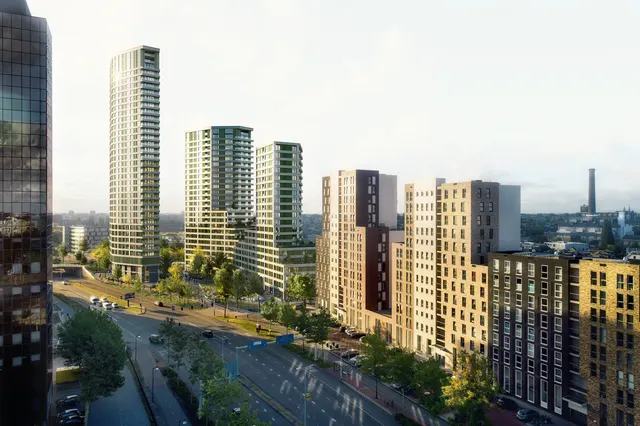
The MPG has a baseline value of 1 and is calculated using a life cycle assessment. “The technology is not the problem: the market is already capable of delivering, and we have an extensive track record. For example, the recently tendered Horizons project in Amsterdam’s Sluisbuurt is being developed with an MPG of 0.25.” There is clearly work to be done across the entire supply chain, from government to contractors. The NOVI should set out the sustainability requirements that exemplar municipalities must apply. Sustainable construction adds value, and that needs to be better reflected in bank financing. Builders simply have to get on board, Dwars says. “At Ballast Nedam Development, we see that the market as a whole is ready, and we are convinced that the ‘Decree’ is the right step.”
Question about this story? Ask your question
Keep following this
Get an email when a new story is published. No account needed.
- SubjectYearbook