Discreetly integrated solar shading prevents overheating in new bank office
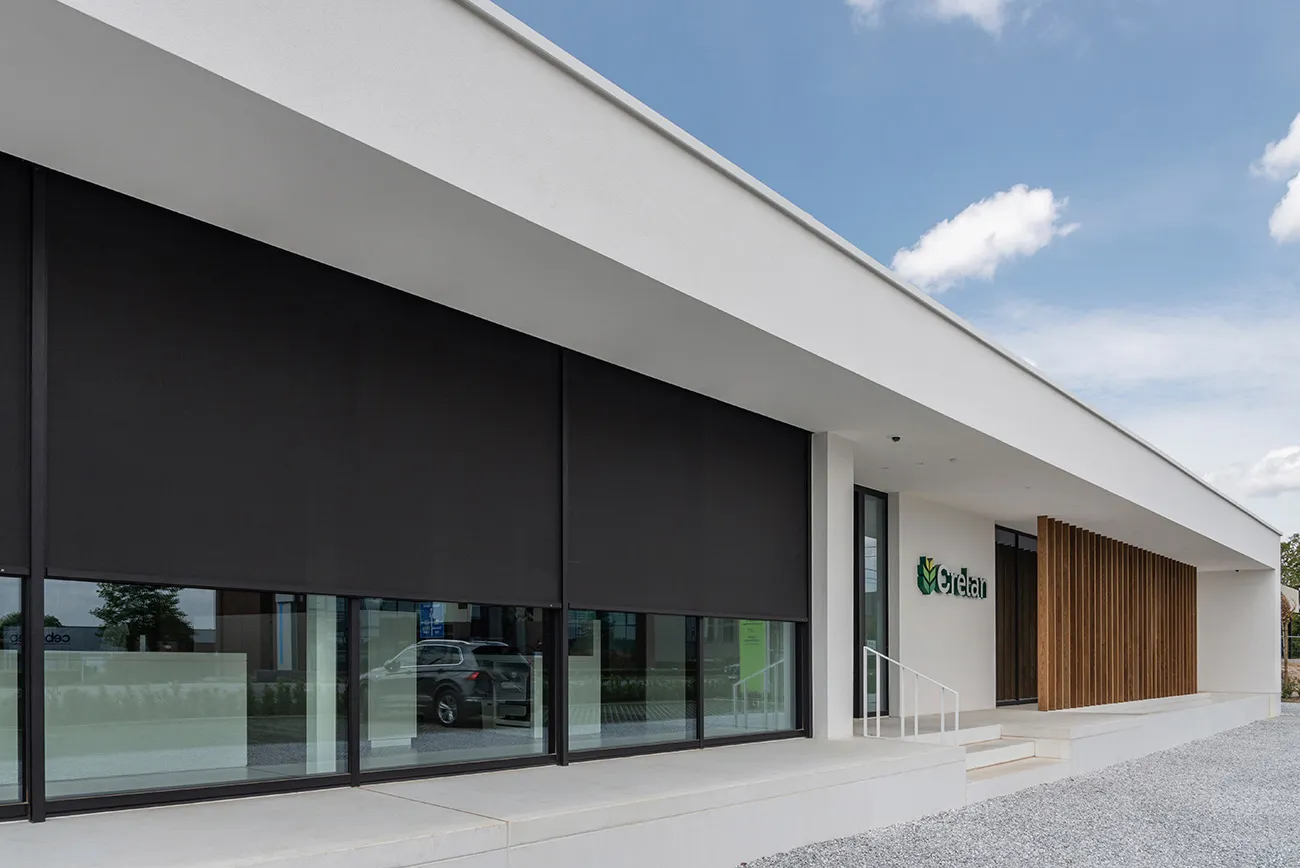
Visibility is crucial for a bank office serving as the new home for two merged Crelan branches in Roeselare. This is further emphasised by Renson’s new Fixscreen Minimal CW50 solar shading, perfectly integrated into the street-facing curtain wall.
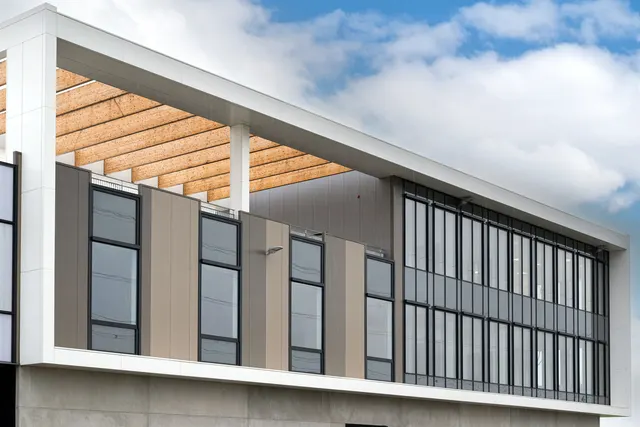
A minimalist, functional building that meets all the needs of a modern bank and insurance office: that was the client’s brief. Large expanses of glazing and an open-plan office were therefore obvious prerequisites for the architect, who conceived the new build as an elongated block. “But one set on a plinth, with a continuous frame on the front façade as a restrained accent,” explains architect Corneel Schepens (architectenbureau Schepens BV). “The windows are also recessed from the front façade, and both the stairs and the access ramp are incorporated into the plinth.” Glass partitions at the centre of the building preserve maximum visibility while also functionally separating the public area from the open-plan office and meeting rooms.
Ideal for slim window profiles
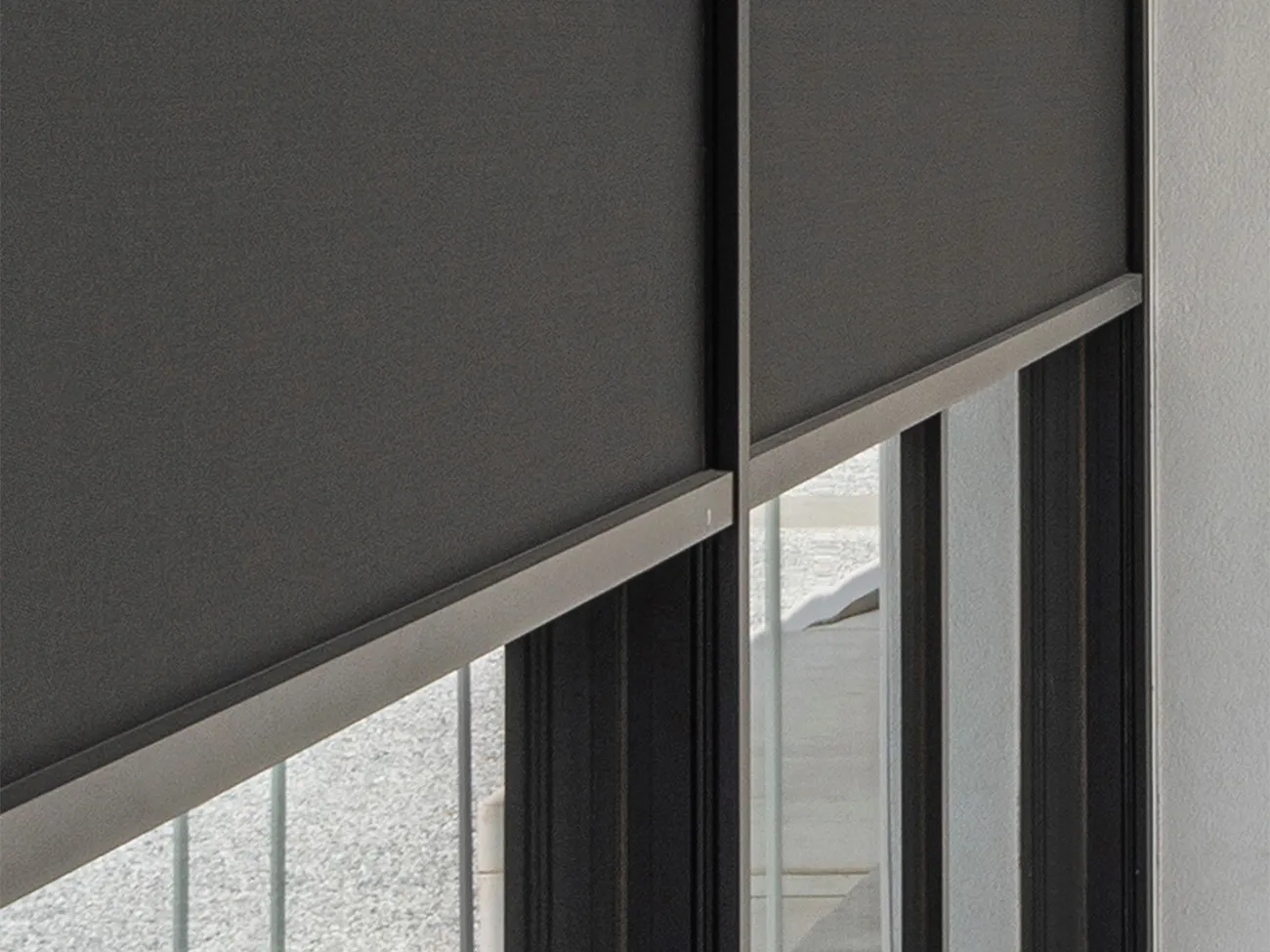
This was a pilot project for Renson’s Fixscreen Minimal CW50 fabric solar shading. The minimalist, wind-resistant system was specially developed for curtain walls like this one. Its coupling guides are therefore the same width (50 mm) as the curtain wall profiles.
“This new type of fabric solar shading allowed us to opt for slim curtain wall profiles after all,” says the architect. What is more, both the narrow side guides and the compact fabric boxes are concealed entirely within the façade, ultimately enhancing the detailing. With all components in the same colour and no visible screws, the solar shading forms a single, aesthetically cohesive element in harmony with the architecture.
A discreetly integrated barrier against strong sunlight
Renson’s Fixscreen Minimal CW50 was therefore seamlessly integrated into the external façade, making the solar shading barely noticeable. Even with the screens lowered, the façade remains a coherent whole. At the same time, the sun is kept out where this is most effective in preventing overheating indoors: before it reaches the glass. However, it was primarily the adverse effects of low or strong sunlight, including reflections on computer screens and white desks, that led the client to choose fabric solar shading. It is also a welcome bonus that this solution does not compromise the office’s clean design.
Question about this story? Ask your question
Keep following this
Get an email when a new story is published. No account needed.
- SubjectYearbook