








A key player in civil railway construction
Text Roel van GilsImage Molhoek Infratechniek
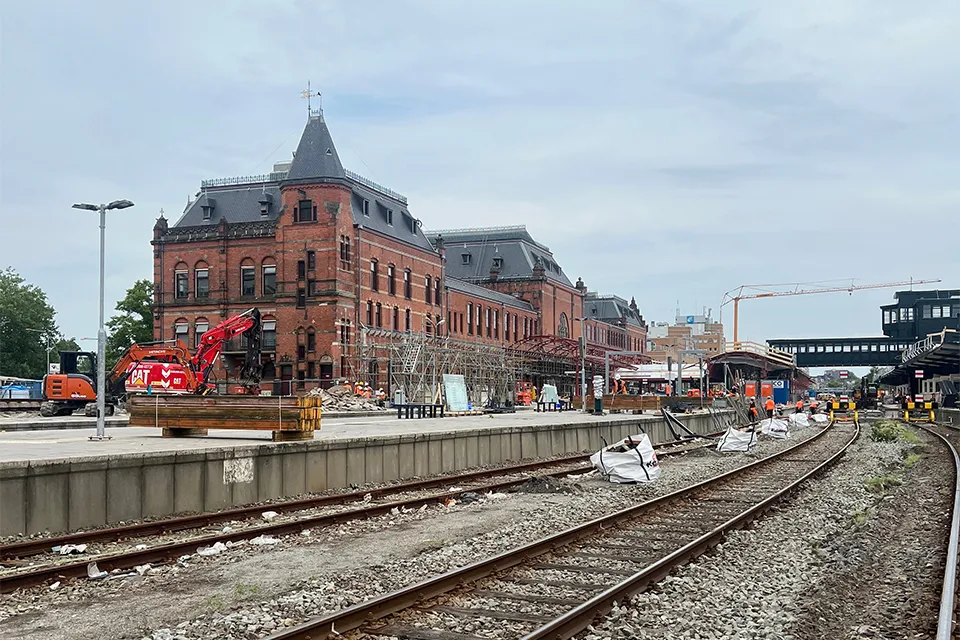
Five years ago, one of the Netherlands’ most significant railway projects got under way in Groningen: the renewal and expansion of Hoofdstation Groningen to create a high-quality public transport hub, and the construction of a new railway yard. Without a solid trackbed, drainage, sewerage and infrastructure, no track could have been laid. Molhoek Infratechniek played a pivotal role in civil railway construction, both in the renewal and expansion of Hoofdstation and in the construction of the new De Vork railway yard.
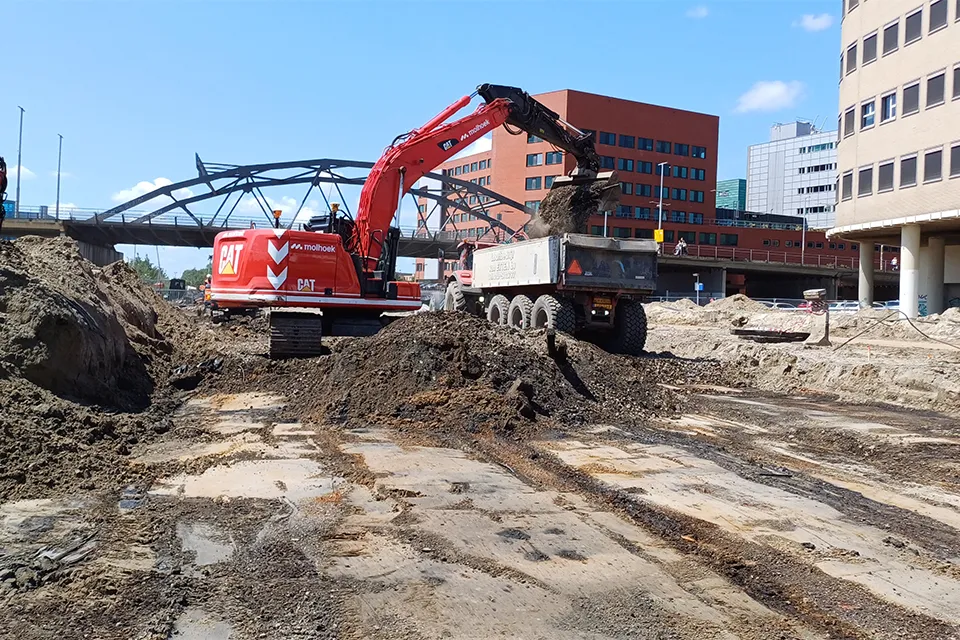
To make room for the expansion of Hoofdstation, the existing railway yard was first relocated to a large site just outside the city. “Commissioned by Strukton Rail Nederland, we laid the complete civil engineering foundations for the new railway yard,” says Jan Postema, project manager at Molhoek Infratechniek. “This site, 1.5 kilometres long and 400 metres wide, with ten tracks side by side, has since become the beating heart of train cleaning, shunting and parking for NS and Arriva. Among other things, we built the trackbed, installed sewerage and drainage systems, laid many kilometres of block paving between the tracks, and created numerous level crossings to allow people and equipment to cross the tracks.” Molhoek Infratechniek also installed the statutory perimeter fencing around the site.
Broad expertise
Once the railway yard had been relocated, space became available for construction of the new station area. Here, too, Molhoek Infratechniek’s broad expertise came fully into its own. “We excel precisely where the railway environment meets the civil engineering environment,” says Patrick Kummu, project manager at Molhoek Infratechniek. “For example, we built the temporary platforms, including temporary passenger routes to ensure safe access to the trains. Strukton Infra Specials could then start work on the new Hoofdstation while the existing station remained operational. During that period, we regularly provided the necessary support.” It proved to be the calm before the storm, as from 2025 the specialist was once again fully involved, preparing for the 64-day closure.
64-day railway closure
While a routine railway closure often lasts 52 hours or at most one or two weeks, work here continued 24/7 for 64 days. Molhoek Infratechniek was the only party on site throughout, often with several teams working at the same time. “Daily progress meetings brought all disciplines together to look ahead: what was going well, where might problems arise, and how could we adjust?”, says Postema. This close coordination proved crucial, as construction workers, track workers, installers and signalling specialists were literally working in the same confined space. The urban setting made the project even more complex. “Working with cranes, dumpers and lorries in the middle of Groningen inevitably caused noise pollution. Sometimes we had to adapt working methods or lay trackway panels to minimise disruption,” Kummu recalls. “Unexpected factors, such as soil contamination and archaeological finds, also required flexibility.”
Nevertheless, everyone involved managed to bring the new Hoofdstation into operation on schedule after the 64-day closure. “What we achieved together with both Strukton companies is unique, thanks in part to the seamless integration of railway and civil engineering disciplines. It’s an achievement everyone can be proud of,” Postema concludes.
Question about this story? Ask your question
Keep following this
Get an email when a new story is published. No account needed.
- SubjectModular construction