









A partner in prefab
Text Lieke van ZuilekomPhotography Knauf
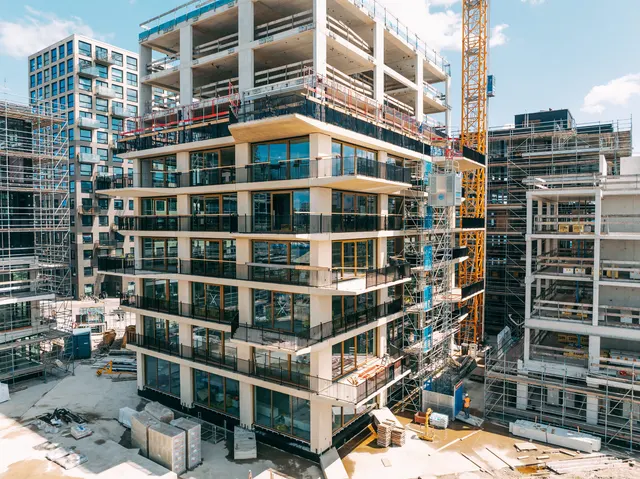
To address the housing shortage, it is important to add new, affordable homes quickly. Prefabricated and modular construction could offer a solution. “In recent years, the focus was mainly on using prefabricated elements, but we are now seeing a growing trend towards modular construction,” says Niek Wouda, Market Manager Drywall Finishing at Knauf. “More and more factories are being built where complete homes are assembled. As a producer of innovative finishing materials and systems, we are keen to be part of this…”
“The prefab trend will extend beyond housing construction in the years ahead,” Wouda expects. “You can already see this, for example, in drylining projects, where there is growing demand for efficient processes. This means considering dimensions, fixings and installation sequence at a very early stage of the construction process, so that materials can be installed quickly and efficiently on site, in a single operation. This trend will continue to spread to other construction methods in the coming months and years. It will also reach prefab factories, which likewise benefit from minimising additional work.”
Quality and performance guarantee
“Knauf has a wealth of expertise in-house, from technical specialists to building physics and BIM experts, who can work with the client and architect from the design stage to identify the right systems and finishes for each project,” says Wouda. “We take careful account of requirements for insulation, fire resistance, resistance to break-ins and acoustics. Comprehensive test reports are available for all our systems. If required, we can also carry out a physical inspection during construction. Do the installation and system build-up meet our quality standards, which have been tested and verified by independent laboratories? If so, we can guarantee not only the quality but also the specific performance. We call it KnaufZeker.”
M’DAM in Monnickendam
Both drylining and prefab projects increasingly call for complete solutions, not just for façades but for the entire home and/or building, stresses Maxim Sprong, Commercial Technical Adviser, Prefab Industry at Knauf. “To deliver this effectively, we actively seek partnerships with supply-chain partners, in timber construction, steel framing and modular units. We also work with major contractors, who are increasingly setting up modular factories.”
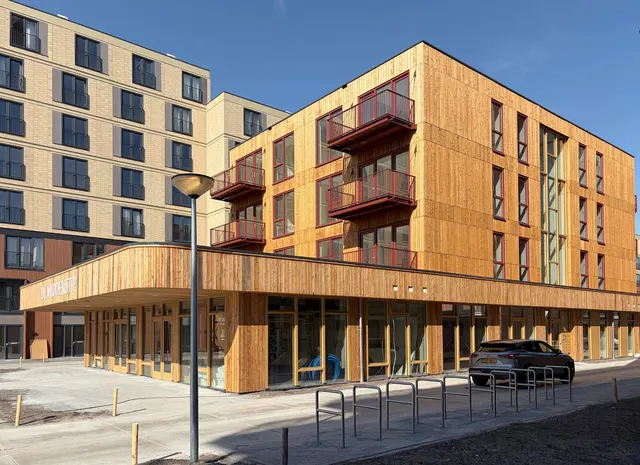
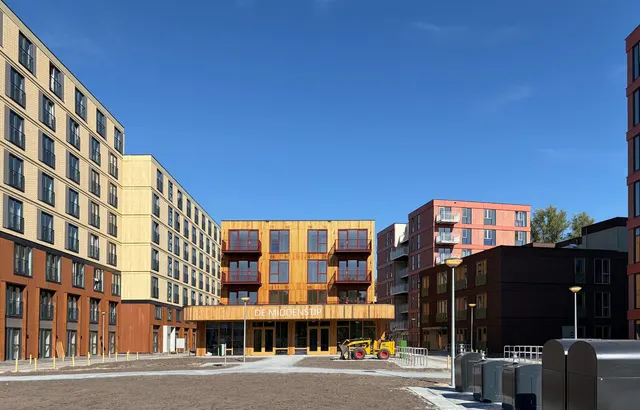
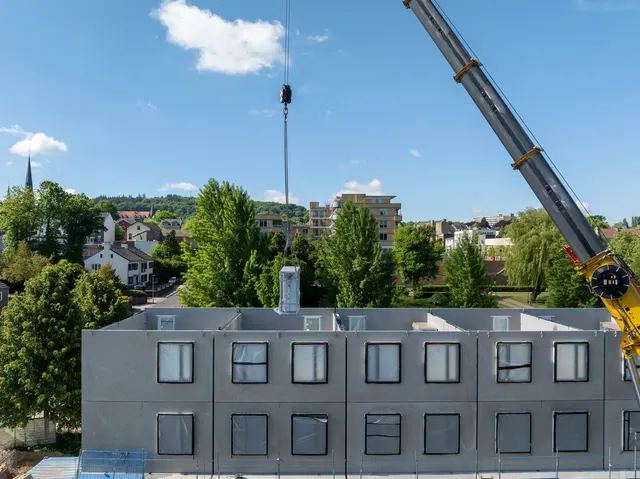
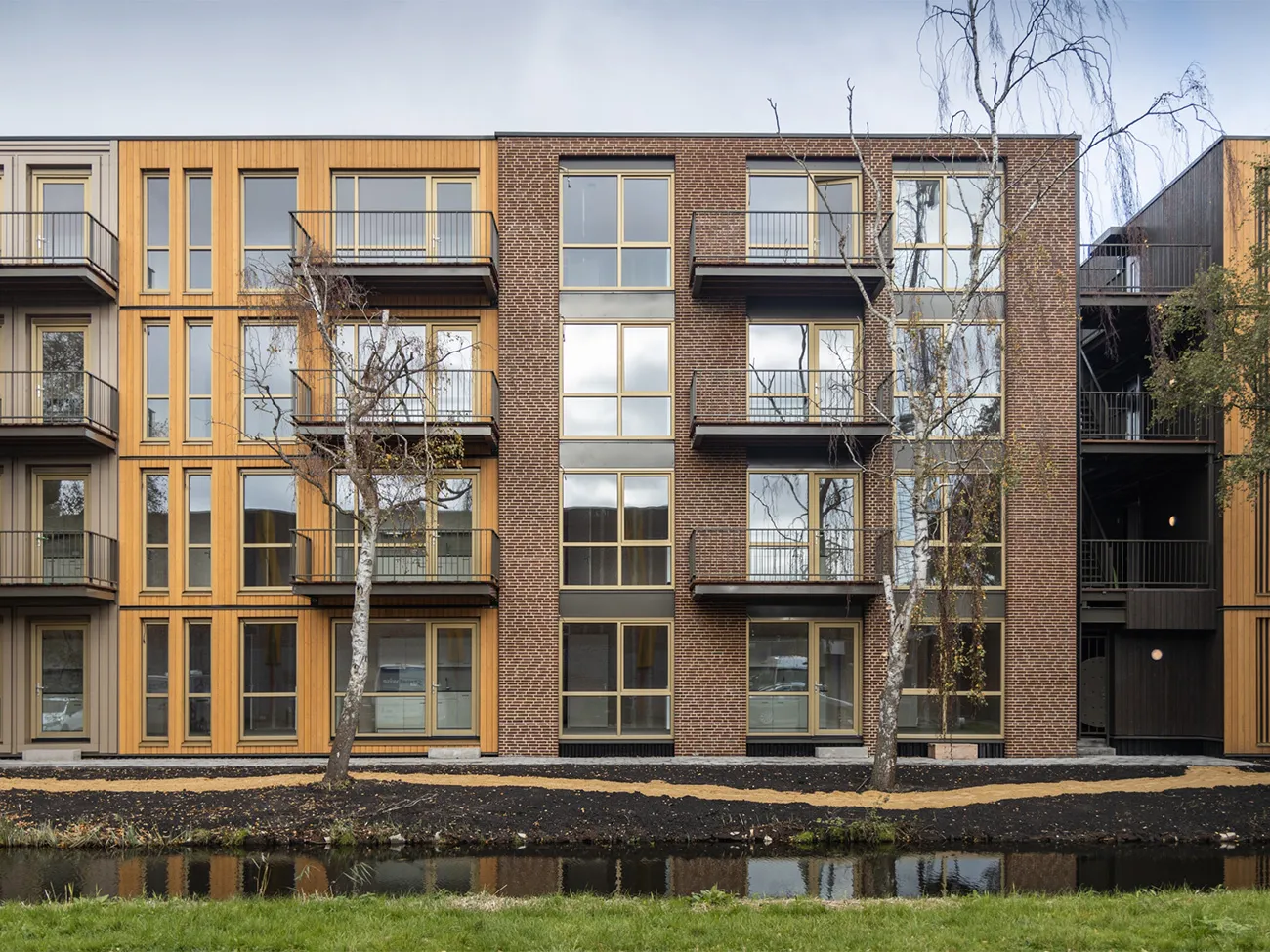
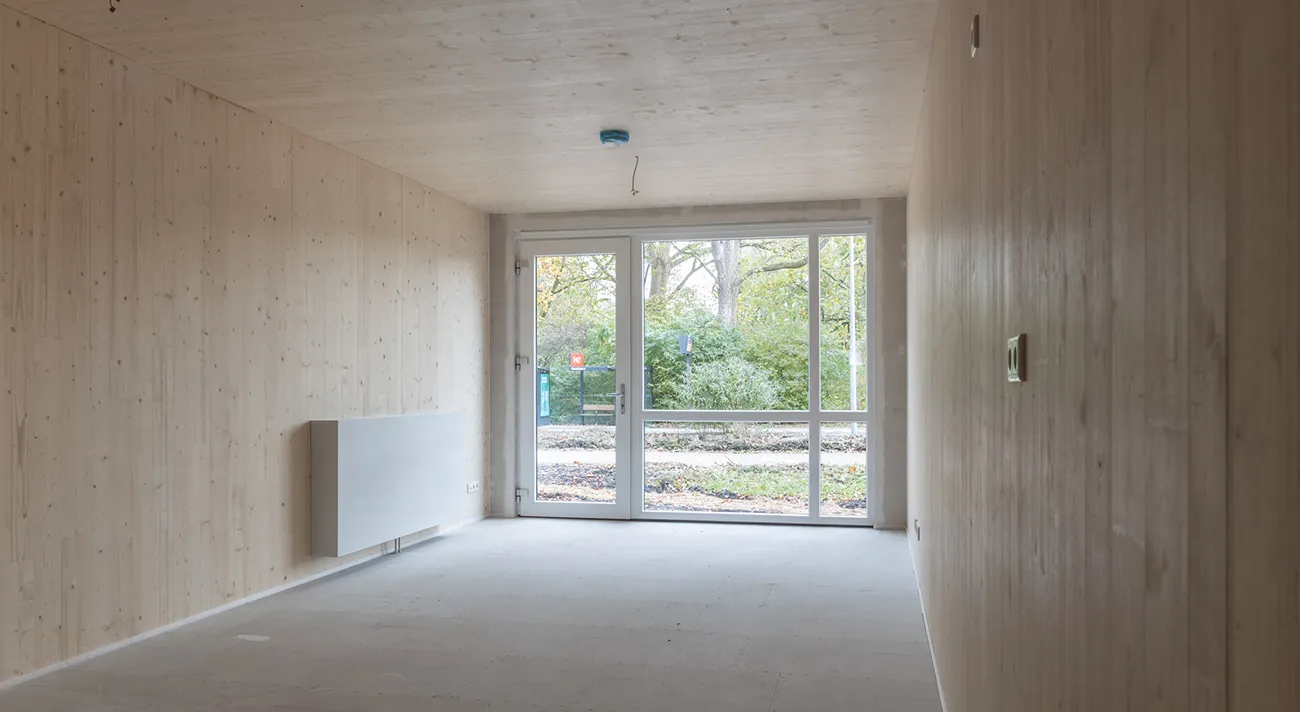
One such contractor is De Groot Vroomshoop, with whom Knauf completed a major project in Monnickendam. “The M’DAM residential building is constructed entirely from ready-made Cross Laminated Timber (CLT) modules, with our Knauf Brio dry screed floors smartly integrated,” says Sprong. “To ensure efficient assembly without waste, all our Brio floors were palletised to size and in the correct installation sequence, then delivered to site. During the design and engineering stages, we identified the performance requirements for impact and airborne sound insulation, the potential integration of cables and pipes, and the production process, and translated them into a tailored solution.”
Grote Kerk in Hoorn
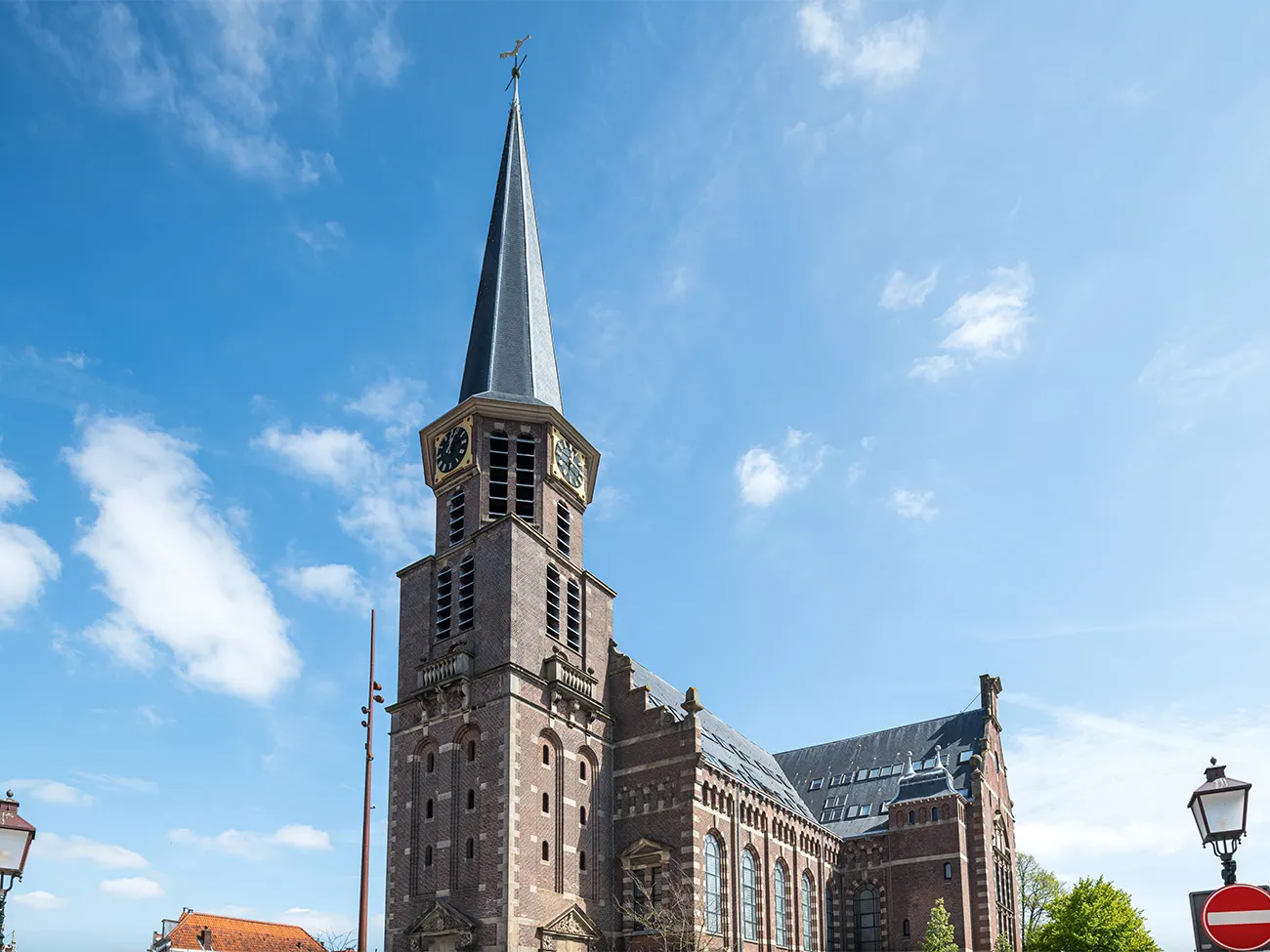
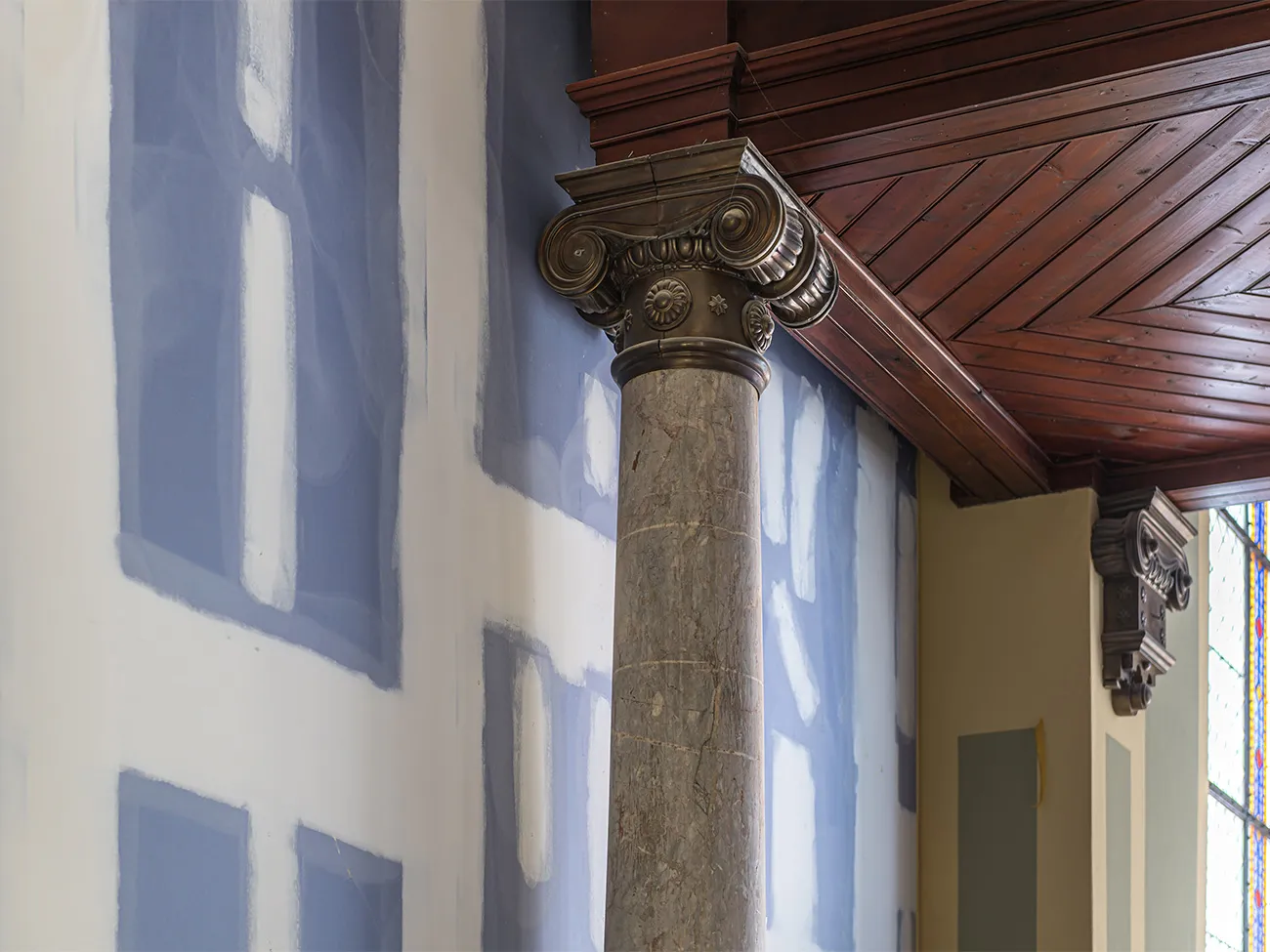
Knauf also recently contributed to the conversion of the Grote Kerk in Hoorn into a four-star boutique hotel and restaurant. “An important requirement for this project was that the authentic outer envelope had to remain intact,” says Sprong. “Our partner Steel Framing Holland therefore built a steel-frame structure that is independent of the building envelope. Our structural Knauf Diamond Board X plasterboards are part of this wall construction. They were supplied to order, in a specific length and with a tapered edge rather than a square edge. In addition, they were delivered in packs of 20 instead of 40 per pallet, to make transport inside the church easier. We consider that bespoke service too.”
A change in mindset
Demand for prefab is also affecting Knauf’s products and systems, Wouda explains. “In the ‘new market’, it is not just the products themselves that matter, but above all how they fit into the overall installation process. This calls for a change in mindset. For example, plasterboards that were previously screwed into place on site are often stapled or nailed in the prefab process. The products must be suitable for this. Our R&D department is giving this a very high priority.” More work is also being done by machine rather than by hand. “To ensure optimum efficiency in this area too, products may need to be delivered differently.” Sprong adds: “We normally deliver our plasterboards with the face side against the face side. That works well for an installer on site. A prefab company, however, would rather receive the boards with the face side upwards, so they can be lifted with a mechanical vacuum lifter and installed straight away. We take this into account when palletising them.” Wouda says: “One final interesting change is the growing demand for integration and complete solutions that combine different systems and building services. We are keen to play a part in this too, both with our supply-chain partners and with our sister company Knauf Insulation, with whom we also completed the Grote Kerk project.”
A business enquiry for Knauf? Get in touch
Companies in this story
Keep following this
Get an email when a new story is published. No account needed.
- SubjectModular construction
- CompanyKnauf