









Residential and non-residential construction
The building and its demolition materials get a sustainable second life
Text Lieke van ZuilekomPhotography RGS Groep
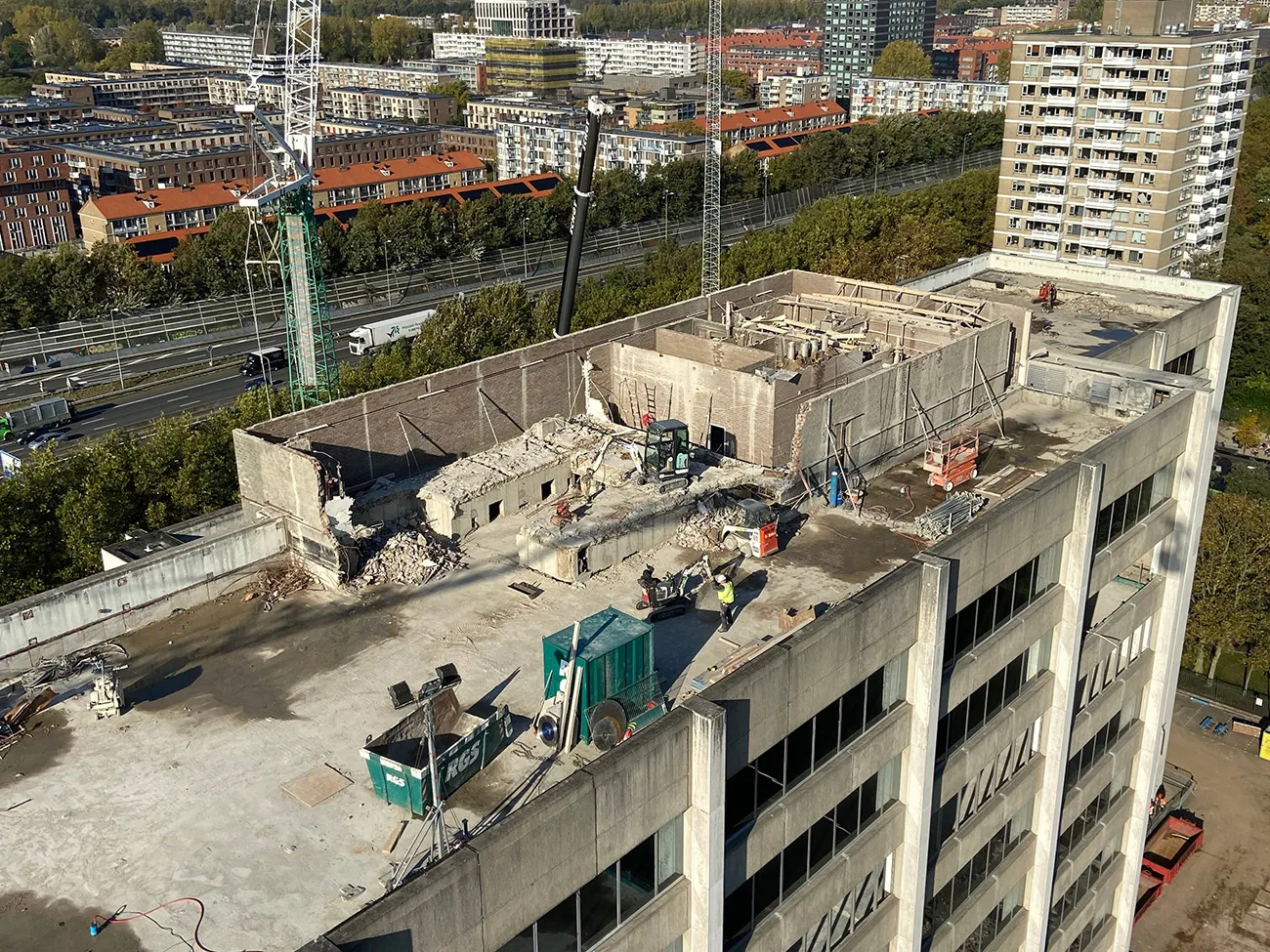
Reshaping today, creating tomorrow. Whether it is demolition, asbestos removal, recycling, concrete sawing or transport, RGS Groep carries out its work with sustainability and circularity in mind. “By carefully dismantling buildings, we can make almost all the materials available for reuse,” says operations manager Cor van Wijngaarden. “In this way, we contribute to the circular economy of today and tomorrow. Following projects such as MST Ziekenhuis in Venlo, Fontys Hogeschool in Eindhoven, Rodezand in Rotterdam, Hilton Hotel at Schiphol and the A’DAM toren in Amsterdam, this is clearly demonstrated at project Rembrandt Park One in Amsterdam, where we were appointed as a subcontractor to Dura Vermeer Renovatie Midden West to carry out the complete soft strip and asbestos removal.”
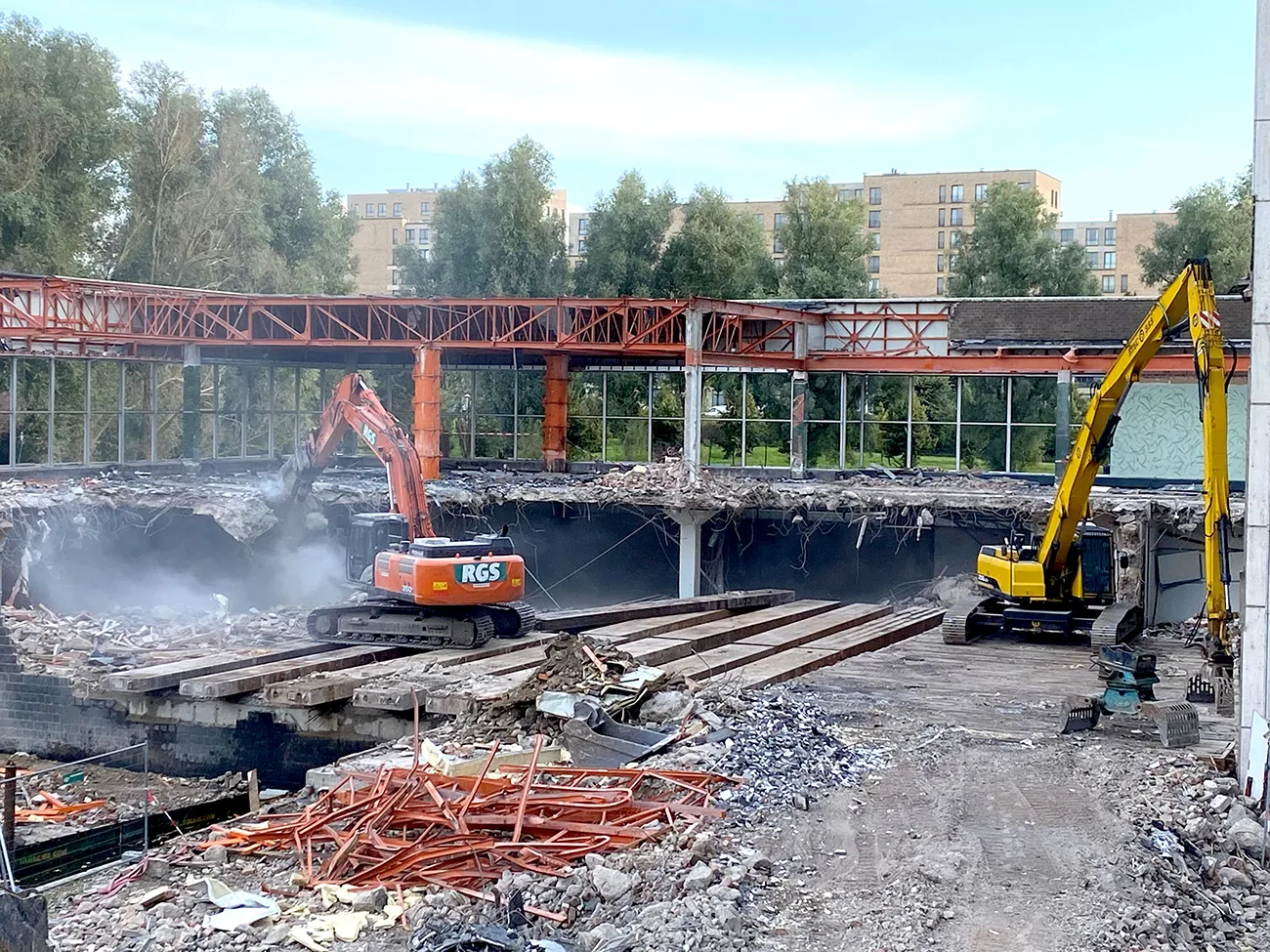
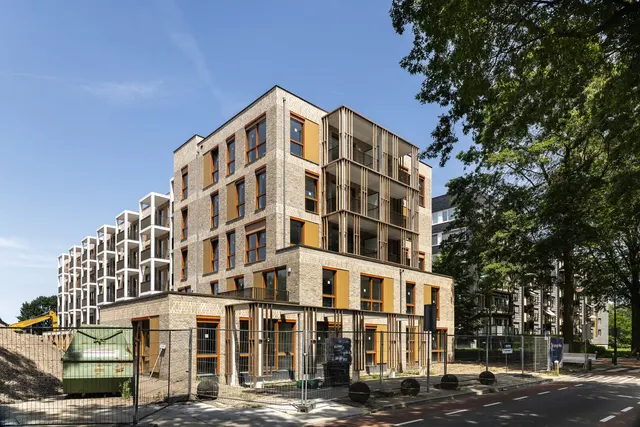
Rather than putting projects out to tender, Dura Vermeer Renovatie Midden West prefers to work with partner companies. For demolition and asbestos removal, it works with three specialists, including RGS Groep. “We were involved at a very early stage, to help consider the sustainable repurposing of the former Ringpark building,” says Van Wijngaarden. “The building was completely stripped internally. Only the concrete frame remained standing. We removed all building services, non-masonry materials and asbestos from the building, as well as various raised terraces around it. We also demolished the former pavilion at the rear using specialist demolition machinery. RGS Groep has all the expertise required for this project and was therefore the right partner.”
Cut into sections
To make way for the new rooftop extension, RGS Groep also removed the concrete rooftop structure. This was a major challenge because of the height of the building. “Demolishing it by breaking up the walls and floors and throwing them down was clearly not an option,” says Van Wijngaarden. “Instead, we temporarily supported the concrete walls and roofs and sawed the rooftop structure into sections. A large crane lowered all the sections from the roof, where they were further dismantled for reuse.”
Circular repurposing
“During the preparatory phase, we carried out a thorough survey of the building,” Van Wijngaarden emphasises. “Which materials can be repurposed circularly, either as raw materials or as building materials? The masonry and concrete rubble from the concrete rooftop structure and internal walls, among other materials, was crushed for reuse in construction and asphalt roads. The gypsum finishes were separated and delivered to a processor, which uses them to make new gypsum products. All the wood, iron, tin and non-ferrous materials were also given a circular new purpose.”
Asbestos removal
The materials that could not be reused circularly were those containing asbestos. “These included the sealant around the façade frames, the gaskets in the air-handling system, the spray insulation beneath the floors and the bitumen in the shafts. They were removed in strict accordance with the legislation and regulations for the various asbestos risk classes and taken away in special packaging. The major challenges were safety and logistics. Together with Dura Vermeer, we continuously looked for the right working methods and sequence of work, so that everyone could work efficiently and safely, including with regard to asbestos.”
Question about this story? Ask your question
Keep following this
Get an email when a new story is published. No account needed.
- SubjectResidential and non-residential construction