Residential and non-residential construction
Tailored to residents
Text Lieke van ZuilekomPhotography Van Wijnen Utrecht
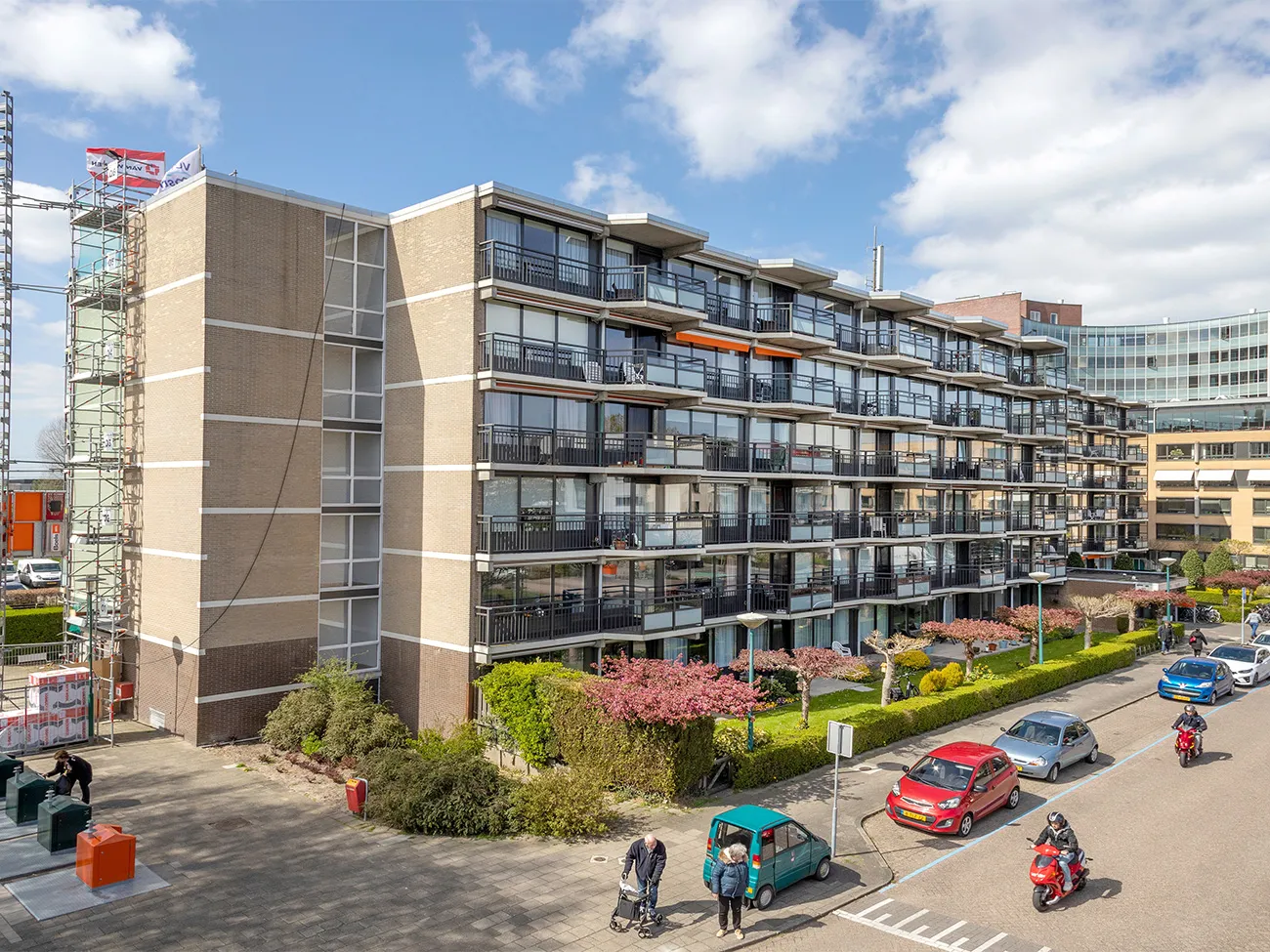
As contractor and chain partner to Woningstichting Vecht en Omstreken, Van Wijnen Utrecht is improving 114 apartments in the ’t Heycop senior citizens’ complex in Breukelen. “We are responsible for the planning, advise on the route towards a CO2-neutral future and are making the complex more comfortable, sustainable, accessible and fire-safe for residents,” says Martijn Leijdekker, deputy director of Renovation & Conversion at Van Wijnen Utrecht.
Woningstichting Vecht en Omstreken aims to create a sustainable, energy-efficient housing stock that remains a good place to live in the long term. To achieve this, the housing association began working in a chain partnership with Van Wijnen Utrecht in 2018. “For each residential complex, we advise on what can be done to make CO2-neutral living achievable by 2050,” says Leijdekker. “The ’t Heycop project came along in the meantime. A fire broke out in one of the homes in 2018. To evacuate residents quickly, the fire brigade had to kick in the front doors. These doors therefore had to be replaced, and on our advice, the objectives for CO2-neutral, energy-neutral, sustainable and fire-safe living were also taken into account. All the work is due to be completed in autumn 2021.”
Energy rating upgrade
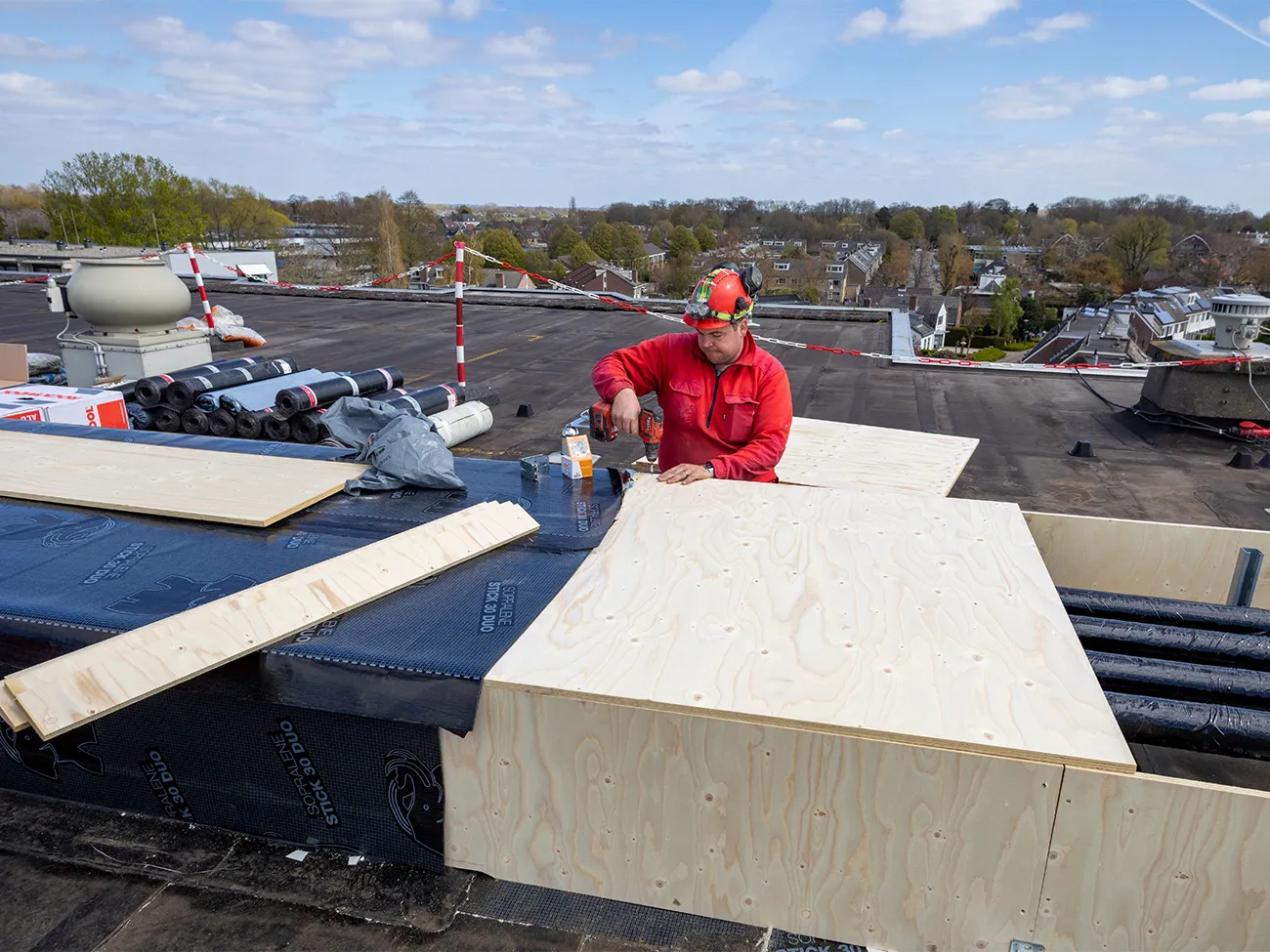
The senior citizens’ complex was in reasonable condition, says Leijdekker. “The window frames and roof had already been replaced, providing some of the thermal insulation to the building envelope. We are building on this by adding insulation to the panels, spandrels and brickwork, while retaining the existing façade.” The greatest maintenance needs concerned the building services, he says. “The homes still had thick-walled central heating pipes that gave off a lot of heat. There were also leaks in the pipework in several places. In addition, ventilation in the corridor and homes was unbalanced, putting residents at risk of overheating in summer. A new climate control system with thermal energy storage, heat pumps, a dry cooler and convectors will address this. As well as heating, the convectors can also provide cooling, bringing temperatures down to a few degrees below the outdoor temperature.”
Since the shaft is being opened anyway, the outdated cold-water pipe network will also be replaced as part of the ‘no-regret measures’. “We are also improving the mechanical ventilation system, so that ventilation will be controlled by CO2 levels,” says Leijdekker. “New and improved ventilation provisions are also being added in the communal areas, which also suffer from excessively high temperatures.” Together, these measures will improve the energy rating from D to A. “A special feature is that the neighbouring ‘de Angstel’ care complex will also be connected to the climate control system, creating a ‘heat network’.”
Optimal fire safety
To ensure fire safety in the senior citizens’ complex, all vertical ducts between the homes will be clad with fire-resistant material. “Any gaps between corridors and homes, and between neighbouring homes, will be sealed against fire, preventing fire from spreading. The front door assemblies will also be fire-resistant. The communications system at ’t Heycop is being expanded so that it can also be used as a call system for care workers. The fire alarm system will also be connected to the neighbouring care complex.” A scooter garage is being created in the old bicycle storage area on the ground floor, says Leijdekker. “Finally, the balconies and galleries are being refurbished, and the entrance is getting an aesthetic upgrade, with residents’ wishes carefully taken into account.”
Work carried out in phases
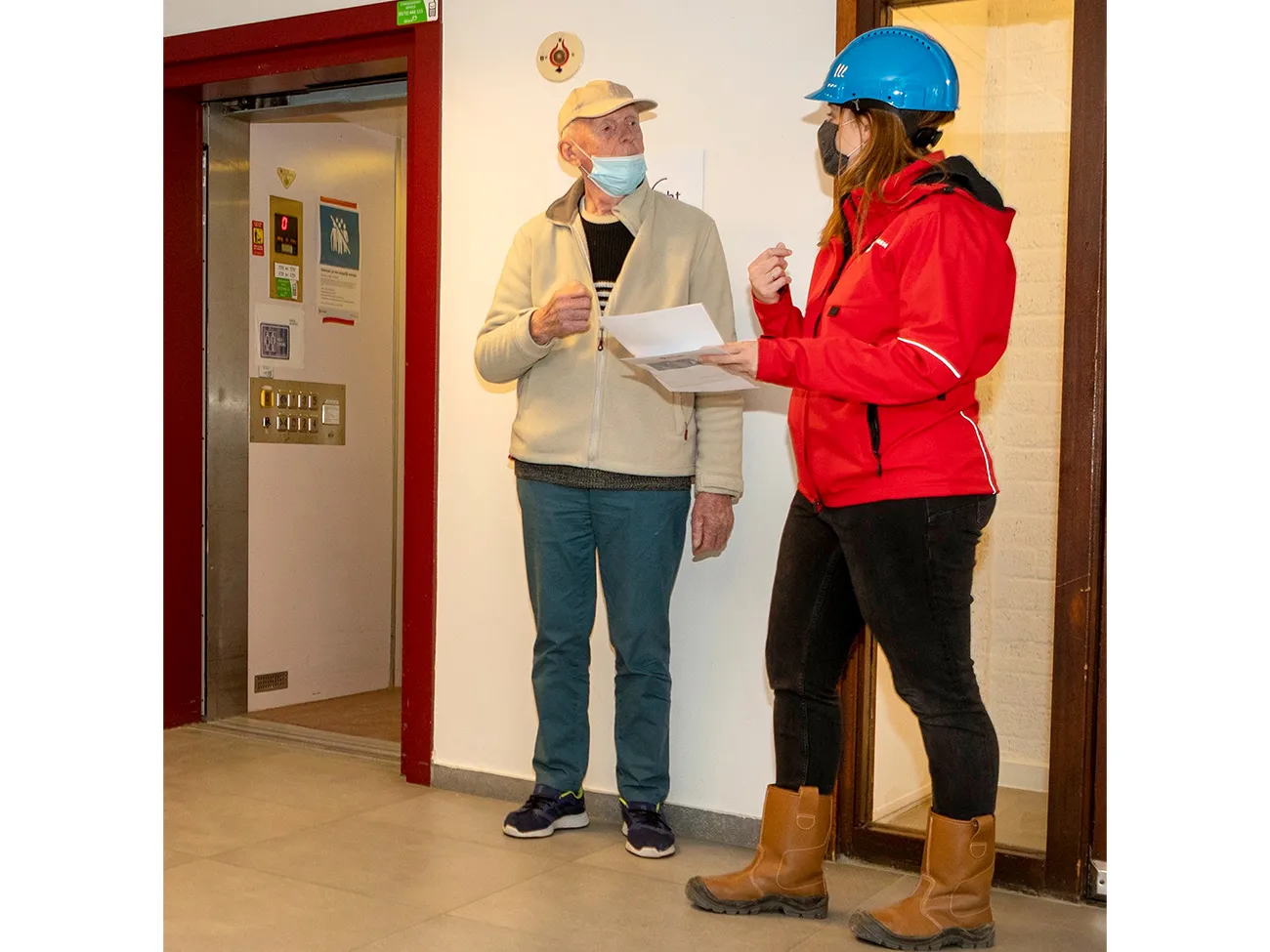
“Initially, all the work was to be carried out while the homes remained occupied,” says Dorieke Storck, resident liaison for Renovation & Conversion at Van Wijnen Utrecht. “Covid changed the situation. To protect residents and our employees, we revised the schedule and put new facilities in place.” The residents of ’t Heycop are in an at-risk group, she says. Their average age is around 80, and several residents also have care needs. “Together with our subcontractors, we assessed how long we could keep the work out of residents’ living spaces. This led to the work being carried out in phases: (1) replacing the front door and work in the hall, (2) installation work in the internal storage rooms in the home, (3) connecting the new water pipe in the storage room and (4) work inside the home itself. Phase 4 is expected to start in July, by which time the residents will at least have been vaccinated. To maintain the 1.5-metre distance, residents will still move out during the day, for a maximum of four days, to temporary accommodation. We have set up six temporary homes in total, including two for residents with medical needs. We drew up a schedule in consultation with the care providers so that residents can continue to receive the individual care they need. We consider that level of tailored support very important.”
Personal contact
Given the target group, Van Wijnen has opted for as much personal contact as possible. “We regularly get in touch with residents and their family members, including by phone. For example, sons and daughters often want to be kept informed,” says Storck. “We distribute schedule letters and newsletters, and make active use of an information board in the entrance. I also work closely with site manager Lars Kuipers, who visits residents before and after the work. This personal attention is appreciated. The atmosphere in the complex is good. An interim mini-survey gave us nothing but green smileys. What’s more, our colleagues will soon be playing a game of pétanque with the residents.”
Question about this story? Ask your question
Keep following this
Get an email when a new story is published. No account needed.
- SubjectResidential and non-residential construction