










Residential and non-residential construction
Willemstoren | Rotterdam
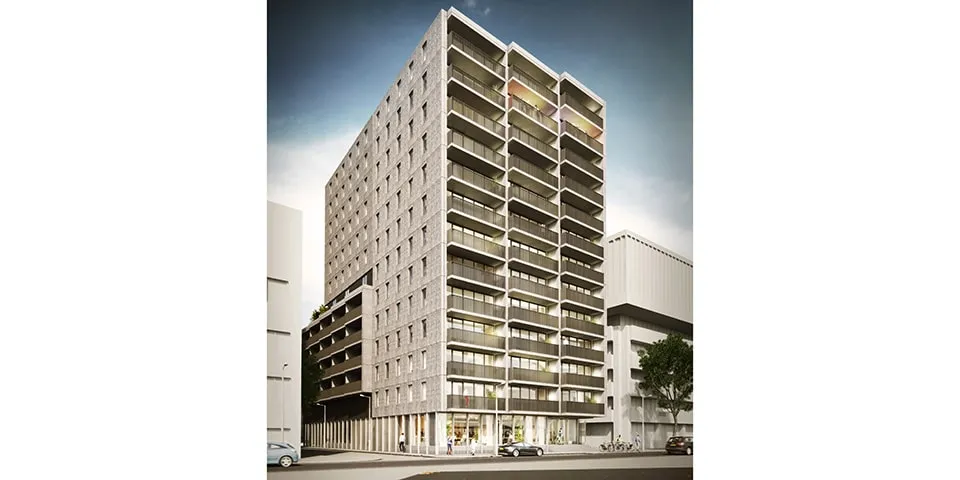
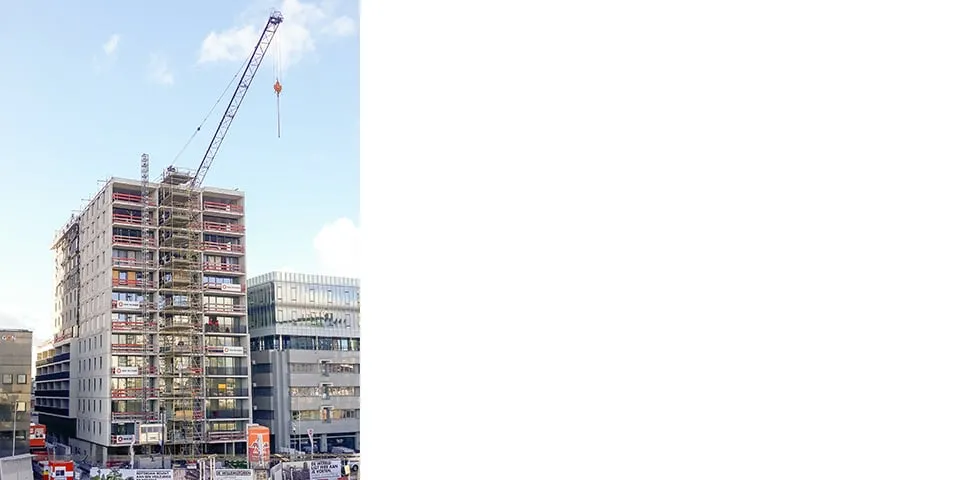
Rising twelve storeys above ground, with two underground parking levels, at the foot of the Erasmus Bridge and overlooking Rotterdam’s skyline, Willemstoren is taking shape on the site of the Gedempte Zalmhaven. The building has reached its highest point and construction is on schedule, says site manager Mark van Haarlem of contractor Van Wijnen.
Willemstoren, with 76 rental homes, is being built on a distinctive site. Its location near the Erasmus Bridge, its position on the Gedempte Zalmhaven and the limited size of the construction site all make it unusual. “When the site was still vacant, it was hard to imagine that a residential tower could be built there,” says Mark van Haarlem. He points to the area’s history: the former Zalmhaven was partly filled in with rubble from the Second World War, and sections of the old quay walls were still buried underground. “We left some of them in place to prevent subsidence. The basement wall was designed around them. Structurally, the basement wall is somewhat smaller, but the above-ground building has its planned dimensions.”
Concrete work
Van Wijnen became involved in the project at an early stage, several years ago, and helped develop both the preliminary and final designs. “We looked closely at all the building physics aspects and, for example, proposed widening the access galleries. We then developed everything ourselves in BIM as well.” Piling began during the 2017 summer construction holiday, using cast-in-situ piles, followed by excavation. In autumn 2017, pile caps were cast on site, among other works, and the crane runway was installed. Work above ground began in early 2018. The biggest challenge lay in the structure, says Van Haarlem. “The entire shell is made of concrete elements. It’s a fine job, but a substantial one to carry out properly. You have to take account of junctions, beams of different sizes, recesses and concrete of different strength classes. The concrete façade panels are also attached to the inner concrete leaves with a concealed fixing system. Everything was carefully documented, in both words and pictures. It became a veritable ‘shell construction bible’.” He describes the change in direction on the seventh floor, where the building cantilevers out, as a major challenge. “It took a lot of calculations to support it correctly.”
Logistics
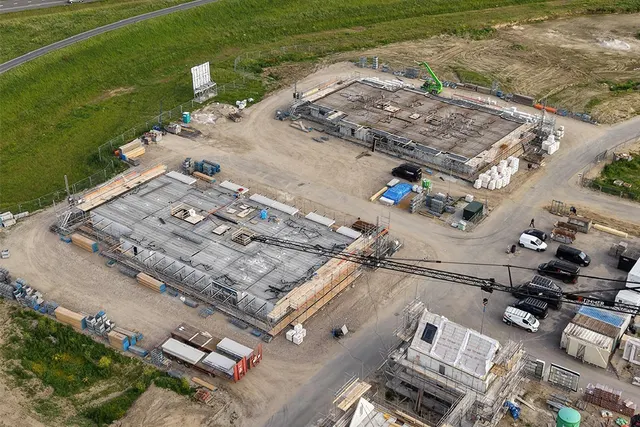
The limited space on the construction site was another consideration. According to Van Haarlem, getting materials to and from the site was not a problem, but handling them all required a tightly organised logistics plan. “At first, we tried to put together a plan with a software company. That didn’t work. So we took it on ourselves and developed it with great care. It works excellently.” By mid-November, the building had reached its highest point. Work is now under way on closing in the façade, and the fit-out has also begun. Van Haarlem concludes that Van Wijnen will hand over Willemstoren on a turnkey basis, complete with bathrooms and kitchens, among other things. “16 April is the deadline, when we hand it over to Vesteda. We expect to meet it; we’re on schedule.”
Vraag over dit verhaal? Ask your question
Wie eraan werkte
Willemstoren in Rotterdam
- contractorVan Wijnen
Blijf dit volgen
Bij een nieuw verhaal krijg je een e-mail. Geen account nodig.
- ProjectWillemstoren
- OnderwerpResidential and non-residential construction
- CompanyVan Wijnen