Preventing side effects during lift maintenance and modernisation
Text Roel van GilsImage Aboman
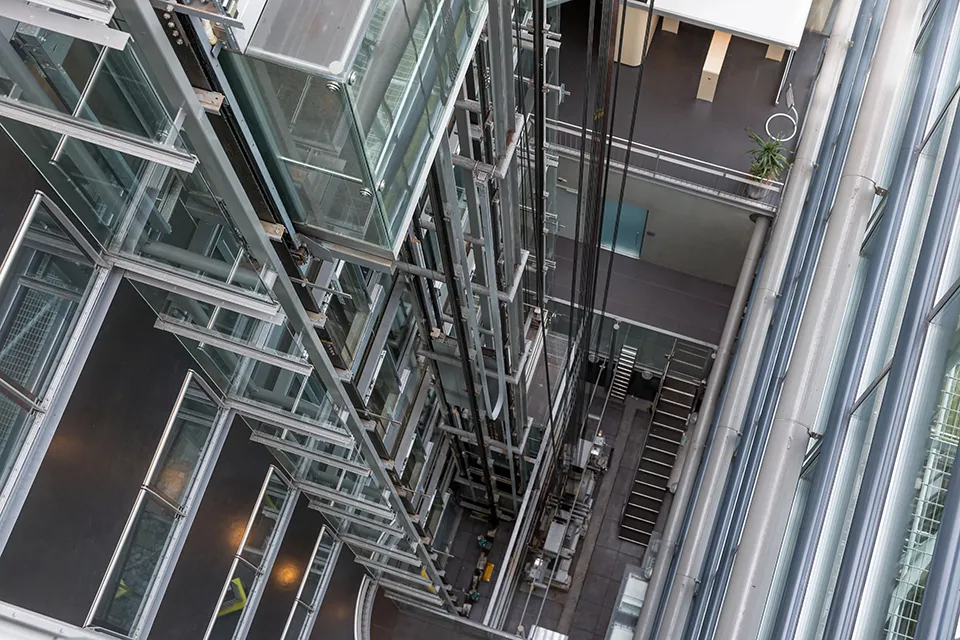
A lift is maintained periodically, like any other item in use. Before the lift is returned to service, changes to the lift installation resulting from repairs, remedial work or the preventive replacement of components must be assessed by a designated inspection body to ensure it operates correctly and maintains its safety level. Sometimes components are used that are not identical to the original part, potentially causing adverse side effects that could even compromise safety. To prevent this, new inspection schemes are in the pipeline, with a greater focus on risk assessment. Aboma is already preparing for this. We spoke to Bert Huisman, Lift Manager at Aboma.
Replacement parts must meet the same specifications as the existing component, says Huisman. “A replacement part may be suitable for its intended purpose, but still cause adverse side effects. This is a consequence of changing technologies and changes in the composition of components. With today’s knowledge, work is ‘as we speak’ under way to amend the current inspection scheme for conformity assessments of lift installations in the use phase. Risk assessment, including possible side effects and how to eliminate them, will become an important part of this.” He expects the new scheme to come into force in the second half of 2025. Aboma is already strongly focused on this, however. Huisman says he is also seeing growing awareness in practice. “And even though an inspection is mandatory, it can also demonstrate that you have given the matter careful
consideration.”
Responsibility lies with the building owner
Under European regulations, responsibility for ensuring that a lift installation is sound and safe already lies with the building owner. If an incident causes damage or injury, the building owner must be able to account for it. “It is therefore essential to have a sound conformity assessment as a basis. If a change means that a lift deviates from its original design, this may also mean that it no longer complies with the initial risk assessment carried out by the manufacturer or installer. Careful investigation is then necessary. Identifying hazards, assessing possible damage or worse and potential injury, taking precautionary measures based on the assessment, and recording the findings are four steps towards a sound risk assessment. The safety of the lift installation must not be compromised. The safety of the lift must be guaranteed for both its users and those who work on it.”
Question about this story? Ask your question
Keep following this
Get an email when a new story is published. No account needed.
- SubjectGeneral