Energy efficiency? Yes, … but without compromising on healthy, comfortable living!

New build in 2020 is all about climate awareness, circularity, NOM, BENG, … terms that are now firmly part of the construction industry. And this is clearly reflected in the requirements for ventilation and solar shading. Read on to find out how Renson, as a pioneer in these fields, anticipates and responds to these demands, and even goes a step further.
Make sure there’s a ‘+’ in your ventilation
The good news is that as long as you, as an architect, consultant or property developer, choose a ‘+’ in ventilation, both systems with natural supply of fresh air (system C+) and heat recovery ventilation systems (system D+) fully meet the prescribed requirements. At the same time, their demand-controlled operation takes the burden off residents and delivers the best possible comfort and indoor climate through tailored ventilation. Two birds with one stone!
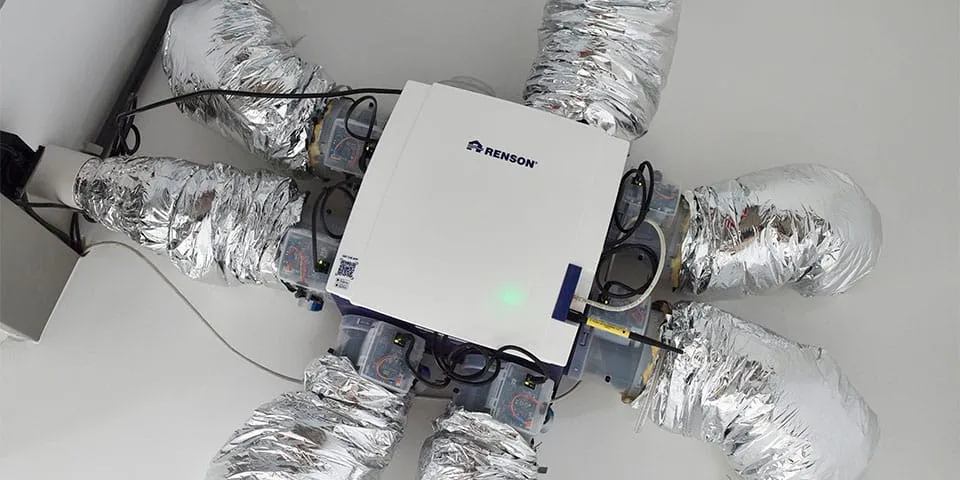
Tailored ventilation: room by room
The ‘+’ in Renson’s ventilation solutions stands for smart ventilation, in other words, providing extra ventilation only where and when it is needed. Humidity, odour and CO2 sensors measure indoor air quality 24/7 and adjust ventilation levels accordingly. With a system C+, this even happens room by room. The key benefit is that rooms with good air quality are not unnecessarily flushed with fresh air. Think of the kitchen at night, or bedrooms during the day when nobody is in them.
The result is that you ventilate much less overall, based solely on what the sensors monitor, but do so far more efficiently, sustainably and energy-efficiently. The guarantee: the best possible indoor air quality in every room. This has already been proven in practice. Analysis of data from connected Healthbox 3.0 ventilation units in Belgian homes showed that the highest possible indoor air quality was achieved thanks to the C+ system’s advanced demand control. And this was achieved at a ventilation level of less than 30% of the nominal flow rate (see also the full white paper ‘Tailored ventilation’).
This type of demand-controlled ventilation, with a tailored airflow for each room, prevents unnecessary ventilation and means the ventilation unit does not use power needlessly. Low airflow rates in each room also reduce heat loss, because fresh air enters only those rooms where continuous measurements show that polluted indoor air needs to be replaced.
A C+ system operates fully autonomously, of course, and always ensures optimal indoor air quality in every room, without the resident having to think about it.
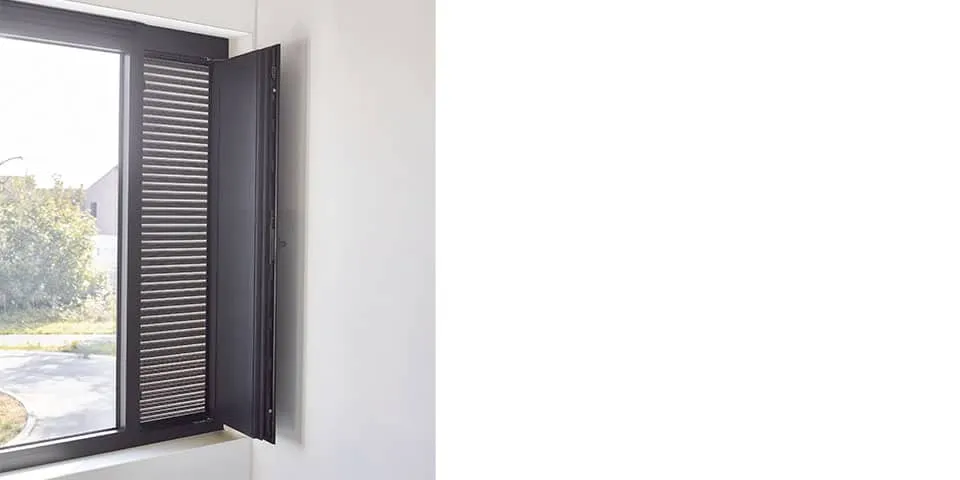
C+ ideal for BENG and NOM
Thanks to the very low heat loss associated with ventilation, the C+ system has been granted a favourable equivalence rating, making it highly suitable for BENG and NOM homes, whatever people may claim. What’s more, when you look at the total energy consumption of a C+ system, including heat loss from ventilation and the power used by the ventilation unit itself, it is even lower than that of a conventional heat recovery ventilation system.
And that’s just the energy consumption. When you also factor in the fact that filters do not need replacing and the ducts need cleaning less often, because there are no supply ducts, the total cost of ownership quickly becomes highly competitive with heat recovery ventilation systems.
With a C+ ventilation system, you also get the added benefit of bringing fresh outdoor air directly indoors through ventilation grilles. Renson has effectively reinvented ventilation to meet the latest BENG standards, with the same goal in mind: the highest possible indoor air quality for residents, room by room, without them having to think about it.
The ultimate in ventilation comfort
After all, shouldn’t ventilation above all take the burden off residents, provide them with the best possible indoor air quality fully automatically, and, most importantly, offer comfort? A C+ ventilation system delivers all this. The direct supply of fresh outdoor air and removal of polluted indoor air in each room that needs it means that much lower ventilation rates can be used. This also addresses the frequently voiced complaints about conventional C-ventilation systems, which lack this advanced demand control: the risk of draughts and cold air falling into the room.
C+ ventilation with Healthbox 3.0 and Invisivent window vents prevents this through:
- A lower required ventilation volume, thanks to highly targeted ventilation in the rooms that need it,
- The backdraught shutter in the Invisivent window vent, which prevents draughts and uncontrolled ventilation,
- The option to close an Invisivent in extremely cold weather. Demand-controlled removal of polluted indoor air from each room ensures that sufficient fresh air continues to enter through other rooms.
All this prevents comfort complaints, even when combined with low-temperature heating. It is also a bonus that the Healthbox 3.0 ventilation unit, the heart of the system, is barely audible. And there is no dry air blown into bedrooms and living rooms, while users can easily track the activity and history of their connected ventilation system via the app.
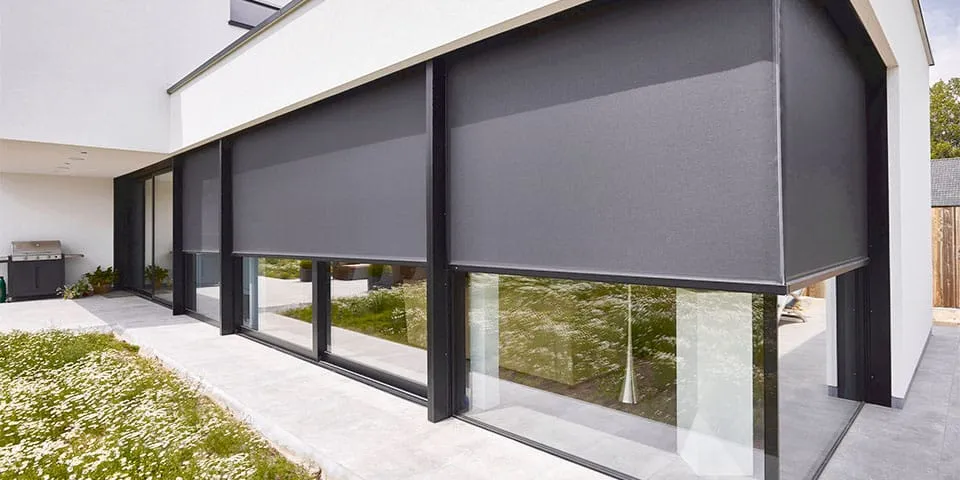
Keep the sun out before it reaches the glass.
Renson’s ventilation solutions meet the strictest EPC standards and guarantee indoor air quality, but the company goes a step further. Because healthy living means more to us than high indoor air quality. It also means a comfortable indoor temperature. In light of the last few hot summers and heatwaves, it is becoming a greater challenge to cool our well-insulated, airtight homes in an energy-efficient way than to heat them.
TO July … achievable with external solar shading and night cooling
In line with this, BENG 4’s ‘TO July’ requirement states that architects, consultants and property developers must take account in their designs of the number of days when temperatures rise too high for indoor conditions to remain comfortable. An overhang, external solar shading and/or passive night cooling are attractive, sustainable alternatives to energy-hungry, climate-unfriendly active cooling such as air conditioning.
Renson is equally committed to a natural solution in this area: external solar shading blocks the sun as effectively as possible before it can reach the glass, while burglar-resistant window vents let in cooler night air to help cool the interior. Together, these measures can reduce indoor temperatures by up to 15°. Another bonus is that dynamic solar shading, such as screens, still allows you to benefit from free solar heat in winter. This type of fabric solar shading can also be seamlessly integrated into the façade without compromising the design.
Find out here how Renson responds to the latest energy performance requirements:
Brochure ‘+ in ventilation’
White paper ‘Tailored ventilation’
www.renson.eu
Question about this story? Ask your question
Keep following this
Get an email when a new story is published. No account needed.
- SubjectInnovation & technology