









Residential and non-residential construction
Elements contributes to a ‘city among the trees’
Text Henk GeistPhotography Dura Vermeer
A new purpose for an ageing office district
Elements is rising at a rapid pace in Schalkwijk, a district of Haarlem. The project involves converting Fluor’s former office building and the surrounding car park into a mixed-use, vibrant and low-traffic residential and work area.
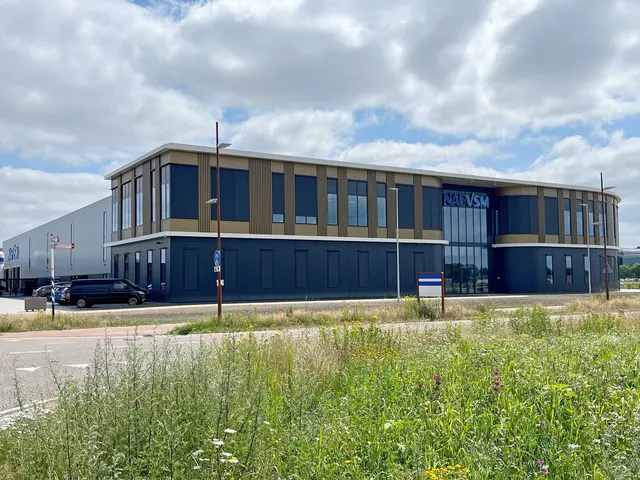
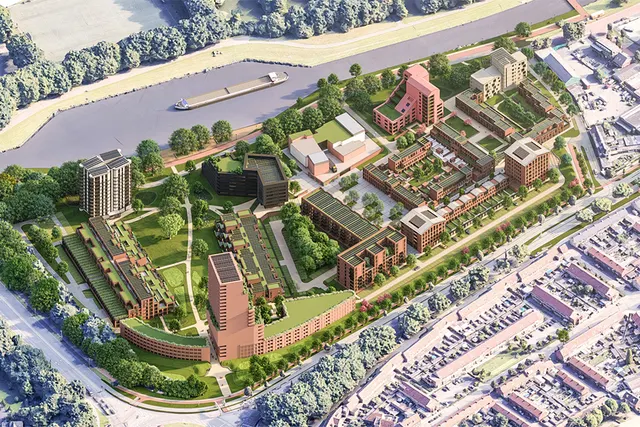
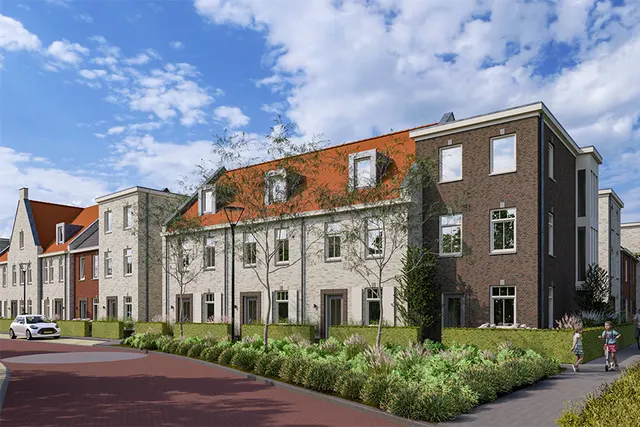
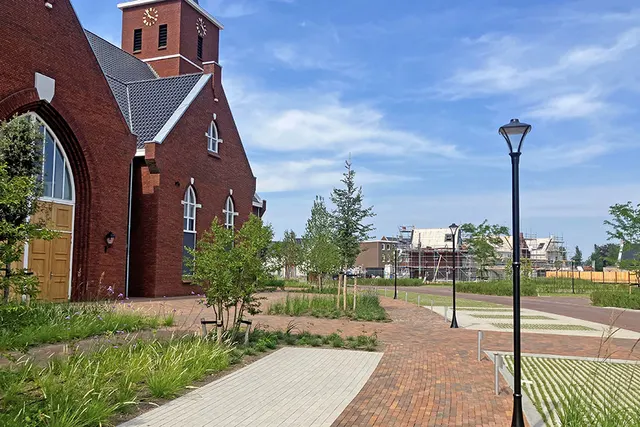
A few years ago, the engineers at US company Fluor moved to Hoofddorp. Dura Vermeer Bouw Midden West built their new premises. “The agreement also included the redevelopment of the site and building in Haarlem,” says Martijn Kramer, site manager for the project at Dura Vermeer. “Elements contributes to a new purpose for the former Schalkwijk Midden office and business district, in line with a development framework drawn up by the municipality in consultation with the various owners. A new residential and work area is taking shape here, nestled in greenery.” Most of the existing buildings will be demolished, making way for around 1,250 rental and owner-occupied homes around a landscaped, low-traffic central area. The result will be a ‘city among the trees’, with space for workplaces, hospitality venues and other amenities, particularly on the ground floor.
5 subprojects
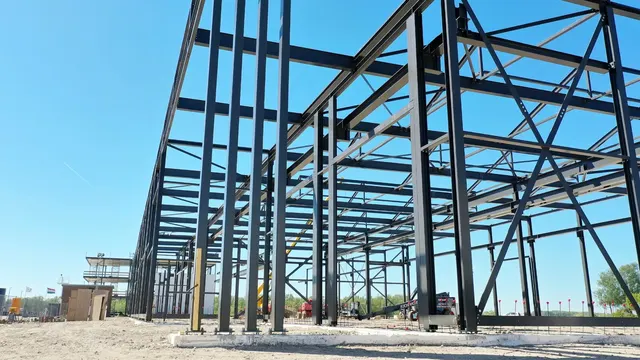
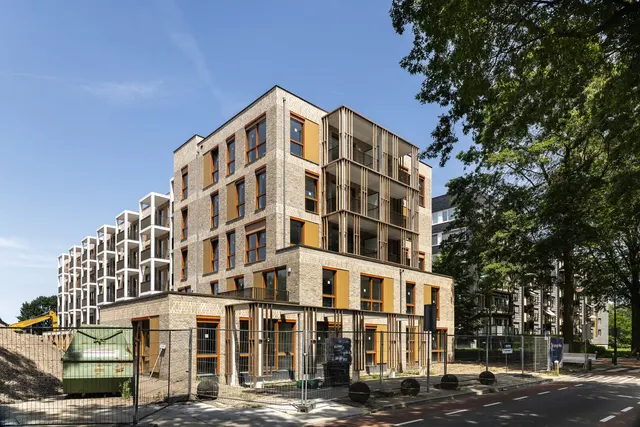
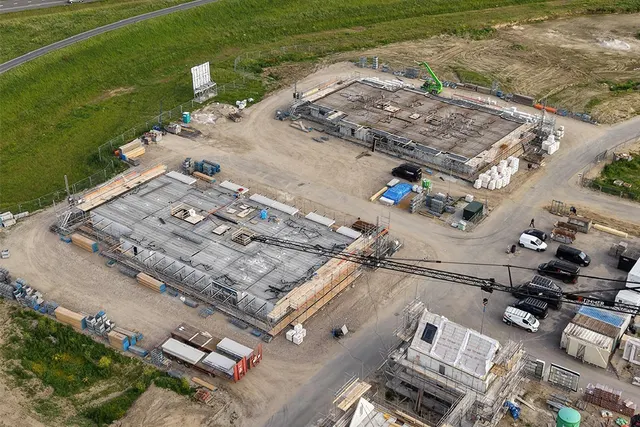
Dura Vermeer drew up the masterplan for Elements, which comprises 5 subprojects designed by various architectural practices. Four new buildings are now rising on the former car park around the Fluor office. Amerikablok, along Amerikaweg, comprises 3 residential towers, with a total of 149 flats above an underground car park. The buildings have now reached their full height, as has Floors, a building with 41 flats along Europaweg. The steel frame of Smart Dock, a car park with a work café and service point on the ground floor, has also reached its full height. Construction of the final subproject began after the summer break. It comprises 10 Townhouses, while Lookout will contain 8 flats.
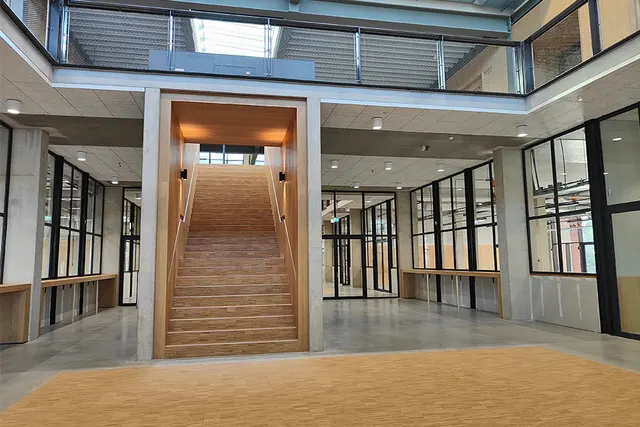
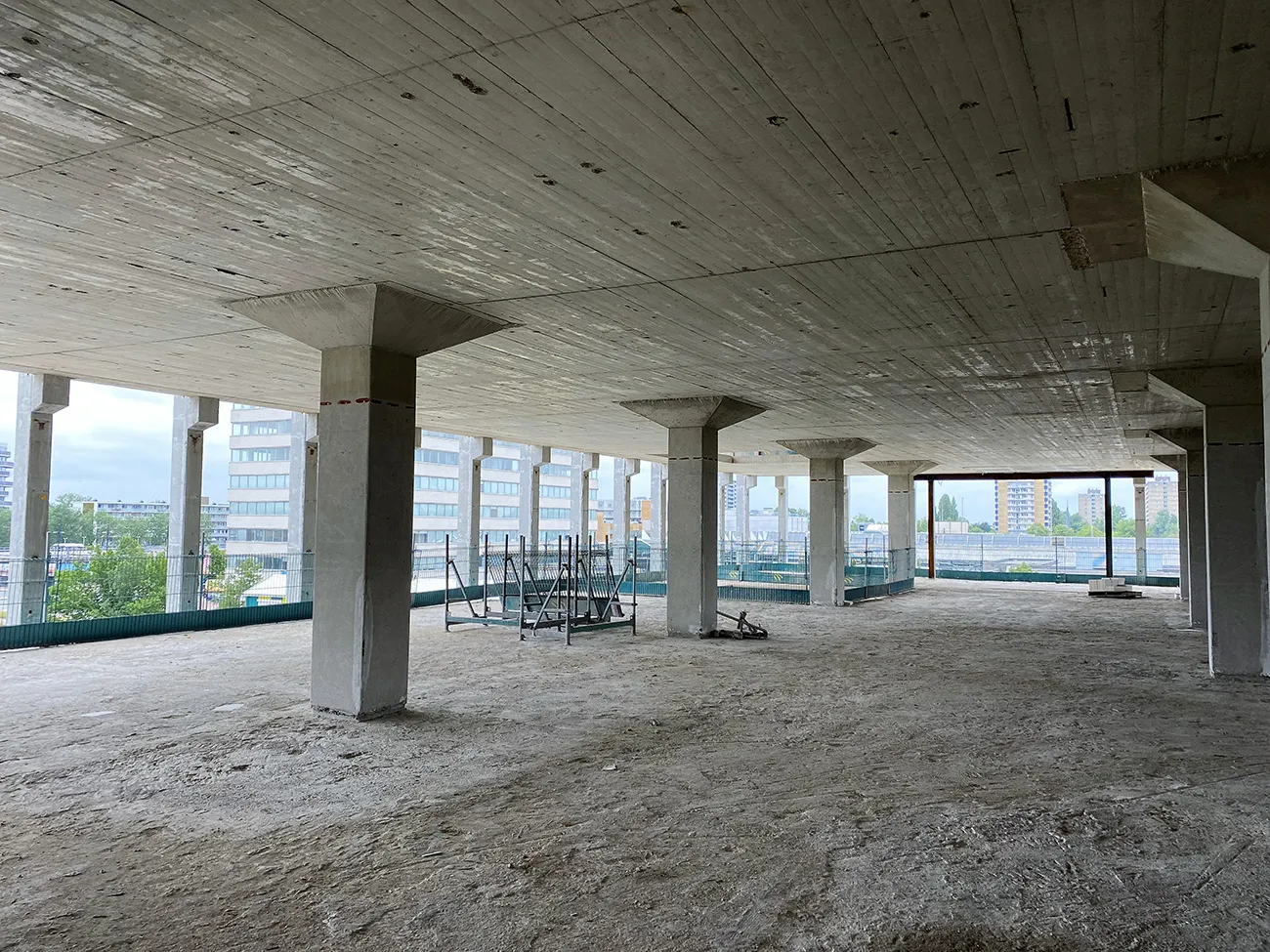
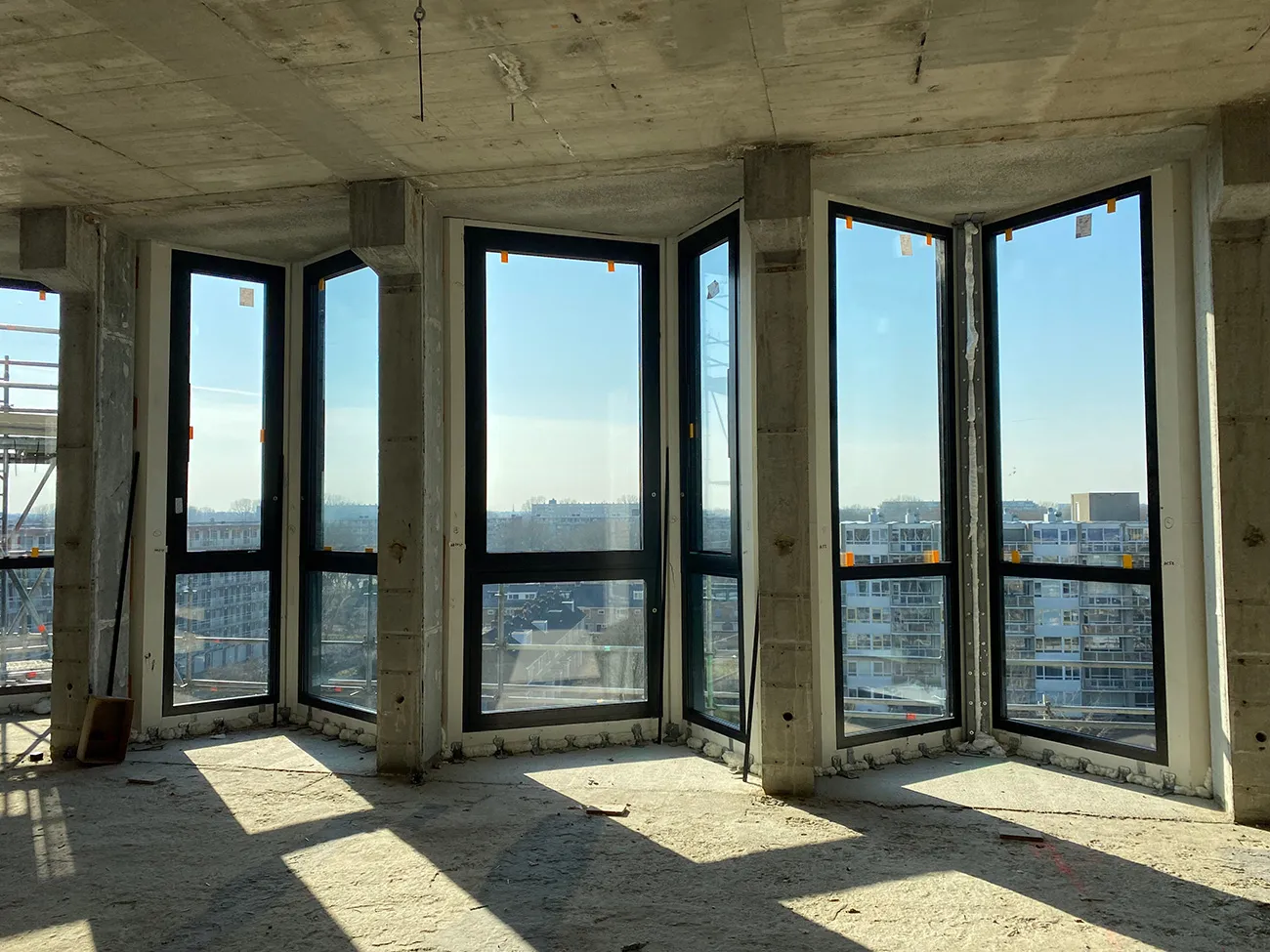
The fifth and most distinctive subproject is Factory, which involves converting the former main building. When it was built in the 1970s, Fluor already envisaged that it would be used temporarily, with a different purpose for the building in the longer term. It was therefore designed with floor-to-ceiling heights of more than 3 metres and an open column structure with a generous 7.20-metre structural bay. Its huge mushroom-shaped columns are a defining feature.
Industrial character
The building has now been stripped back to its concrete frame. Designed by Elephant, it will contain 96 loft flats ranging from 80 to 200 square metres, with 18 on each floor, some of which can be laid out to suit residents’ needs. The concrete is left exposed, and most of the huge mushroom columns stand free within the living spaces, reinforcing the industrial character of the flats. Most are accessed via the 2 stairwells in the building’s existing concrete core. Four new stairwells have been built for the corner flats. A large communal roof garden will be created on the roof.
576 bay windows
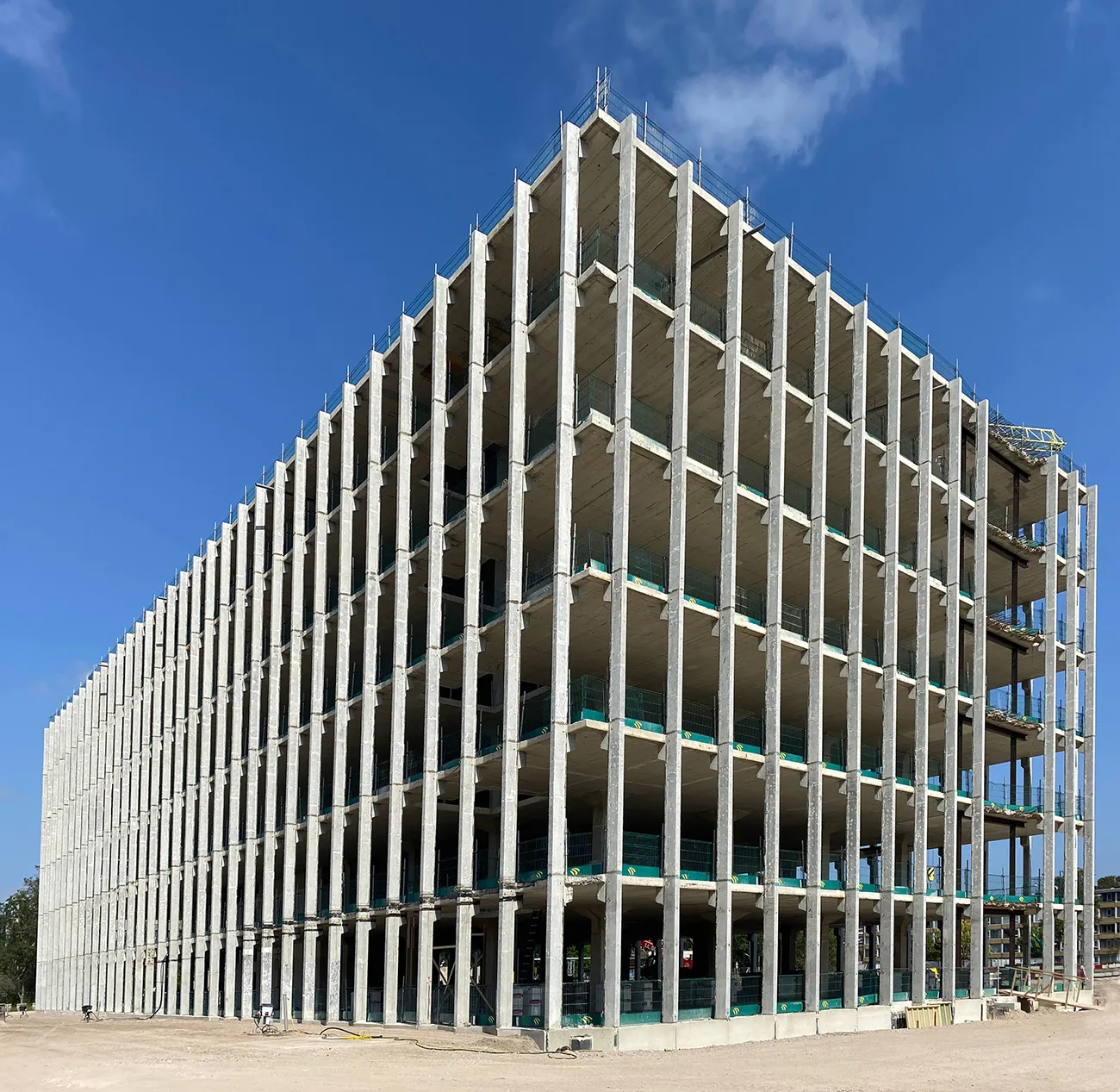
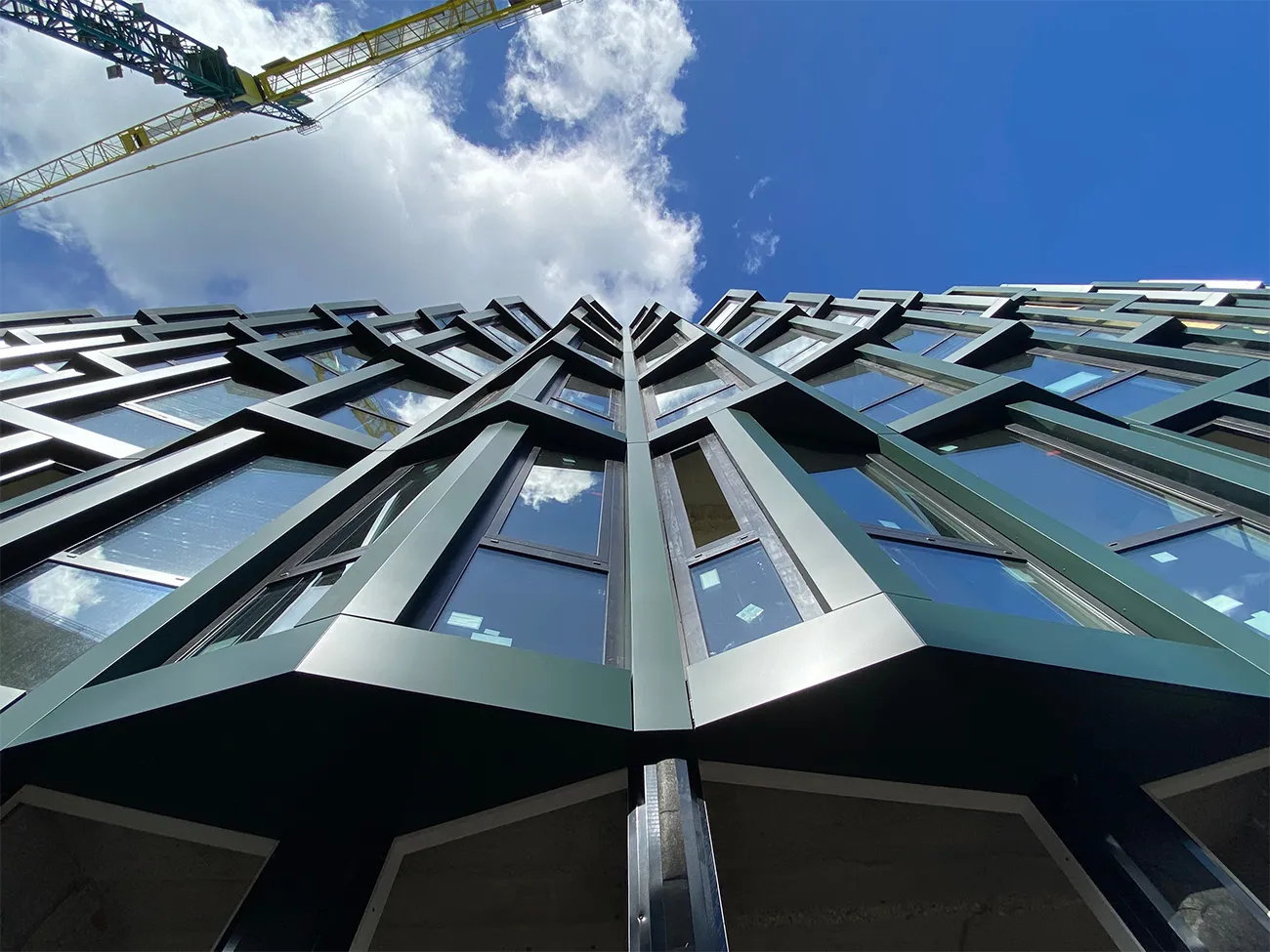
To bring enough daylight into the deep-plan flats, the external façade is made up of triangular bay windows. There are 576 in total. They project slightly further out from the façade on each successive floor, reaching 1.5 metres on the top floor. Each bay window also has a slightly different shape, creating a richly varied façade. This presented a major challenge for Dura Vermeer, says Emiel Kemp, site manager responsible for the construction of Factory. “We had to cast the floor slab in situ for every bay window. That means 672 floor slabs. We also had to contend with dimensional variations, which had not been anticipated. After demolition, we carried out a 3D scan from the inside, which revealed the variations. We then scanned the outside too, where there were also dimensional variations caused by settlement and differences in the columns. Accommodating all this in the façade design required a great deal of effort from our team. A straight façade would have been much easier. But the result is a unique building.”
Question about this story? Ask your question
Who worked on Elements
- client and contractorDura Vermeer Bouw Midden WestIn this story
- designElephantIn this story
- designKoschuch ArchitectsIn this story
- designMeesVisserIn this story
- Project management31 West concept & projectontwikkelingMentioned in A modular, sustainable mobility hub
- sealant jointsDutch Sealant Applications (DSA Nederland)Mentioned in Liquid-tight and liquid-resistant sealant joints
Keep following this
Get an email when a new story is published. No account needed.
- ProjectElements
- SubjectResidential and non-residential construction
- CompanyDura Vermeer Bouw Midden West
- CompanyElephant
- CompanyKoschuch Architects
- CompanyMeesVisser