Stedenbouw is part of Louwers Mediagroep: 45+ trade platforms in the Netherlands, Flanders and Wallonia. Trade magazines, websites, newsletters, video and podcasts, since 1987.
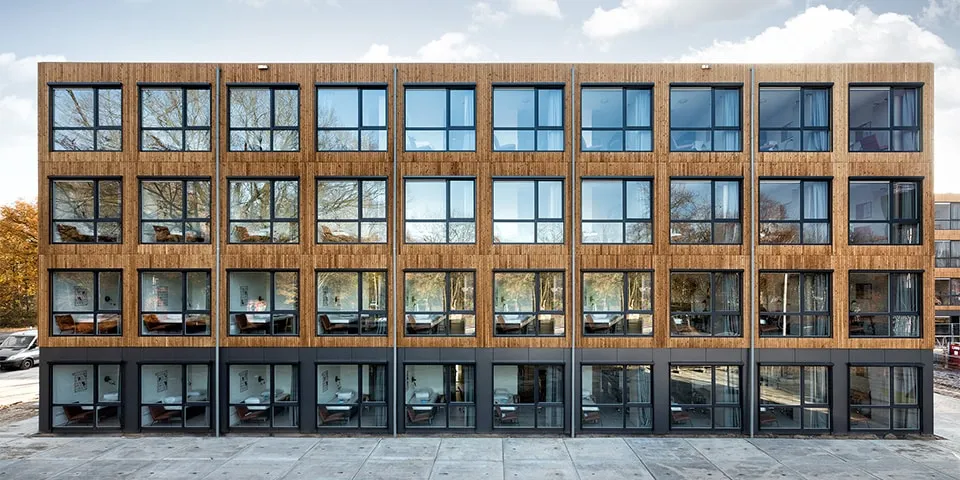
With Eindhoven’s student population growing, student housing provider Vestide, part of Woonbedrijf, urgently needed student homes. Jan Snel delivered 300 modern studios within six months. Thanks to modular construction, a vacant plot in the student city was transformed into a student complex at remarkable speed.
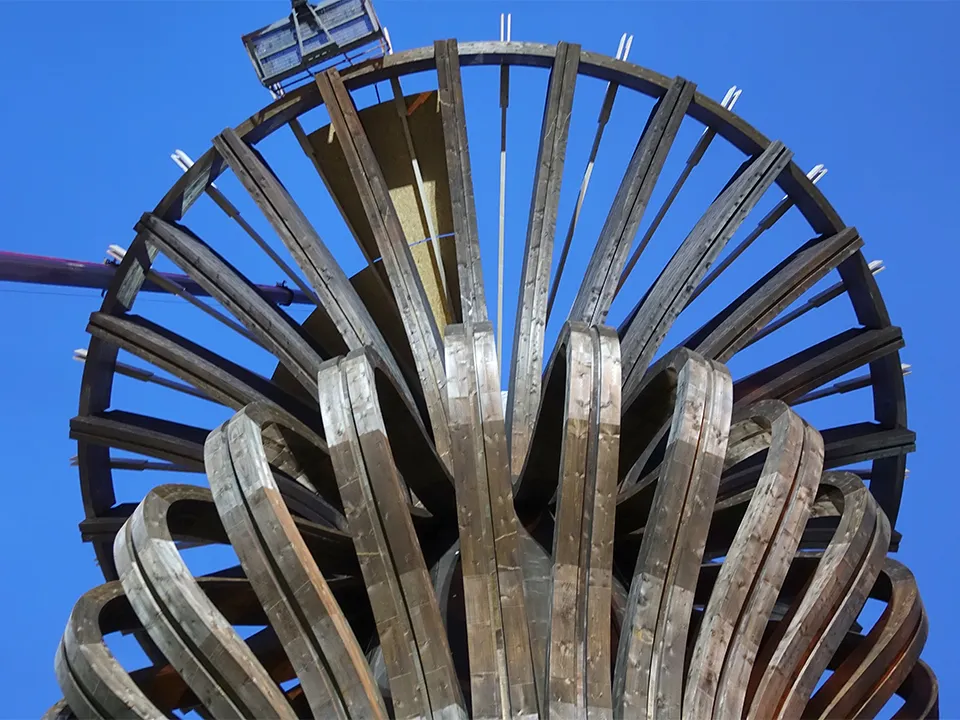
De hele constructie wordt gedragen door een ‘stengel’ met een diameter van 3,2 m.
Brand-new student homes
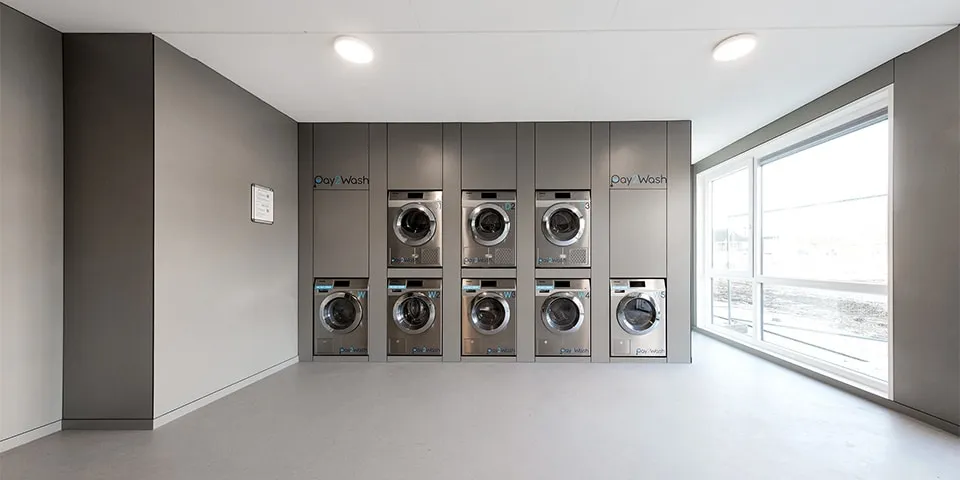
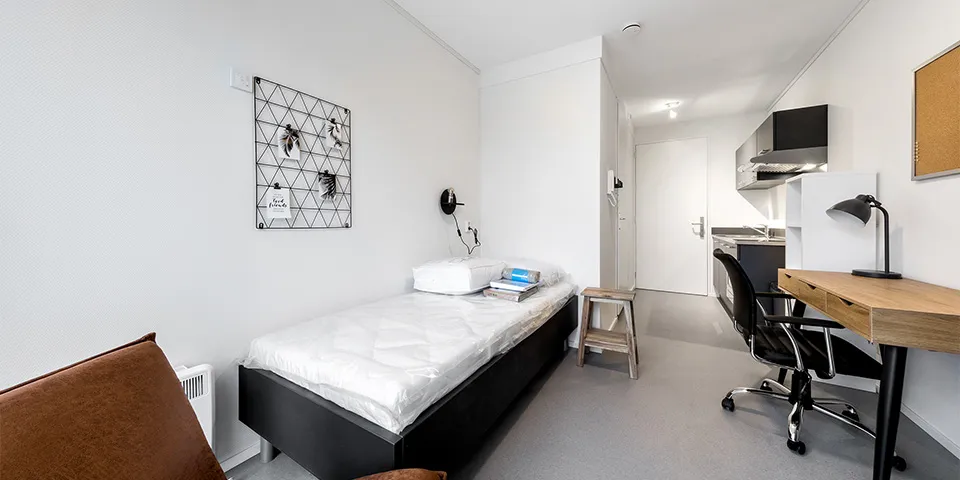
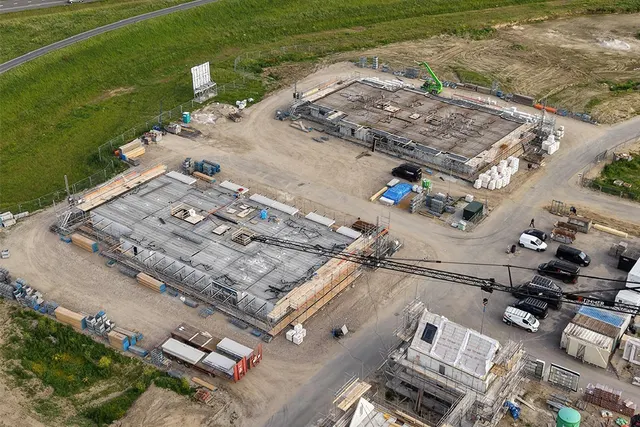
Students did not have long to wait for their new studios: Woonbedrijf awarded the contract in June, and the first 66 residents moved in as early as October. In just five months, the modular construction company built four blocks, each four storeys high. The blocks provide space for 300 studios, a communal living room, laundry facilities and plant rooms. Each studio consists of a single 3 by 6 metre unit (18m2), with its own kitchen and bathroom with toilet. The student complex is located near the Berenkuil, within cycling distance of Eindhoven’s universities of applied sciences and university.
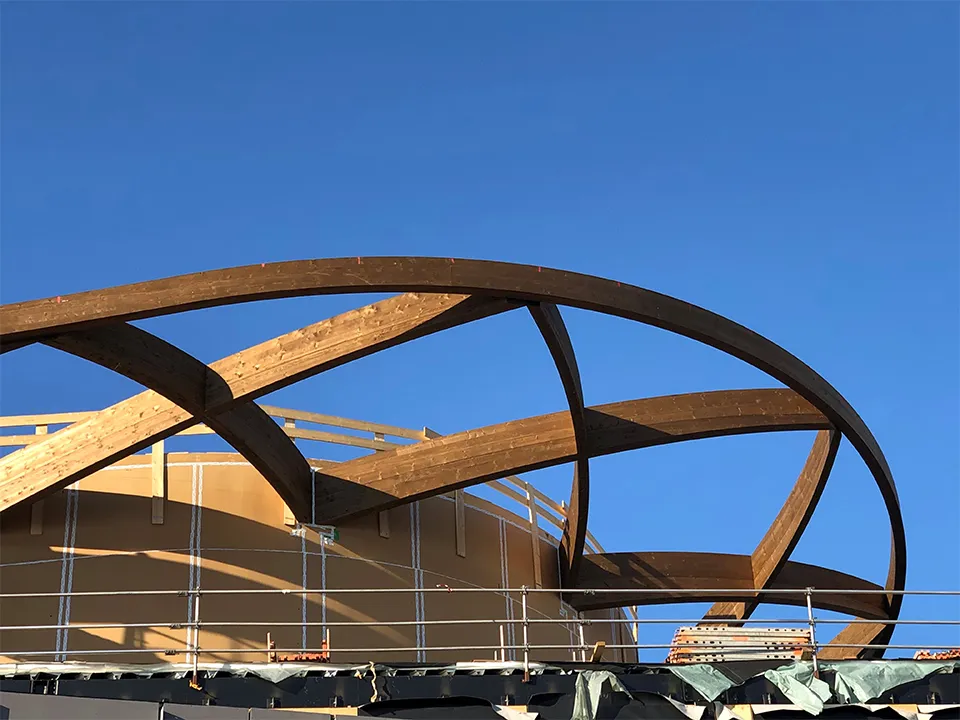
Blumer-Lehmann ontwikkelde, produceerde en monteerde de opvallende ‘houten bloem’ als eyecatcher van het nieuwe Holland Casino in Venlo.
A flexible solution for the long term
The studios at the Berenkuil will be in use for the first fifteen years, after which a new location will be sought. Jan Snel’s modular construction system makes it possible to respond quickly to changing housing needs. Although the homes are intended to remain in place for fifteen years, choosing modular construction has delivered a solution for the long term. Because the studios are made up of units, the buildings can be easily adapted and relocated. The use of steel walls and concrete floors makes the units suitable for permanent use. Giving the units a second life after fifteen years will therefore also help the project contribute to the circular economy.
Design that takes the surroundings into account
A distinctive feature of the project is its all-electric design. This means that heating and the water supply are electric. This not only makes the units easy to relocate, but also provides a sustainable solution. Solar panels further reduce the environmental impact and keep costs manageable for residents.
The design also takes the impact on the surrounding area into account. For example, the construction of swales ensures effective rainwater drainage. The swales allow rainwater to soak into the ground and prevent the wastewater treatment plant from becoming overloaded. In addition, in consultation with Wasven, a variety of grasses and plants were chosen to attract bees and birds. The project thus contributes to a greener environment and provides a sustainable solution for the future.
Max Smits, project manager at Jan Snel, is very proud of how quickly the student homes were delivered: “The speed at which we completed this project is truly unique. Good communication and the willingness of all parties to act quickly meant that we were able to build new student homes at remarkable speed. Normally, applying for a building permit takes at least eight weeks, but thanks to the municipality’s cooperation, we were able to get started after just a week and a half. You don’t see that very often!”
Find the right company in constructionSearch by product, specialist field, region or project, across the company directory and all Stedenbouw articles.
We use cookies to keep the site working properly. With your consent, we also use cookies for statistics and third-party banners. Read more in our privacy and cookie statement.