Platform on new construction, renovation, restoration and transformation
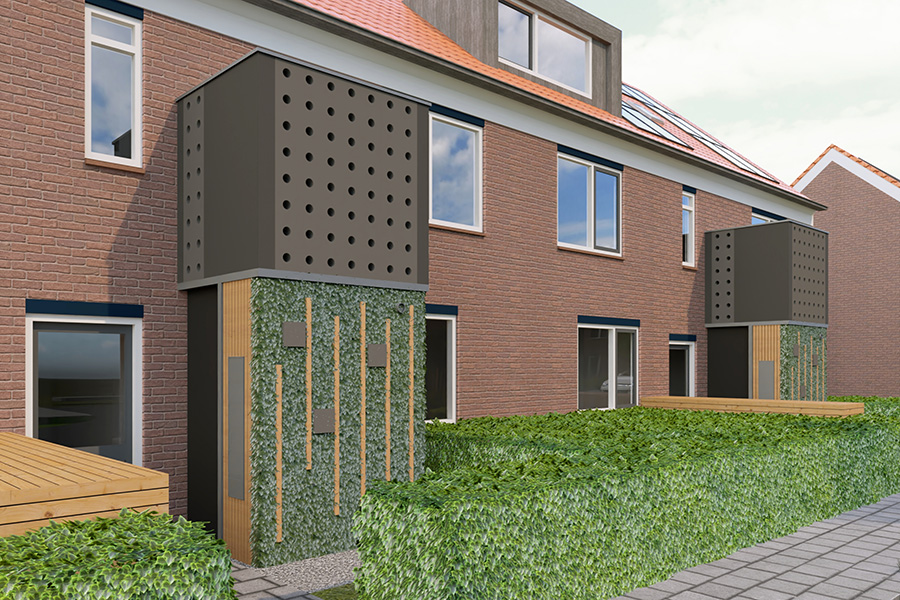
The need to accelerate the energy transition is growing even more due to rising energy prices. As a result, municipalities must make decisions more quickly. New laws, such as the Municipal Instruments for the Heat Transition Act (Wgiw) and the Collective Heat Act (Wcw), will also give a boost to the heat transition. It is almost inevitable that these transition plans will include new heat networks. Thanks to the growing popularity of modern, mini-heat networks, the possibilities are now much greater.
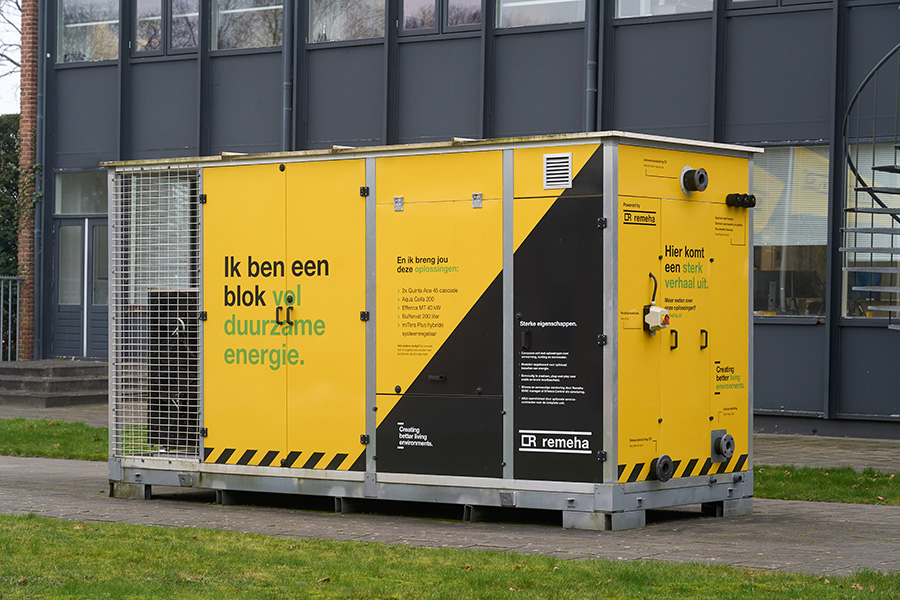
If we want to transition existing buildings off natural gas, the options are not endless. Currently, grid congestion is such a limiting factor that homeowners in many neighborhoods cannot apply for increased connection capacity to switch to an individual heat pump system. If we still want to help residents reduce their energy consumption and costs, we must therefore find other methods. And those methods do exist. Especially in areas with grid congestion, connecting homes, apartment buildings, or entire neighborhoods to a mini-heat network is a solution. “We now have several concepts available for installing heat networks that supply heat—and often cooling as well—to anywhere from a few to several hundred homes,” says Rudolf de Haan, commercial solutions manager at Remeha. “Given the current state of our electrical grid, implementing individual solutions is very complicated. However, if you opt for a collective heating and cooling system that supplies multiple homes with renewable energy, each home requires a smaller electrical connection.”
Remeha has observed that, despite grid congestion, the desire to continue making systems more sustainable is driving the implementation of heating and cooling solutions. “There are several ways to implement heat supply in smart ways. These range from a utility room with a single collective heat generator serving four or six apartment buildings to a neighborhood heating plant that supplies heat—and possibly cooling—to multiple homes on different streets,” says De Haan. “The common thread among such concepts is that we almost always need only one or a few heat pumps to serve a large number of homes. If you combine such a concept with a smart energy management system and a hot-water boiler, peak demand remains limited.” Moreover, you can also implement such concepts—even if only temporarily—in a hybrid configuration. “We then combine the system with a gas-fired boiler that kicks in on the coldest days of the year or during peak demand for hot water. Such a small collective heating network is also excellent preparation for a potential connection to a regional heating network, if that is included in the future heating transition plan.”
Thanks to the new laws—the Wgiw and Wcw—the municipality has more options and authority to determine the type of heat supply for neighborhoods and areas. It is precisely in the neighborhoods where the municipality plans to build a district heating network in the future that homeowners can get started with mini-heat networks. More flexible rules and exemption options apply in particular to systems with fewer than 1,500 connections. Mini-heat networks also have everything needed to better ensure public values such as affordability, reliability, and sustainability. Once a mini-grid—using, for example, an air/water or ground-source heat pump as a heat generator—has been established, it is always possible later to connect it to a larger network that also includes, for instance, suppliers of residual heat. “With Fortes Energy Systems, we also have a sister company that is the leading expert in transferring energy from collective heating and cooling networks to a home’s distribution system,” says De Haan. “They specialize exclusively in the development and production of large and small transfer stations.”
“In the homes themselves, we can usually make do with a modern and often very compact distribution unit,” says Timo van Kasteren, a heat network specialist at Fortes Energy Systems. “With these smart delivery kits, we can provide any type of home with comfortable heating and cooling. To do this, we use state-of-the-art changeover systems.”
When it comes to making homes more sustainable through mini-grids, so-called LT and ZLT grids are becoming increasingly common. In an LT grid, the supply temperature ranges between 30 and 55°C. In a ZLT network, this is even lower, ranging from 10 to 30°C. With a ZLT network in particular, it is possible to cool homes using the same network. This need is increasing significantly in many renovated and well-insulated homes. “In the winter, we use these low temperatures for heating, and in the summer, we can use a high temperature for cooling. Depending on the supply temperature, the delivery unit can also provide domestic hot water, possibly in combination with a special, highly compact booster heat pump. This allows for many possible configurations,” says Van Kasteren. “That’s the beauty of the partnership between Fortes and Remeha. We have all the necessary technical components in-house—from large communal heat generators to small, individual booster heat pumps and distribution sets, and everything in between. Moreover, our engineers provide full support for design and engineering. We literally stand right alongside the residential installer to ensure that, together, we deliver the most ideal configuration for every specific situation.”
Remeha supports building owners, installers, and consultants in system design, thereby increasing both the feasibility of projects and the future-proofing of systems. This requires early involvement, a holistic approach, and the courage to move beyond traditional design principles.
Neem dan rechtstreeks contact op met Remeha BV.
 Contact opnemen
Remeha develops innovative and energy-efficient products for climate control or heat and hot water, both for homes and utilities. With its innovations Remeha wants to anticipate the needs and wishes of now and in the future. With over 500 employees, Remeha has a contemporary approach to development, production and market approach, with which they [...]
Bekijk Bedrijfsprofiel