Area development: ‘A mobility hub only works when all the elements add up’
Text Carolien KleesImage Haskoning, Jane van Raaphorst en Stijn Poelstra
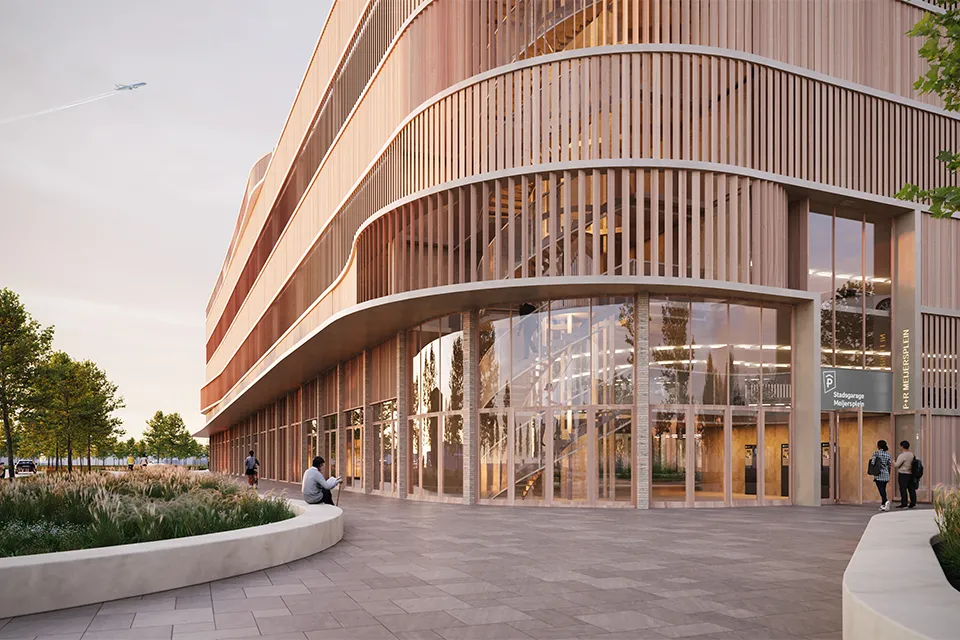
“A mobility hub is never an end in itself. It is a means of changing mobility so that an area becomes more liveable and accessible, or remains so,” says Jasper Homrighausen. He is a team leader in Haskoning’s Mobility Hubs department, the new name for Royal HaskoningDHV since recently. Two colleagues from the department are also at the table: leading professional Jarko van Nunen and adviser Jet Schaap. To learn about the experience and vision of this renowned consultancy and engineering firm, we asked them for their views on mobility hubs. What makes a hub successful, and where is there room for improvement?
Schaap: “We often see that mobility is not considered early enough in area development, even though it is one of the key factors for success. This is already a major area for improvement. It is also important to bring the interests of different stakeholders to the table at an early stage, including organisations such as NS and ProRail. MIRT studies show that there is a need for integrated accessibility plans that connect multiple challenges. Taking an integrated approach to hubs brings together mobility, infrastructure, housing and area development. A good example is the mobility hub in the Papendorp district of Utrecht. At an early stage, we asked whether other functions could be linked to the hub, so that it could serve as a safe, sociable place where people could go for more than just mobility. Think cafés, shops or a gym.” Homrighausen adds: “It is also important to consider when the facilities will be used. In the evening, a car-sharing site is a quiet, unpleasant place. But if you also put in a gym, which is often used in the evening, there will be more activity, making it a more pleasant place that feels safer.”
Multimodal hub
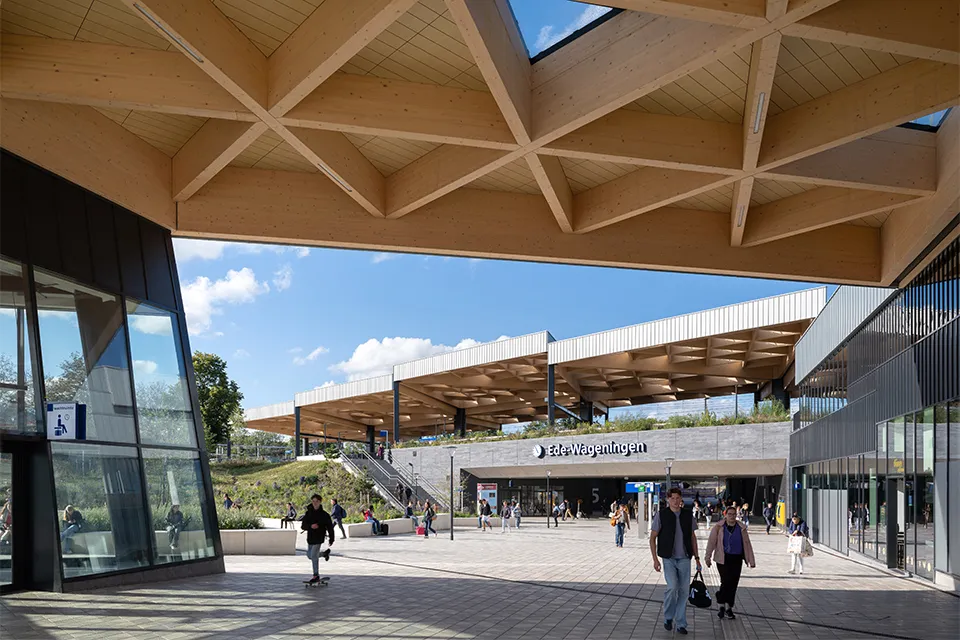
The multimodal Ede-Wageningen hub is a prime example of an integrated project. Haskoning’s team of mobility and rail experts, working with clients ProRail, NS and the municipality of Ede, has created a spatial design that is a key link in the transition to sustainable mobility. In addition to a new station building, the hub includes a passenger tunnel, new platforms, a bridge for pedestrians and cyclists, a large cycle parking facility, shops, cafés and a car park. Traffic flows are separated where possible and brought together where necessary. The new station provides a hub for sustainable transport and a gateway to the natural areas of the Veluwe, Wageningen University & Research and the new neighbourhoods around the station.
Target group analysis
Van Nunen sees another area for improvement in catering for the needs of the eventual users: “People often want a hub without giving proper thought to who will use it in the future. To ensure area development succeeds, we have experts who build a clear picture of the target group. They explore the wishes and needs of future users by mapping their customer journey. Ideally, we speak to future users directly, as we did at P+R Nijmegen Noord. We spoke to a nearby hospital to find out under what conditions its staff could use the hub.”
Adaptable and future-proof
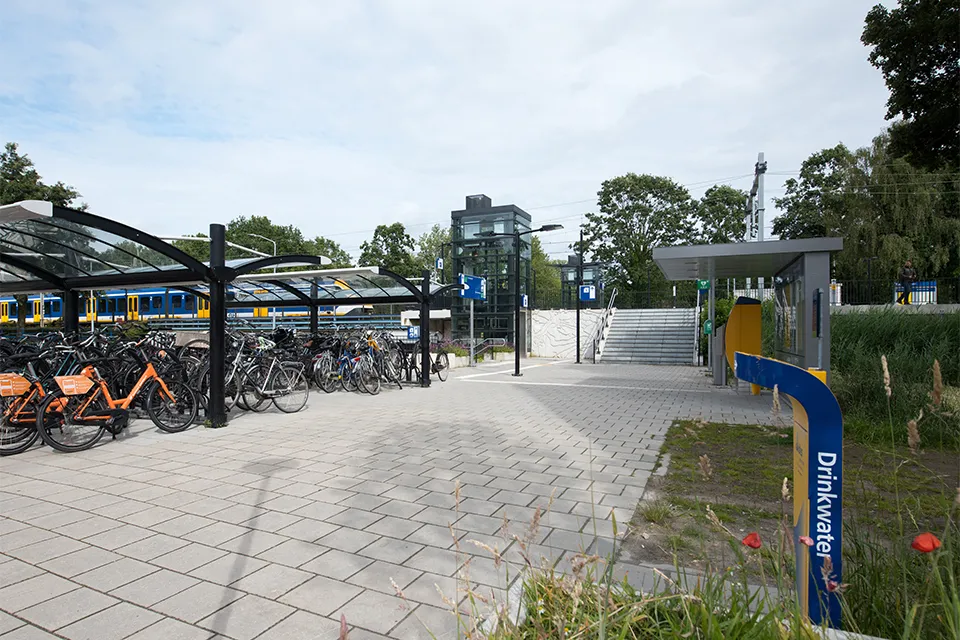
Van Nunen says more attention is also needed for adaptable, future-proof design: “A hub’s function can change over the years. It is often possible to plan ahead by asking which future scenarios are desirable, promising and realistic. A circular design using demountable materials makes a hub adaptable and therefore future-proof. The same applies to using standard components and dimensions. Or the foundations and structure can be designed to accommodate additional floors. There are plenty of options.”
Organisation and funding
Clearly formulated social business cases that demonstrate the added value of hubs make it more likely that decision-makers will allocate funding. Homrighausen explains this using the shared-bike scheme with hubs in Overijssel as an example: “Investments were made here that would not pay for themselves through bike hire alone. However, the social cost-benefit analysis showed that the bikes and hubs also contribute to tourism and employment. After all, many buses stop running in the evening. Thanks to the shared bikes, people who rely on this form of transport can now also work in the city in the evening. This makes the investment pay off sooner.”
Approach
“Every hub is different, but there is one effective approach to creating a realistic path towards a successful hub. We look at it from five perspectives: purpose and target group, required functions, location and integration, design, and organisation and funding. After all, a mobility hub only works when all the elements add up,” Homrighausen concludes.
Question about this story? Ask your question
Keep following this
Get an email when a new story is published. No account needed.
- SubjectConstruction projects