









First-ever geopolymer loading bay, the sustainable alternative to cement-based concrete
Text Johan DebaerePhotography SQAPE
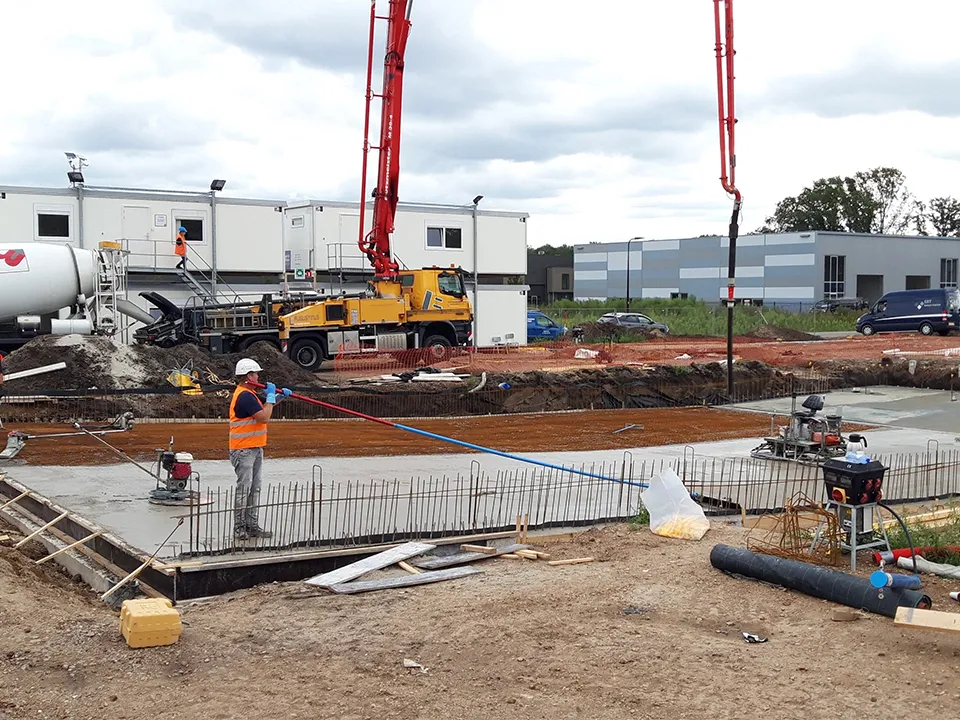
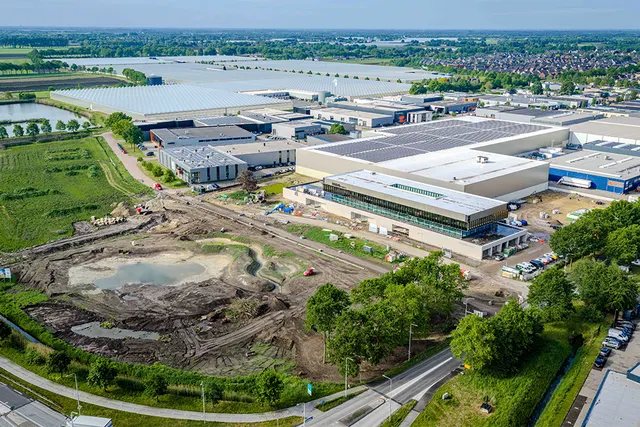
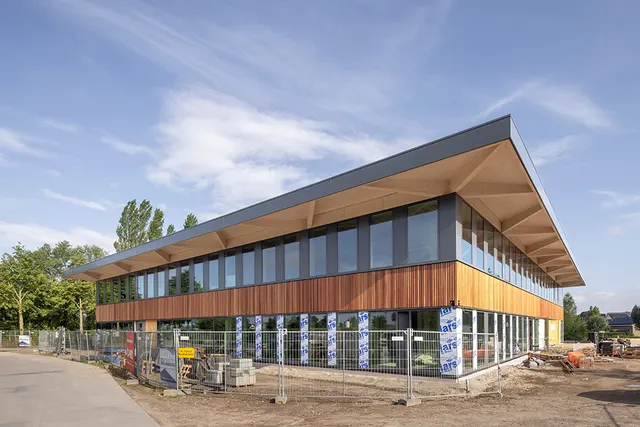
Sustainability and circularity are becoming increasingly important in the construction sector, including residential and non-residential construction and infrastructure projects. This is evident, among other things, in the new office building for publisher DAVO in Deventer, which is being built using as many circular materials as possible.
This applies to the steel structure, the drainage system, … and even the loading bay. Concrete supplier Rouwmaat provided RAMAC geopolymer, produced using SQAPE technology, an innovative, sustainable and circular alternative to conventional cement-based concrete.
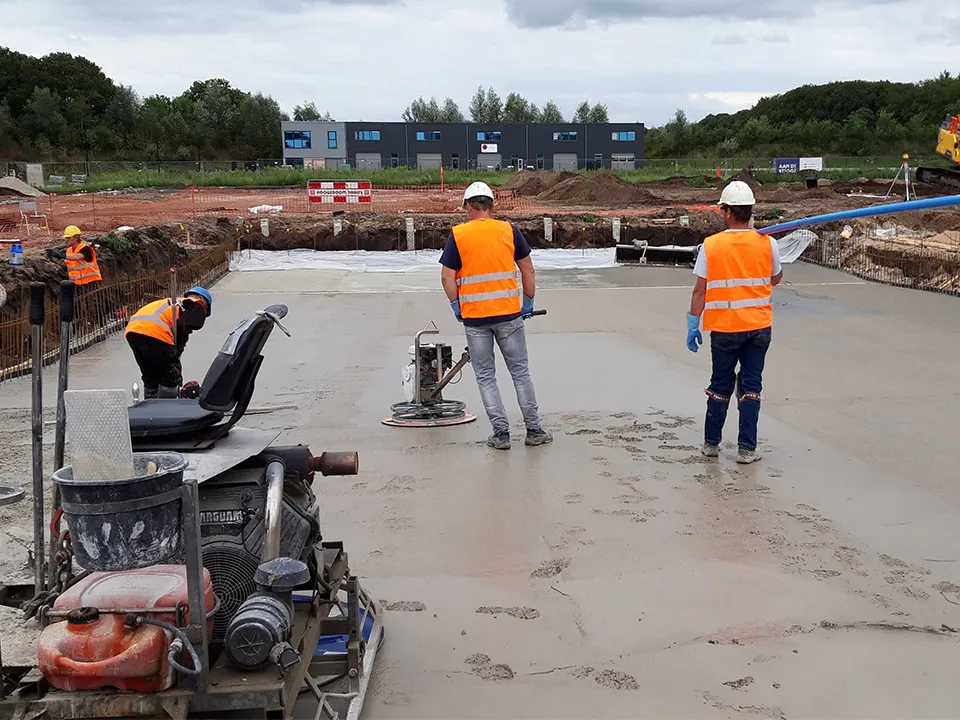
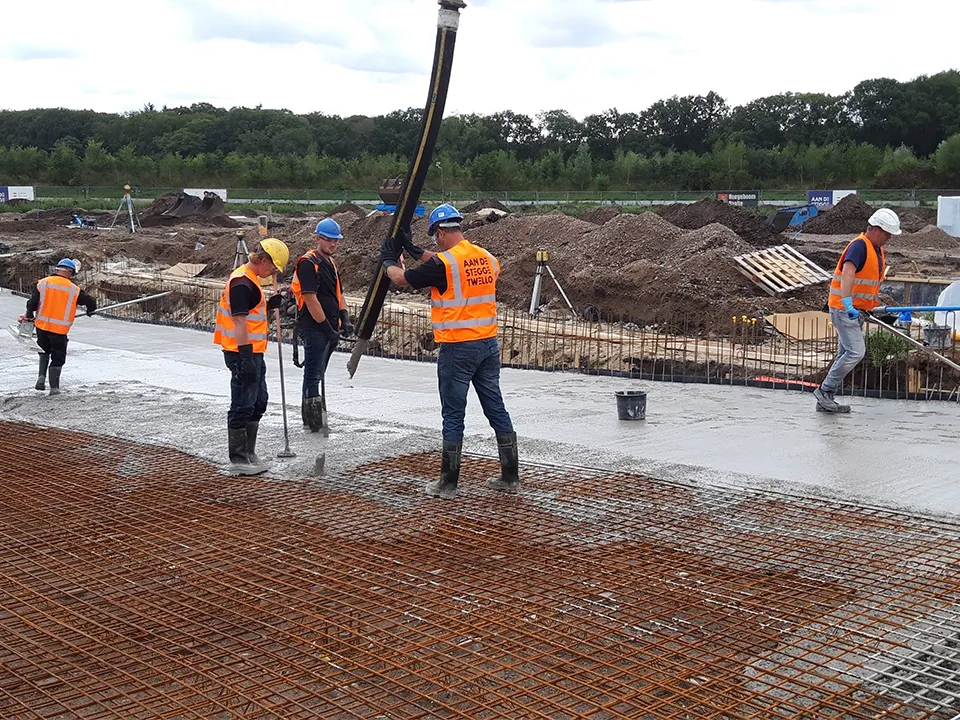
SQAPE technology has been around for several years and is being used in an increasing range of applications. In the traditional concrete mix, which consists of sand, gravel and cement, the cement is replaced by a less environmentally harmful binder system made up of selected mineral by-products, alkalis, an activator and patented additives. This delivers a CO2 reduction of up to 80% and a particularly low environmental cost indicator (MKI) score. “Alongside our work in civil engineering, materials transport, recycling and environmental engineering, we are above all a full-service supplier of concrete, mortars and floor screeds. We have an up-to-date fleet of vehicles and equipment, and are always looking for innovative solutions. That is why, alongside conventional concrete, we also offer our customers RAMAC geopolymer, based on SQAPE technology,” says Jan Smit, concrete director at Rouwmaat Groep. “When we looked with Aan de Stegge Twello in June at how to provide a circular solution for the loading bay at the new DAVO building, we proposed geopolymer, as this material can be reused without difficulty, for example as aggregate in new polymer or concrete.”
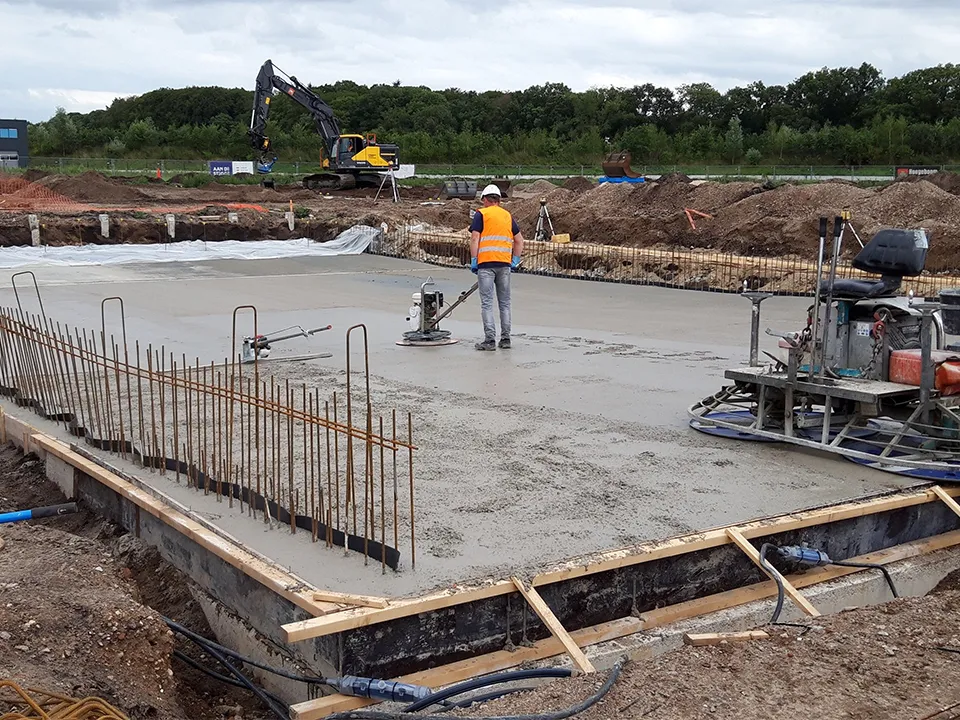
Monitoring
SQAPE has already been used in precast concrete products such as bricks, paving slabs and road surfacing. It is a sustainable material that reduces cracking, offers a high level of acid resistance and ensures good adhesion. “However, every project involves a different contractor and application. This is the first loading bay with a sloping ramp and walls. Lorries will drive over it every day, so we had to take temperature fluctuations and weather conditions into account,” says Jordi van Herel, product manager at SQAPE. “We follow projects closely and monitor them after completion. For the new DAVO building, we first assessed in the laboratory what an application on a slope would entail. Together with Rouwmaat, we supported the installer during preparation, pouring and finishing. After all, the result depends not only on product quality, but also on installation and curing.”
SQAPE and Rouwmaat are keen to take on more projects so they can better monitor long-term performance. Those who have worked with concrete for years are familiar with this sustainable alternative, but examples are important to persuade the next generation to work with RAMAC.
Circular rainwater system delivers unprecedented reduction in roof water load
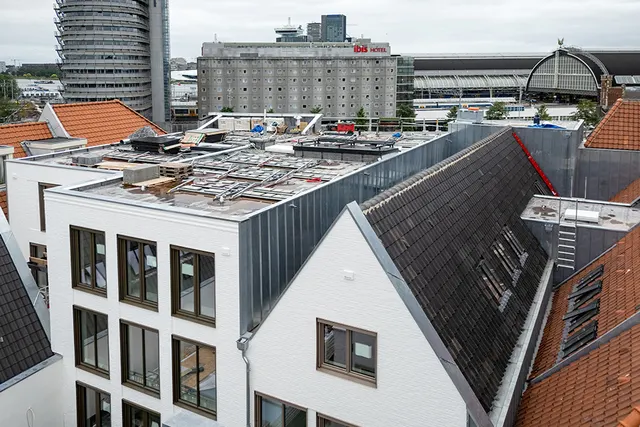
The requirements placed on buildings are stricter than ever. Alongside a safe and comfortable environment, sustainability is a prerequisite. The new DAVO building also puts circularity at the forefront. Thanks to close collaboration with various suppliers of circular building components, the building can be fully dismantled and reused. Aliaxis worked with Brink Staalbouw, Van Dalen Installatietechniek and main contractor Aan de Stegge to find circular solutions that add value. The result is a world first: a 100% circular rainwater drainage system.
“Like other rainwater drainage systems, Akasison may not be the most exciting product, but it is a highly functional and safe solution that meets very demanding requirements. If a roof collapses because the system fails, the consequences for people and businesses can be severe,” says Hilbert Pool, business development manager at Aliaxis. “Our solution reduces the water load on the roof by up to 30 kg per square metre. This can also lead to savings on the steel structure. Our project engineers prepared everything down to the last detail and developed the solution in close consultation with the various construction partners, enabling us to achieve an optimal result.”
“This solution also proves that a circular construction process does not have to cost more than conventional building methods,” adds adviser Cor van Dijken of Adviesbureau COR. “In future, polluters will have to pay the costs, and it may even become cheaper to build with sustainable products. Clients can already benefit from various tax incentives related to the environment. Those who claim Aliaxis’s full-bore Akasison system under asset code G6440 receive a net tax benefit of 9%.”
100% plug-and-play installations are a perfect fit for circular construction projects
Circularity is gaining importance in construction, as it is in many other sectors. Isolectra, a specialist in plug-and-play installations, is responding to this perfectly by using components that can be reused without difficulty and by reducing the amount of material used. Cor van Dijken, the driving force behind circularity at the new DAVO building in Deventer, contacted the company at an early stage to discuss principles and solutions.
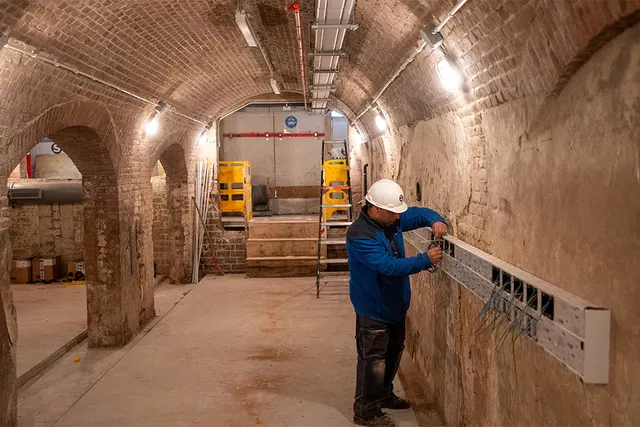
“Naturally, we started with our plug-and-play electrical installations, which eliminate loose wires, conduits, junction boxes and wire connectors. We supply a ready-to-install solution with cut-to-length cables, connectors and a distribution board, significantly simplifying the installer’s work on site. If the installations need to be dismantled or modified in due course, everything can be disconnected without difficulty and the components reused,” says managing director Werner Hulst. “Isolectra originally distributed various leading brands, but today we also develop our own plug-and-play systems, with circularity in mind. That is why Van Dalen Installatietechniek asked us to develop a plug-and-play solution for the data installation on the Deventer project. We proposed a Plastic Optical Fiber solution, which requires the installer to use 95% less material for the data installation. The number of cables is kept to a minimum, making the cable trays smaller and lighter too. The collaboration between Isolectra, Van Dalen Installatietechniek and Cor van Dijken ultimately resulted in a unique and innovative circular plug & play data and electrical installation at DAVO.”
Een zakelijke vraag aan Aliaxis Nederland B.V.? Get in touch
Wie aan DAVO werkte
- SQAPE technologySQAPEIn this story
- main contractorAan de Stegge TwelloIn this story
- steel structureBrink StaalbouwIn this story
- building services engineeringVan Dalen InstallatietechniekIn this story
- adviserAdviesbureau CORIn this story
- supplier and installer
 HardemanMentioned in ‘Our aim is to close the loop for steel roof and wall cladding’
- panel manufacturer
 FALK BouwsystemenMentioned in ‘Our aim is to close the loop for steel roof and wall cladding’

Keep following this
Get an email when a new story is published. No account needed.
- ProjectDAVO
- SubjectConstruction projects
- CompanyAliaxis Nederland B.V.
- CompanyIsolectra BV
- CompanySQAPE
- CompanyAan de Stegge Twello
- CompanyBrink Staalbouw