








Maasdeltatunnel and Hollandtunnel to connect Vlaardingen and Rozenburg
Text Desiree PenningsPhotography DISA International
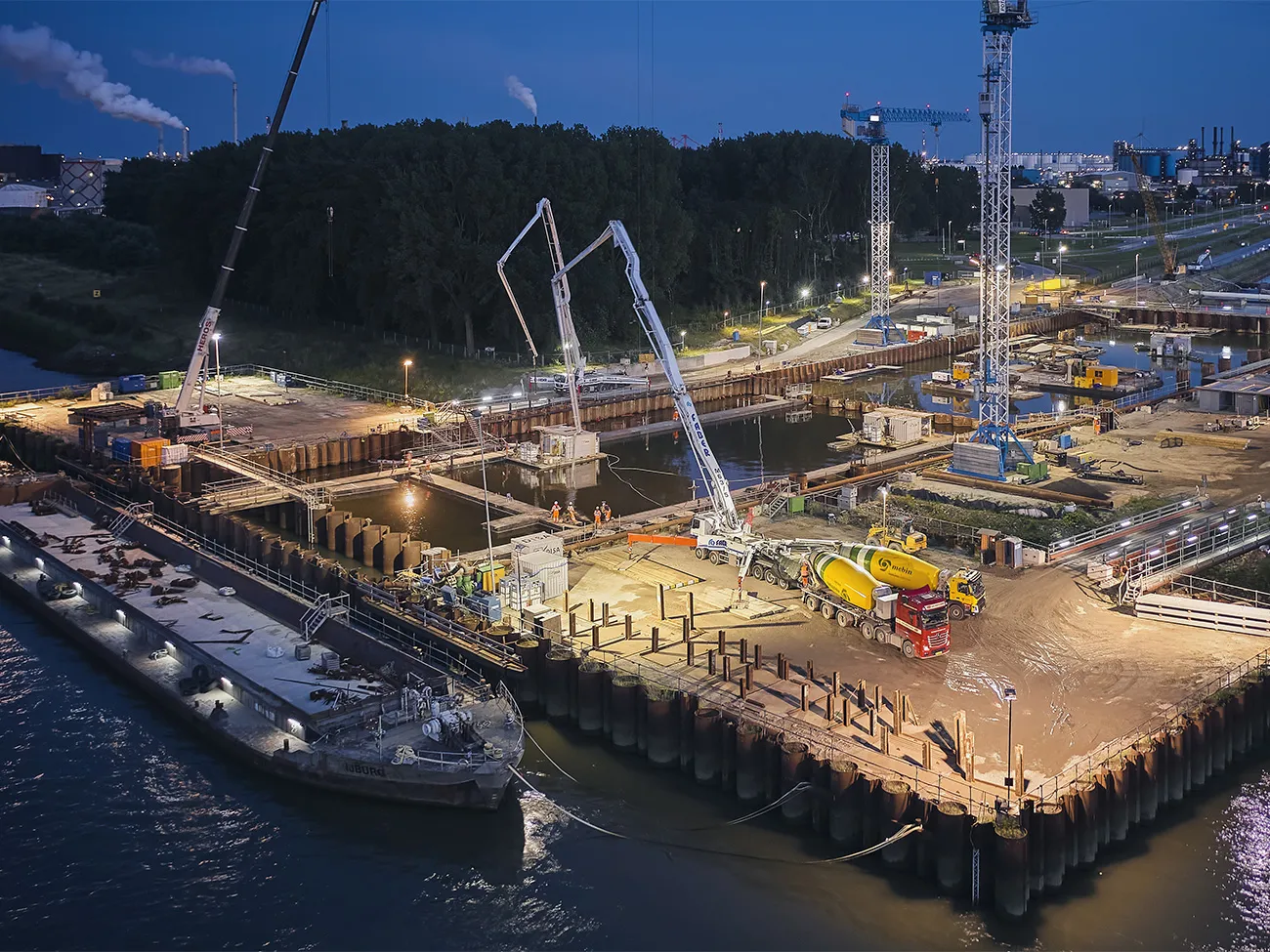
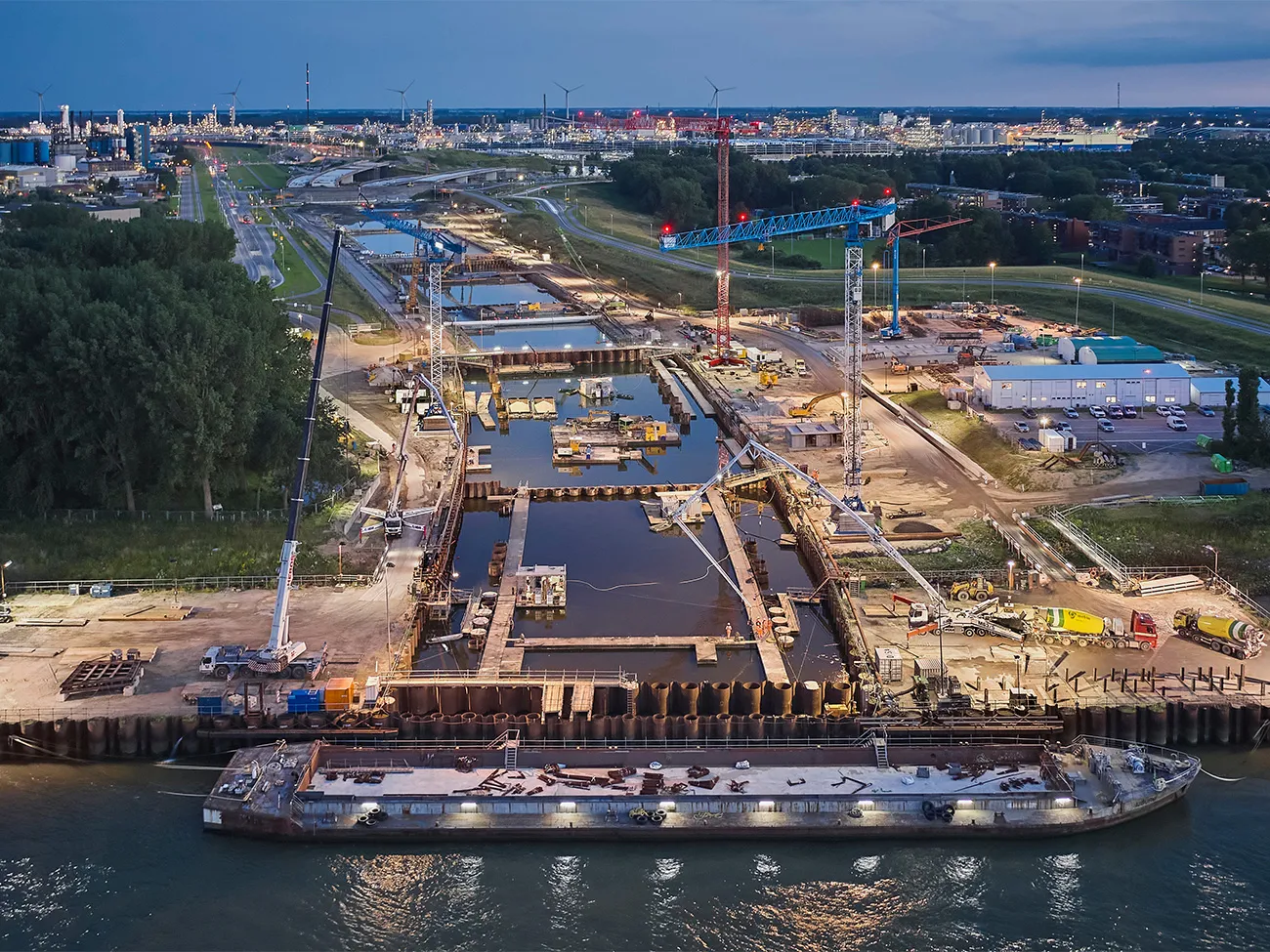
Both the Maasdeltatunnel (MDT) and the Hollandtunnel (HOT) form part of the Blankenburgverbinding, the name given to the new A24 motorway. The Maasdeltatunnel will run beneath the Scheur, east of Maassluis and Rozenburg. The tunnel will be 945 metres long and consist of two tubes with a central service duct between the two traffic tubes. Each tube will have three lanes, plus a fourth lane for slow-moving heavy goods vehicles near the tunnel entrances. The Hollandtunnel will be a land tunnel measuring no less than 510 metres. Construction is being made possible in part by the underwater concrete floors installed by DISA International.
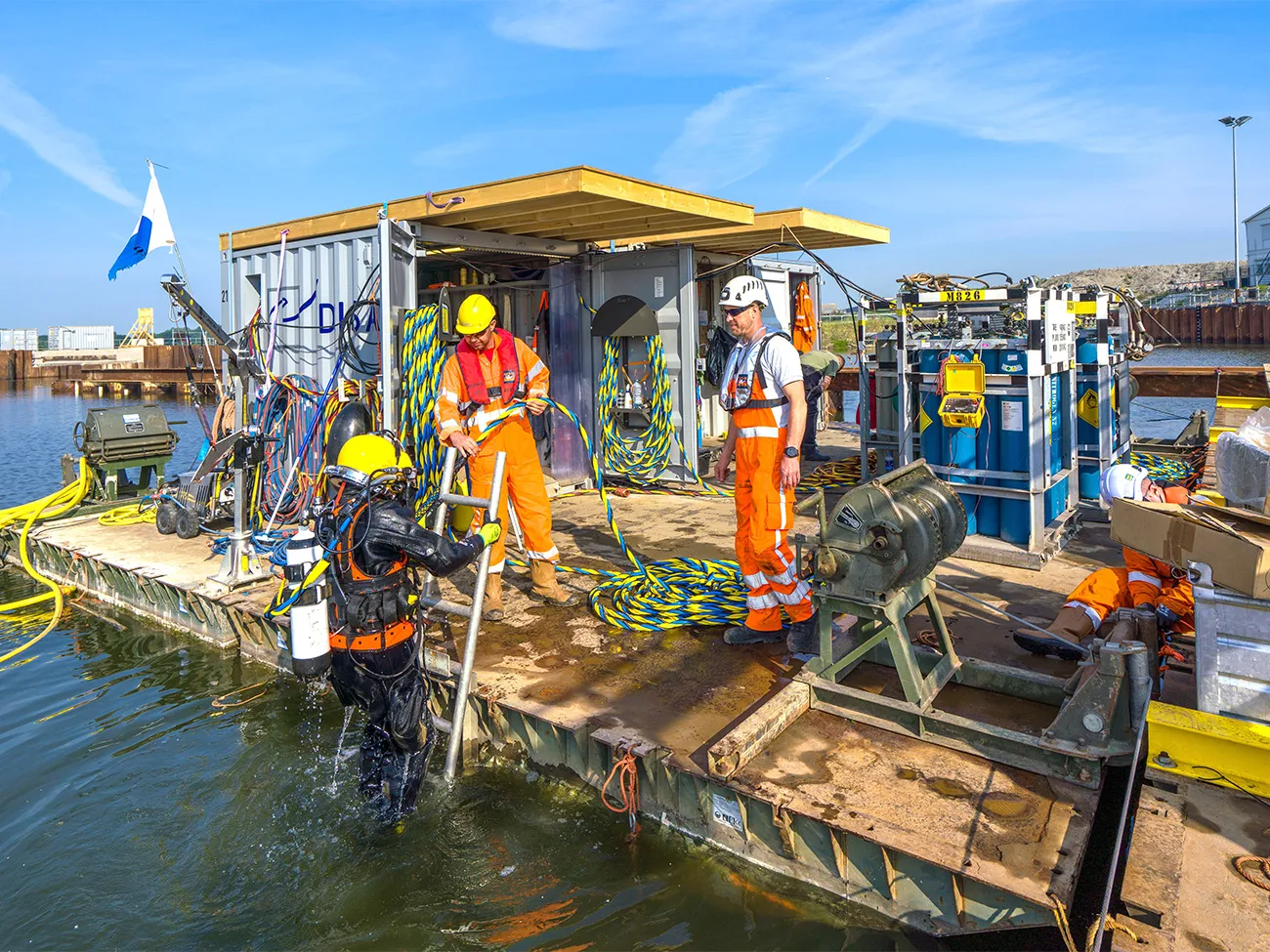
“DISA International operates worldwide in various sectors where underwater work is required,” says Managing Director Didier de Graaff. “One part of DISA International is DISA Civil Construction. This division specialises in underwater work on infrastructure assets, including construction, repairs and maintenance.” DISA is used to major challenges, but even for a company like this, the Maasdeltatunnel is a huge undertaking. There is a great deal involved. DISA and client BAAK began meeting regularly at an early stage to ensure the underwater work could be carried out as efficiently as possible. For the MDT and HOT combined, DISA is working in twenty construction pits of varying sizes and depths.
Before DISA International could start work, the sheet piles were installed, the anchors drilled and the construction pits excavated. DISA was closely involved in the process even before excavation began. Once the pits were ready, DISA could start measuring, cleaning, modifying and extending the anchors. After all this preparatory work, gravel was spread as a base layer for the support beams and to provide additional capacity for capturing silt during the concrete pour. Reinforcement mesh was then laid on top, followed by the underwater concrete pour.
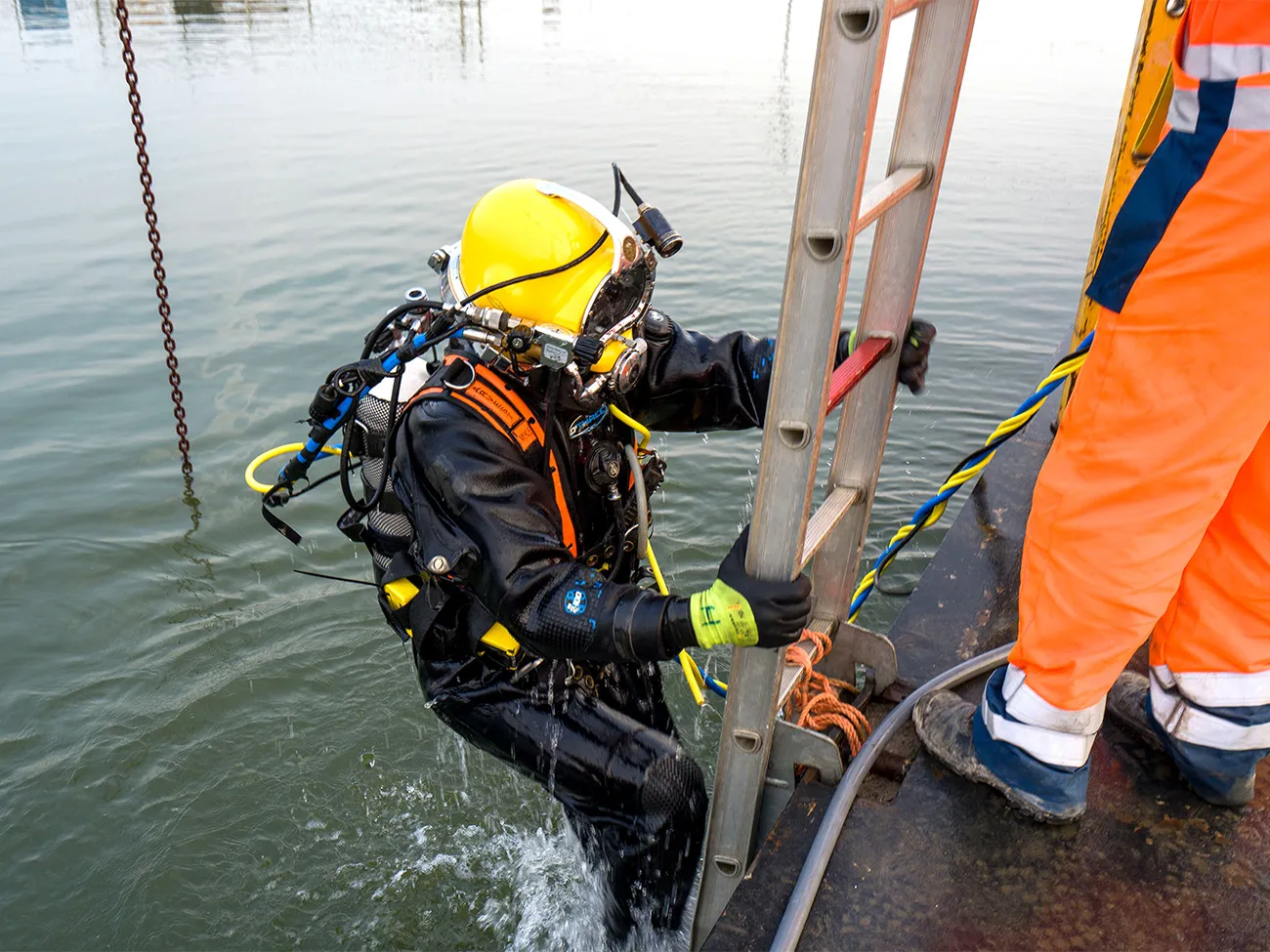
“Pouring the concrete was the icing on the cake,” says John Penson, Operations Manager at DISA Civil Construction. “All the work is preparation for pouring the underwater concrete. The sheet piles and anchors are all cleaned with high-pressure water underwater to ensure the concrete bonds properly.” In early July, around 6,000 m3 of concrete was poured into one of the construction pits over a period of 90 hours. Concrete pours of this kind are carried out as one continuous operation. The concrete supply is crucial to maintaining the quality of the floor as it cures. A specially developed pouring system pumped the concrete down to the bottom of the construction pit. Divers carried out inspections during the process.
More divers needed
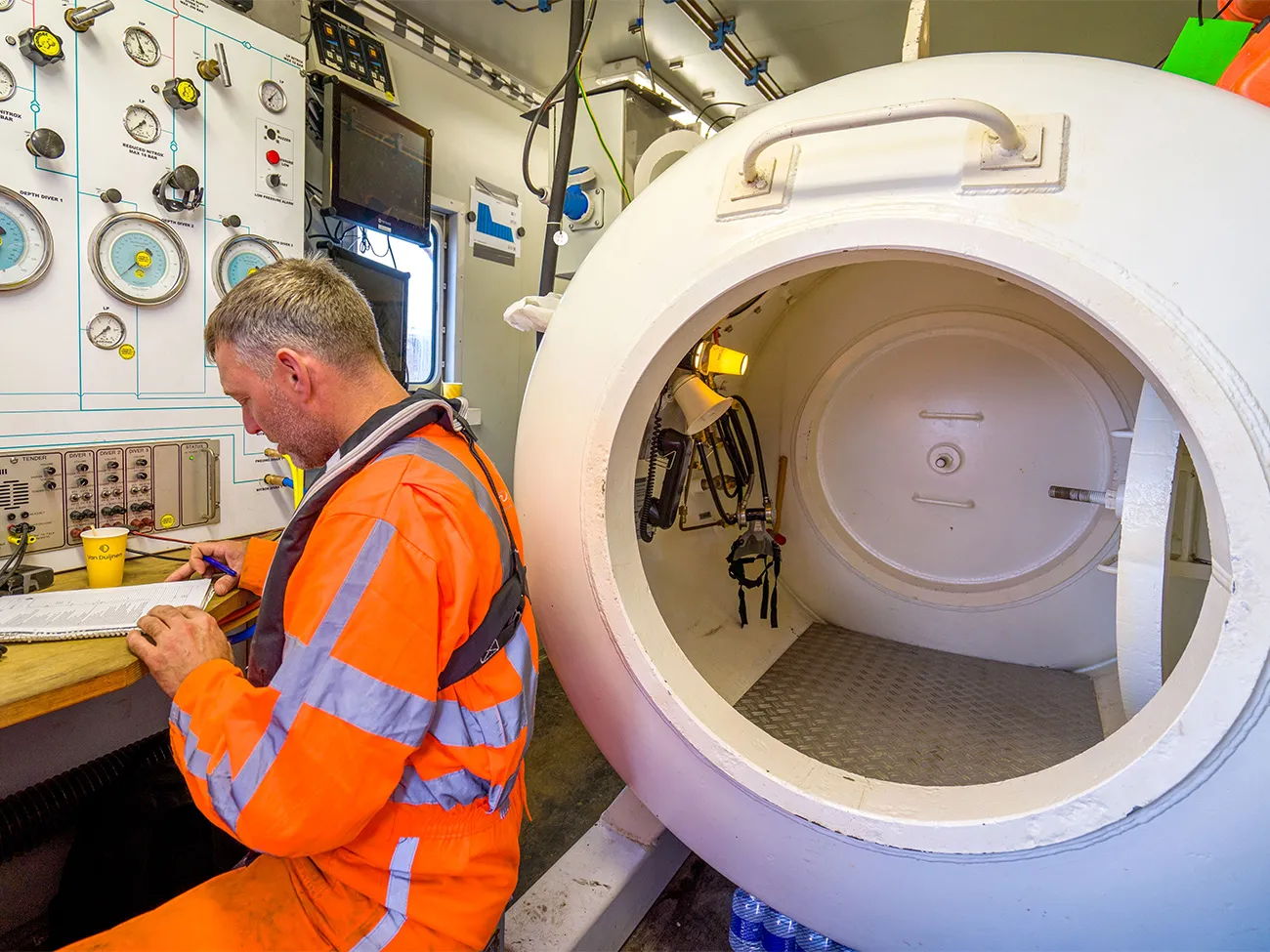
The tunnel floors will be no less than two metres thick. Once the concrete in a construction pit has cured, the water can be pumped out and the tunnel can be built in dry conditions. DISA began work on the Maasdeltatunnel a year and a half ago, and it will continue for at least another year. “The client’s schedule means that a large workforce is needed,” says Marc Dröge, General Manager at DISA Civil Construction. The work is made even more challenging by the fact that most of it takes place 29 metres below NAP. At these depths, DISA uses special breathing gas mixtures to allow longer dive times and shorter decompression stops. Five decompression chambers are positioned at strategic points on the project, one of which is used for surface decompression. These also enable the divers to work underwater for longer periods.
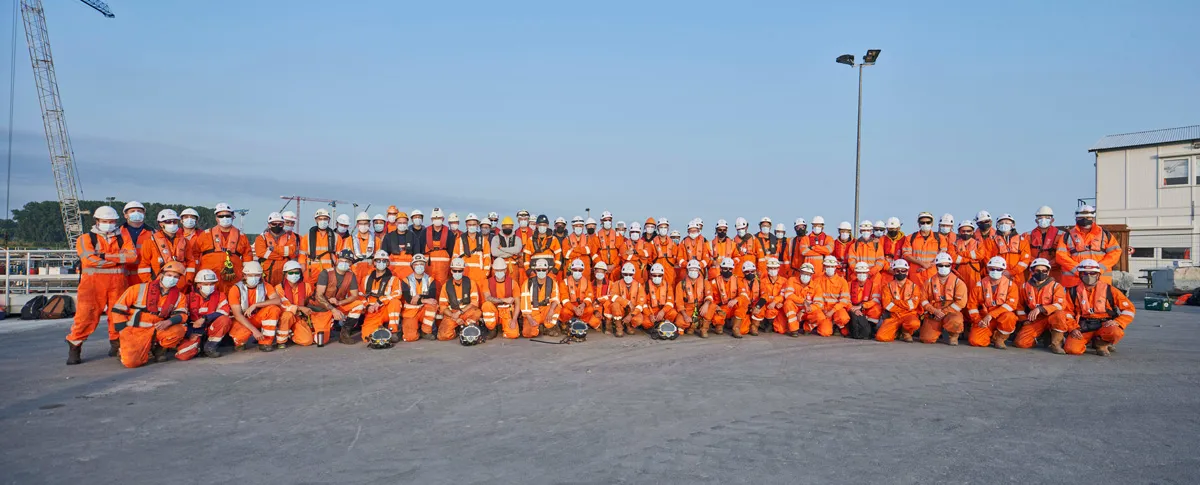
“Another challenge on this project was deploying several dive teams to keep to BAAK’s schedule,” Dröge continues. “To work as a commercial diver in the Netherlands, you need to have completed a number of specialist training courses. Foreign divers wishing to work in the Netherlands have to go through various complex procedures. With the Dutch diving market so busy and several dive teams needed, we called on our international partners to bring in divers from Spain, Italy, France and England. As a result, we now have more than 130 divers working on the project around the clock.”
Credit to the organisation
Efficiently coordinating all the dive teams requires tight planning and organisation. The site managers brief the teams and allocate tasks. Each team, including the individual divers, is assigned specific tasks to carry out independently, such as extending anchors. “There are around 6,000 anchors in the ground in each construction pit. They protrude 20 cm above the bottom. Divers first remove the column of cement around each one, then fit a coupling sleeve and an extension rod with plates. These weigh between 50 and 200 kg and are needed to anchor the concrete,” Penson explains. Another common task is underwater welding. DISA is AWS- and ISO-certified for this work. Penson says: “We often weld brackets onto piles and carry out various repairs to sheet piles.”
DISA is one of the few companies capable of carrying out the underwater work on a project of this scale. It has the people and equipment required. Dröge says: “This is one of the biggest projects we have undertaken in the past fifteen years. We have had to expand considerably to take it on. For example, we had to increase our diving systems to thirty individual systems. Some of the equipment had to be brought in from the United States, the United Arab Emirates and Singapore. Many other disciplines are also needed on a project like this, including accommodation, local transport, flights, visas, grading, meals, SHE-Q, procurement, HR, Q&R, and so on. Our planning and site teams, offices and the entire organisation deserve credit for their work. The project is going very well so far.”
Support
DISA’s client is BAAK, a consortium of Ballast Nedam, DEME Group and Macquarie, which is carrying out the project on behalf of Rijkswaterstaat. The collaboration is going very well, thanks in part to the understanding and helpful attitude of BAAK’s staff. “Whenever we need help, we get it. We can turn to BAAK’s staff with any questions. The collaboration is very positive,” says Dröge.
Question about this story? Ask your question
Keep following this
Get an email when a new story is published. No account needed.
- SubjectConstruction projects