Careful asbestos removal with residents in mind
Text Roel van GilsImage ASB
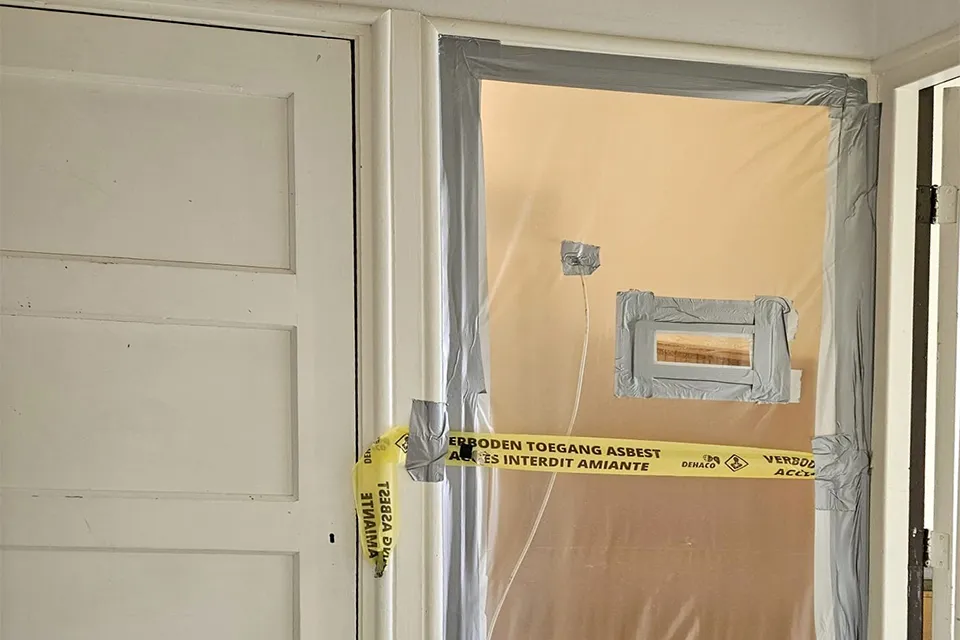
Asbestos-containing materials were located and removed as part of the large-scale renovation of the Rode Dorp. Following extensive investigations, asbestos-containing ventilation pipes were found in around thirty homes. ASB removed them professionally, without residents having to leave their homes. A fine example of skilled workmanship.
ASB has been an important partner of Nijhuis Bouw Apeldoorn in asbestos removal for almost ten years. “We always focus on getting the right balance between price and quality,” says Chris van Beek, site supervisor at ASB in Veenendaal. “This project brought our expertise together with careful communication, because asbestos removal is not just about getting the technical work right. It also means paying attention to the people who live there.”
Airtight enclosure
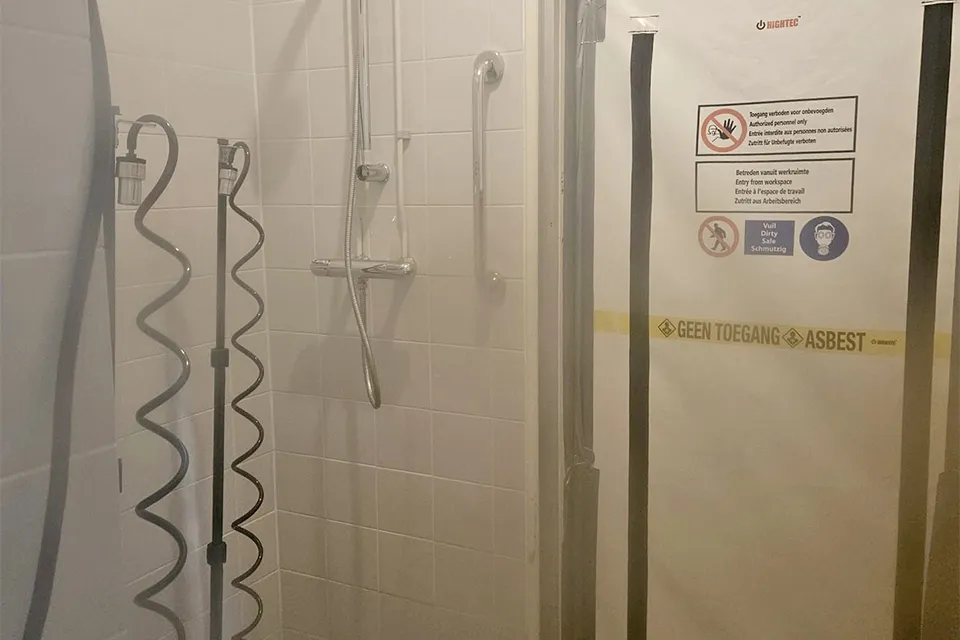
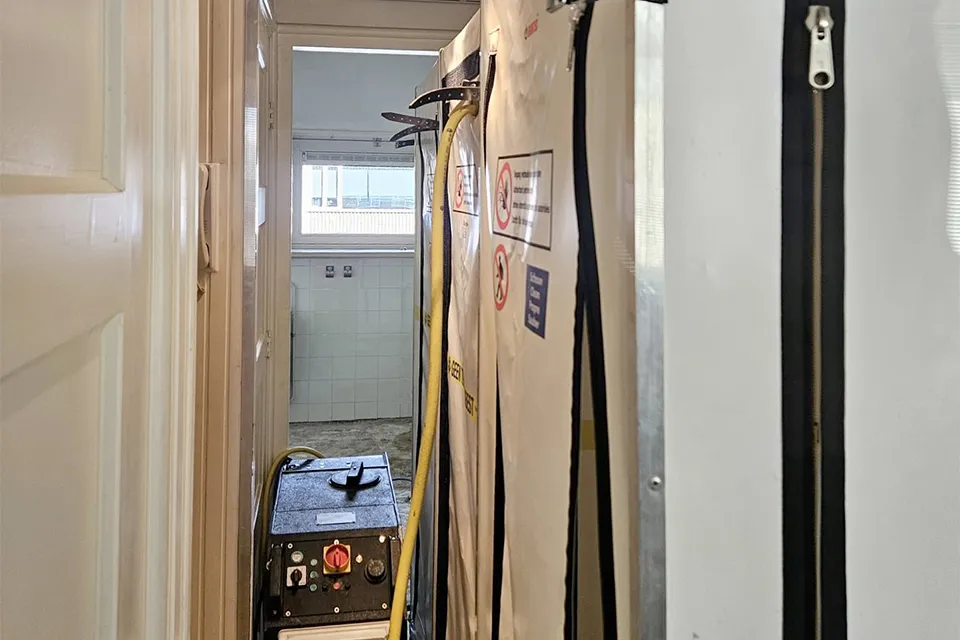
The ventilation pipes in question ran from the kitchen and toilet, through the first floor and loft, up to the roof, often over a length of around 8 metres per home, Van Beek recalls. “Conditions varied from one house to another: some sections had already been removed during previous renovation work, but in many cases a complete removal was necessary. And that always starts with creating a fully safe working environment. In the homes in the Rode Dorp, that meant building what is known as a containment: an airtight enclosure made of sheeting and timber battens in the loft, bedrooms and landing. A special shower unit was then set up in one of the bedrooms. It was a major undertaking, especially given the limited space in the often small rooms.”
Fibres
During asbestos removal, the containment was kept under negative pressure at all times, preventing harmful fibres from escaping. “The air was actively extracted and filtered,” Van Beek explains. “After the pipes had been removed and wrapped, the containment was thoroughly cleaned with damp cloths and specialist vacuum cleaners. An independent company then carried out air tests to check that the space was completely safe. Only after official clearance could we dismantle the containment and dispose of the carefully wrapped asbestos-containing material in accordance with the applicable regulations.”
Although the technical work is often completed within a day per home, the biggest challenge is often the residents, says Van Beek. “Clearing rooms and coming to terms with disruptive work requires clear explanations and understanding. This is where we make a real difference: our operatives work tidily, we communicate clearly and we take a genuine interest in residents. In this way, we have also played our part in making the Rode Dorp safer and healthier.”
Question about this story? Ask your question
Keep following this
Get an email when a new story is published. No account needed.
- SubjectInnovation & technology