










A landmark project with a remarkable history
Text Ramona KezerImage Bureau Polderman, Iwan Baan en Rotterdams stadsarchief
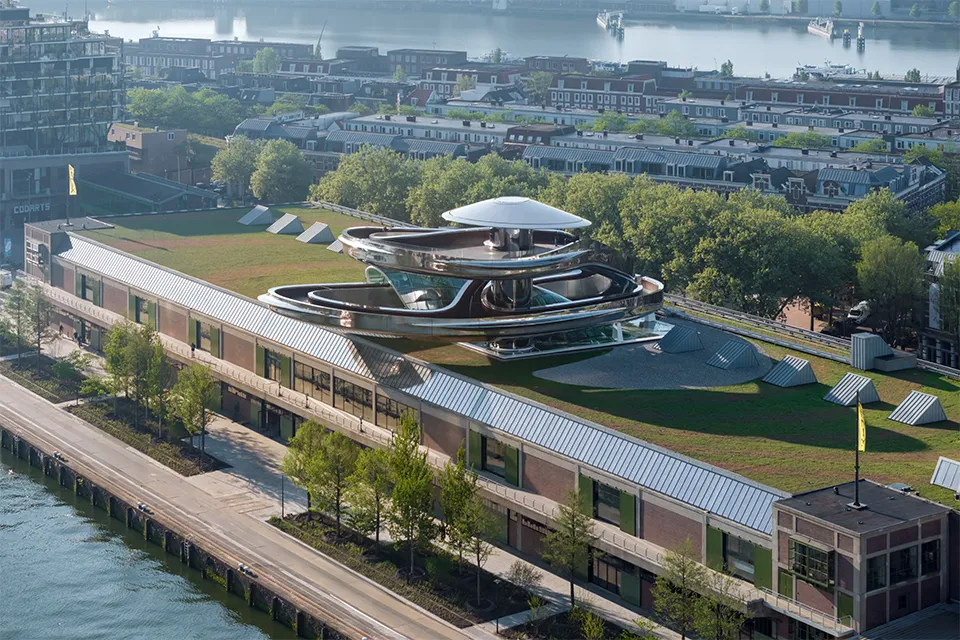
‘Every layer of the building’s history has been kept visible’
The two Fenix warehouses in Rotterdam have been transformed in recent years. Apartments were added above the first warehouse, while the second has now been converted into Fenix, the new art museum about migration. Bureau Polderman carried out the building-history research and restoration plan for client Droom en Daad, and designed the conversion of the existing building.
A landmark project with a remarkable history. Architect Philip Mannaerts: “It is not officially a listed building, but we wanted to treat it as one because of its cultural and historical value to Rotterdam. Originally, there was a single large warehouse for the transshipment of goods, the San Francisco warehouse, built in 1923 for the Nederlandsch-Amerikaanse Stoomvaart-Maatschappij (NASM), later known as the Holland-Amerika Lijn. At the time, it was the largest warehouse in the world. At the end of the Second World War, the Germans bombed the quays of the Rijnhaven, destroying part of the warehouse. Following a major fire in the late 1940s, it was decided to divide it into two separate warehouses, Fenix I and II.”
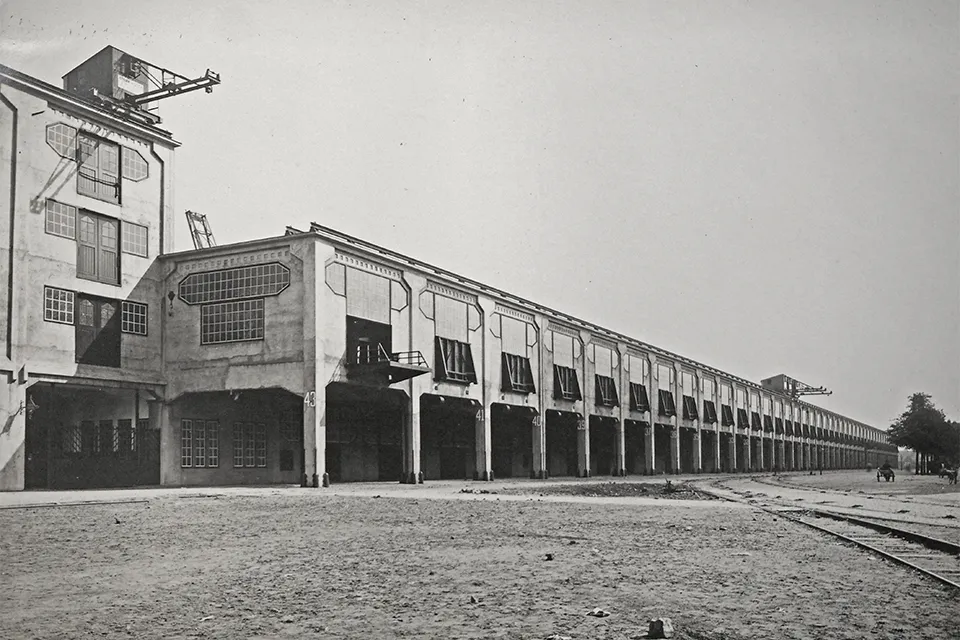
A building with two faces
The architect incorporated both the building’s origins and its post-war reconstruction into the design, making all the significant historical layers visible. The north façade reflects post-war reconstruction architecture, while the south façade combines original elements with features from the post-war conversion. The design was developed in collaboration with EGM architecten and through a construction team involving main contractor Dura Vermeer and various consultants. Chinese firm MAD Architects also designed the building’s central entrance and the 30-metre-high Tornado: two twisting staircases rising from the atrium through the glazed roof above the warehouse, before meeting again at the panoramic viewing deck.
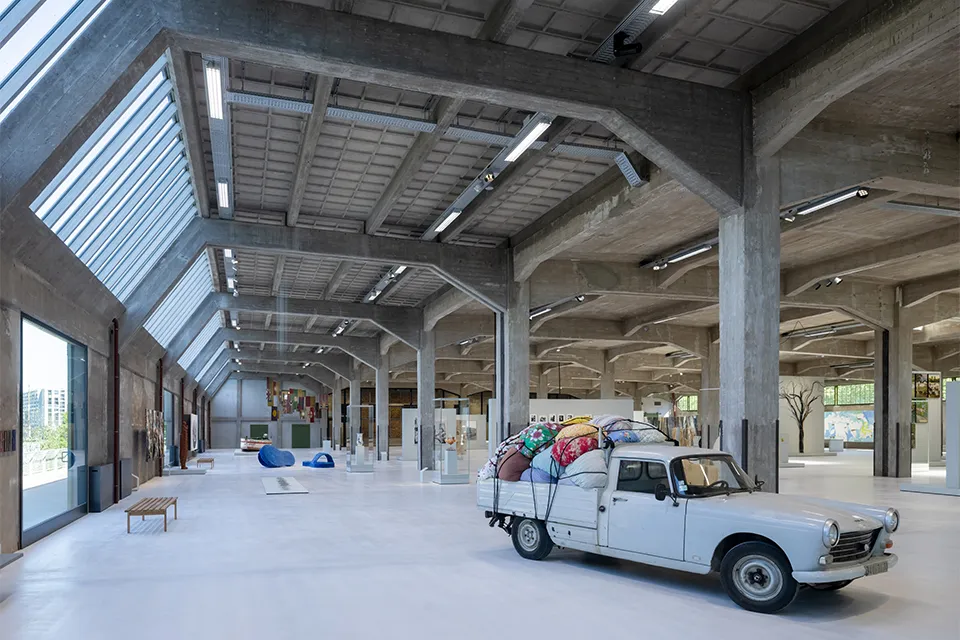
“We worked together to achieve the best possible result, creating a unique building. From the outside, the warehouse looks small because of the surrounding buildings, but inside it feels very different. The warehouse’s superhuman scale creates a remarkable interior space, perfect for the museum.”
At Fenix, history, culture and art come together. The restored monumental warehouse stands on Rotterdam’s quays of departure and arrival. For millions of people, these were the quays where a new life began, on the way to the United States or Canada, or upon arrival from China, Cape Verde or Greece. Here, Fenix provides a space for more than a hundred artists from every continent. Their work shows that migration is timeless and universal. On the ground floor is Plein: a covered public square spanning 2,000 square metres, open to everyone’s ideas for creating programmes together with Fenix. The different cuisines at Fenix also tell stories of migration, in the museum café and bakery, the ice cream parlour and Plein.
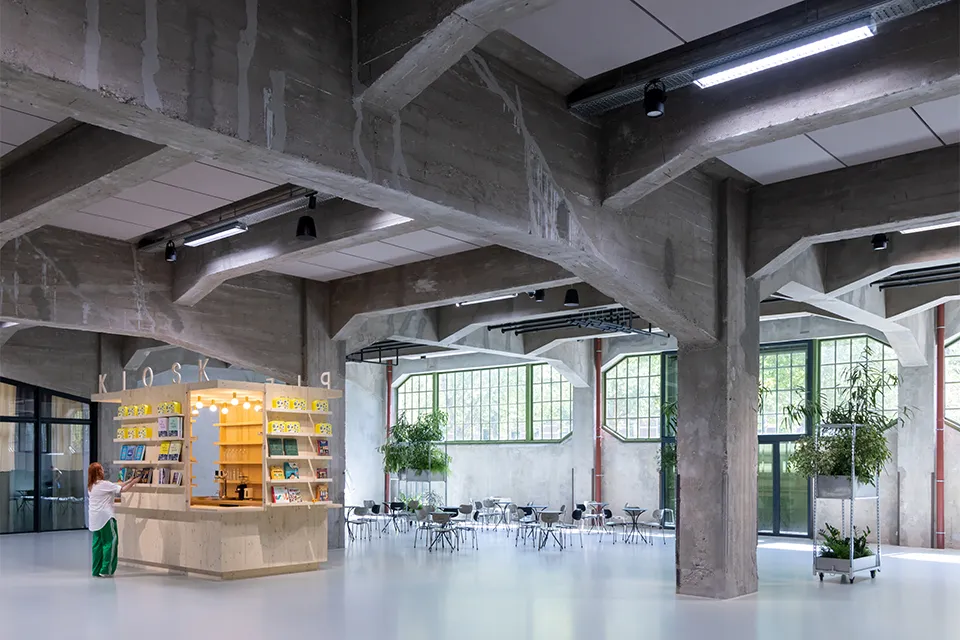
Original architectural features
The architect paid close attention to preserving the building’s distinctive features. The enormous steel loading doors were renovated and are normally left open, while a new inner façade brings light and views inside. “All layers of paint were removed from the concrete supporting structure inside, and the steel angle sections on the columns were cleaned and given a clear coat. Many original architectural features, such as the roof lantern, rooflights and distinctive steel windows, have also been retained and fitted with insulating glass.”
In short, a major renovation and conversion project, carried out with close attention to history and detail. Fenix was opened by Queen Máxima on 16 May 2025. Mannaerts is proud of the project: “We’ve had enthusiastic responses, and everyone involved enjoyed working on it. The building is a valuable addition to the city, in a special and fitting location.”
Question about this story? Ask your question
Who worked on FENIX
- co-architectEGM architectenMentioned in All the expertise needed for a major, complex project like FENIX
- restorationBureau PoldermanMentioned in All the expertise needed for a major, complex project like FENIX
- mono-pitch roof
 Kingspan Light + AirMentioned in Past and present come together in new mono-pitch roof
- main contractorDura VermeerIn this story
Keep following this
Bij een nieuw verhaal krijg je een e-mail. Geen account nodig.
- ProjectFENIX
- SubjectConstruction projects
- CompanyDura Vermeer