Landscape leads the way in construction of the Blankenburg Connection
Text Tim van DorstenPhotography Rijkswaterstaat
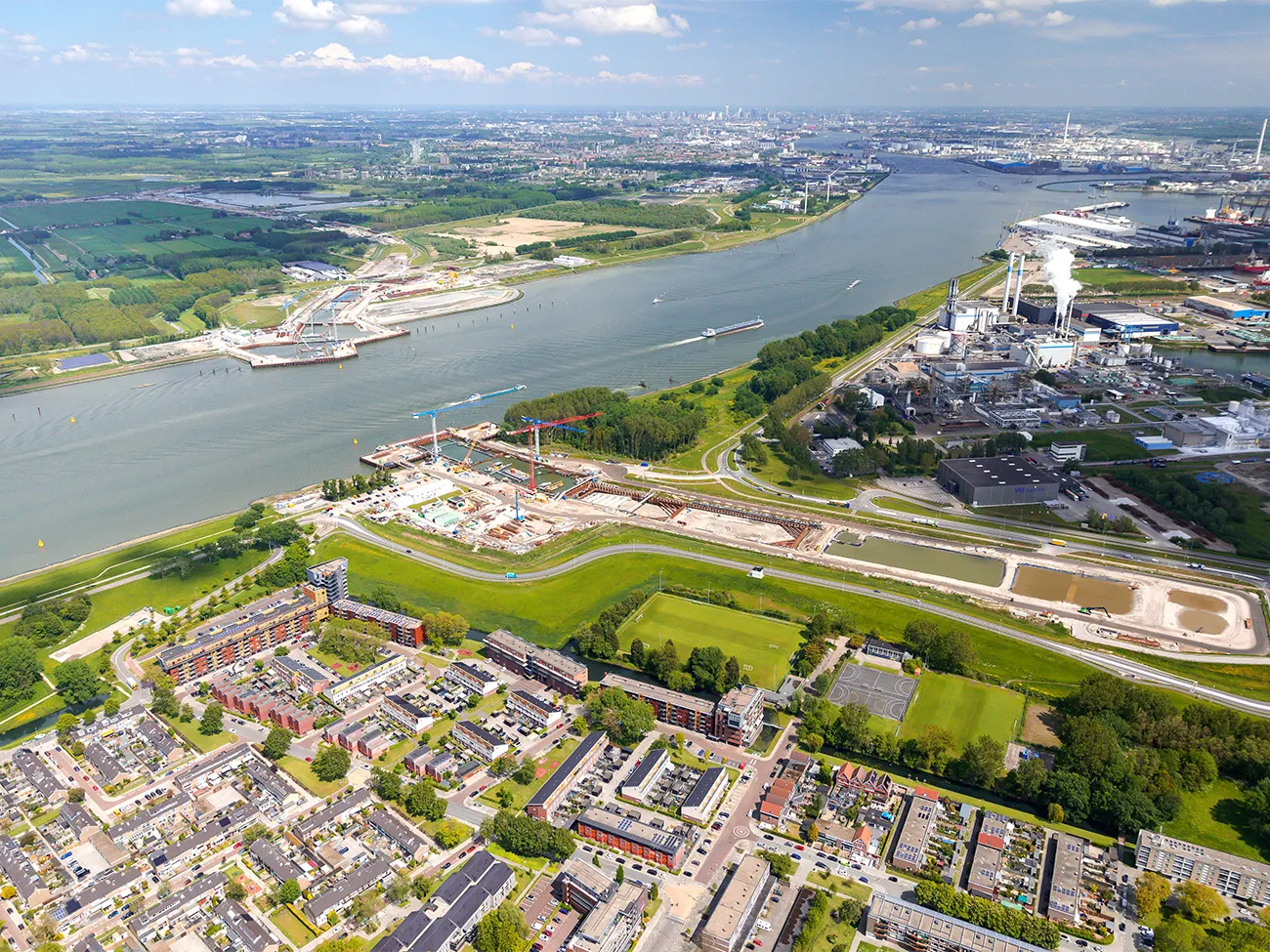
To prevent congestion around the Port of Rotterdam from worsening, consortium BAAK is delivering the Blankenburg Connection on behalf of Rijkswaterstaat. This new motorway (A24) will connect the A20 near Vlaardingen with the A15 near Rozenburg.
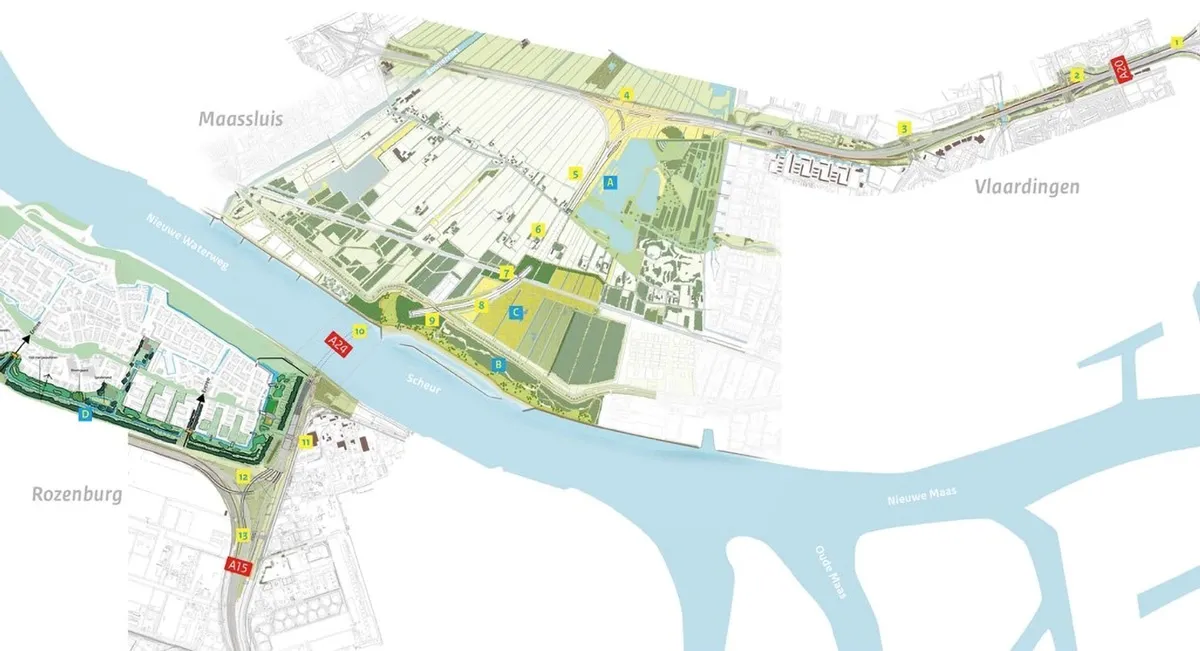
BAAK is a consortium comprising the collaborating companies Ballast Nedam, Deme Group and Macquarie. In 2017, client Rijkswaterstaat selected the consortium’s proposal for the design, construction and maintenance of the future Blankenburg Connection. This new link will be around 4.2 kilometres long, running from the A20 west of Vlaardingen to the A15 on the eastern side of Rozenburg. The route passes beneath the Nieuwe Waterweg/Scheur through the approximately 900-metre-long Maasdeltatunnel, with the 500-metre-long Hollandtunnel land tunnel to the north. “To date, the A15 has been the only motorway providing access to the Port of Rotterdam. The ‘Rotterdam Vooruit’ study concluded around 2010 that an additional route between the A20 and A15 was needed, as otherwise the risk of congestion, including at the Benelux Tunnel, would rise sharply in the years ahead,” says Laurens van Tiel, Spatial Quality Adviser at Rijkswaterstaat.
BAAK’s proposal particularly appealed to the public authority because the consortium had taken into account how to minimise disruption to the surrounding area during construction of the new link. “The future Maasdeltatunnel was initially intended to consist of five separate immersed sections. BAAK, however, proposed two tunnel sections instead of the six tunnel elements in the reference design,” Van Tiel explains. “This causes less disruption to shipping, as fewer closures of the waterway are needed. BAAK also uses the land tunnel for its own logistics, avoiding the need to transport materials and equipment along existing local roads.”
Integrating the route into the landscape
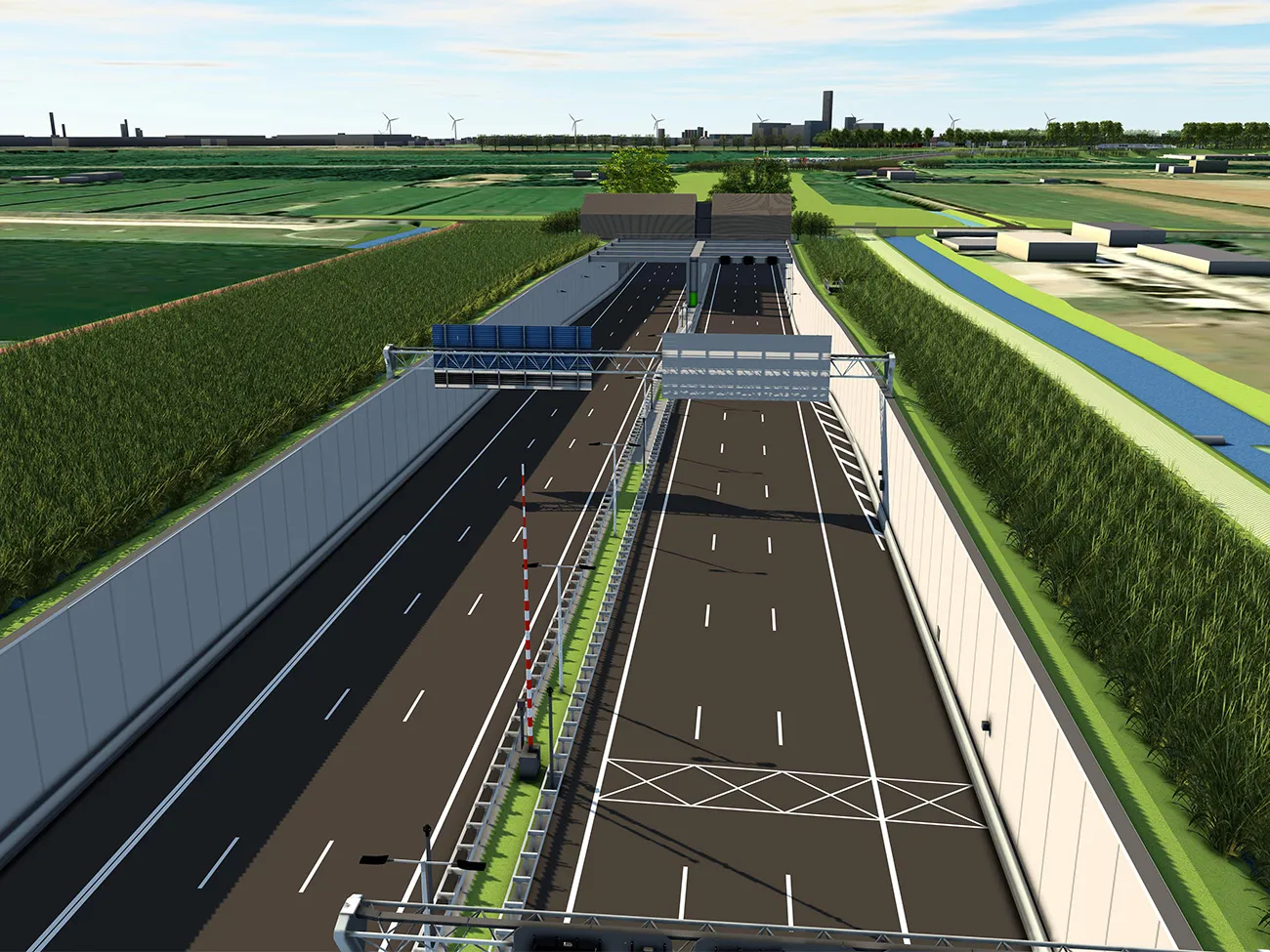
According to Van Tiel, however, the most distinctive feature of the future A24 motorway is the way the Blankenburg Connection is integrated into the landscape. “The landscape has been the guiding principle throughout the design. On the one hand, we want to show motorists the scale and industrial character of the Port of Rotterdam,” he says. “On the other, the new motorway must have as little negative impact as possible on existing green recreational areas such as Krabbeplas and Oeverbos. That is why we opted for a junction with the A15 featuring flyovers in the port area, and for a connection with the A20 featuring dive-unders in the natural area to the north.” This preserves the open views across the peat meadow landscape of Midden Delfland.
The underground Hollandtunnel will also reduce noise pollution. To meet noise standards, BAAK is using quieter asphalt. Existing noise barriers will also be raised considerably. BAAK and Rijkswaterstaat have brought in ecologists who are on site throughout construction to minimise disruption to plants and animals. “For example, we had to remove reeds to build the Maasdeltatunnel approach road. On the ecologists’ advice, we supplied the reeds to Hoogheemraadschap van Delfland, so it could use them to build what is known as a water harmonica. This is our way of making smart use of leftover materials while working together to enhance the quality of the area.”
Construction gets under way
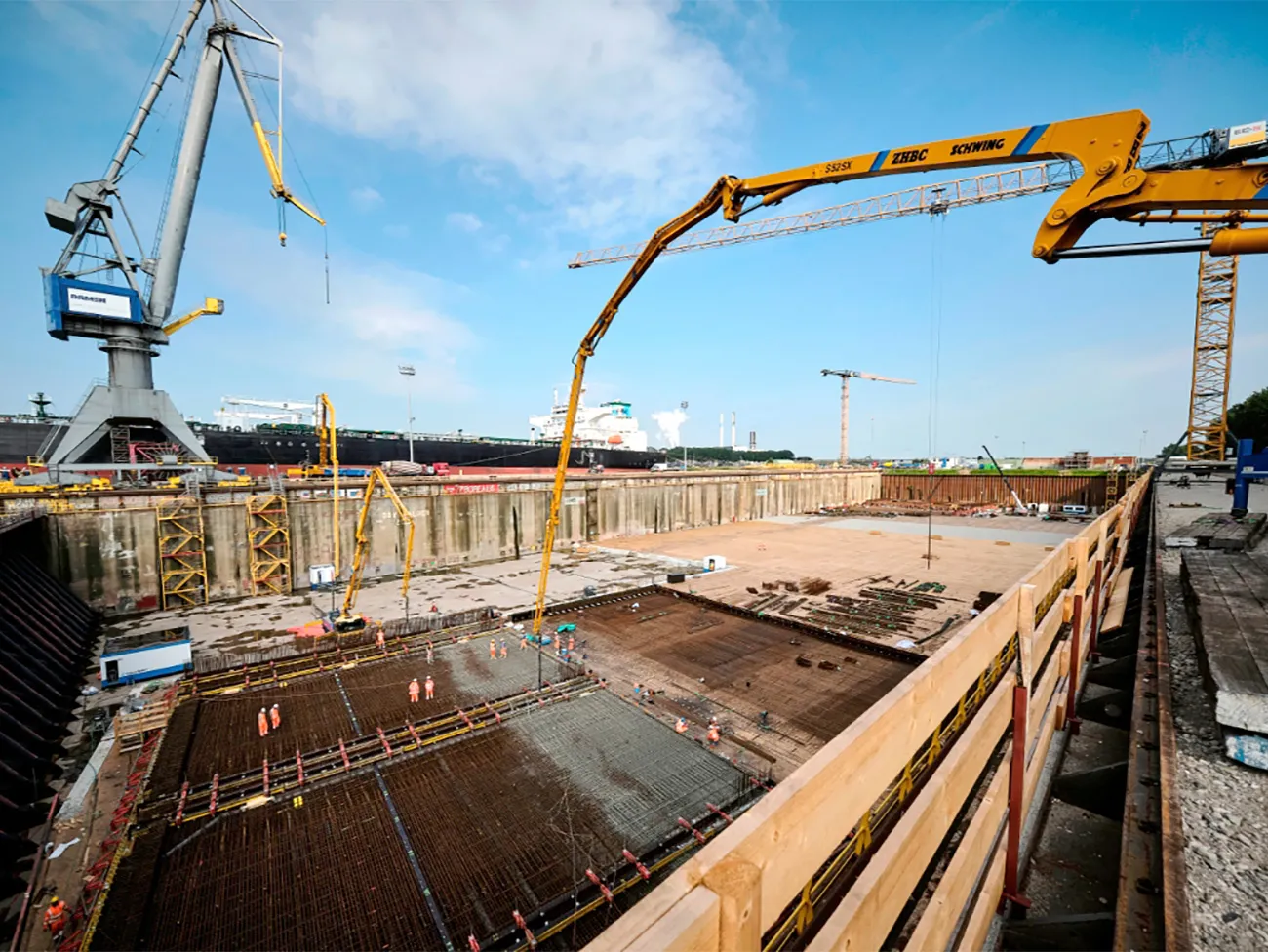
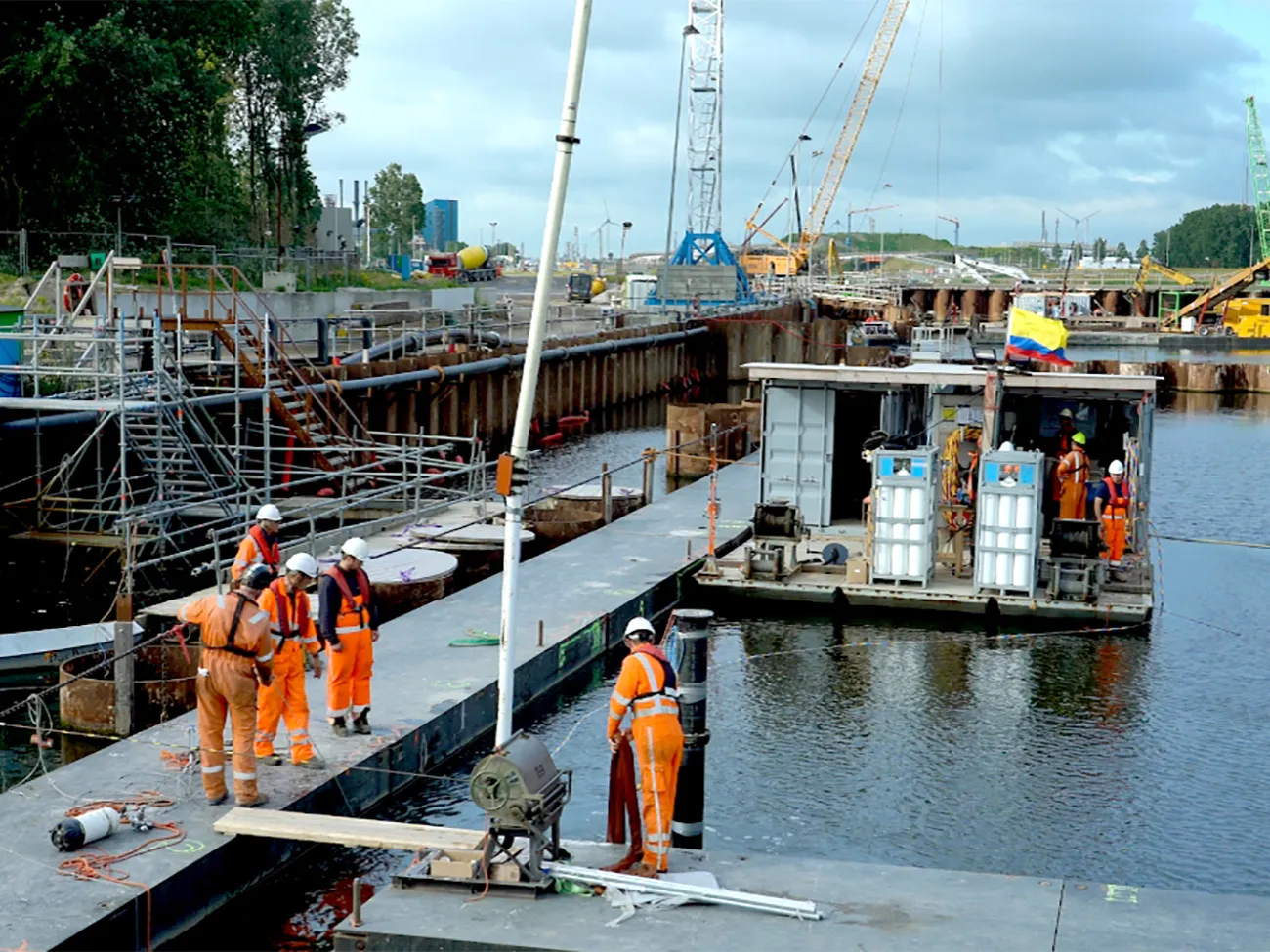
Construction of the link began in 2018. Last July, work began on the immersed elements of the Maasdeltatunnel, and the first tunnel floor was laid in the deepest construction pit on the Rozenburg side. Underwater concrete was poured continuously for 60 hours. Rijkswaterstaat is now working towards the project’s high point, when BAAK will immerse the two tunnel sections of the Maasdeltatunnel. The sections are being built near Rozenburg and are expected to be immersed between the north and south banks in spring 2023. The Blankenburg Connection is due to open in 2024. Around 68,000 motor vehicles are expected to use the link in 2030.
Question about this story? Ask your question
Who worked on Blankenburgverbinding
- consortiumBAAKIn this story
- clientRijkswaterstaatIn this story
- contractorBouwconsortium BAAKMentioned in Two sister companies working side by side on the Blankenburg Connection
- earthworks sectionJohn Bunnik GrondverzetMentioned in Two sister companies working side by side on the Blankenburg Connection
- Hire of various materialsBunnik VerhuurMentioned in Two sister companies working side by side on the Blankenburg Connection
- underwater concrete slabDISA InternationalMentioned in Two sister companies working side by side on the Blankenburg Connection
Keep following this
Get an email when a new story is published. No account needed.
- ProjectBlankenburgverbinding
- SubjectConstruction projects
- CompanyBAAK
- CompanyRijkswaterstaat